Google permits Pentagon to use Gemini for classified operations, exits drone swarm competition
Google confirmed the Pentagon can use Gemini in classified military networks under 'any lawful government purpose' conditions. Amid this, employee protests intensified within the company, while it was separately revealed that Google withdrew in February from the US Department of Defense's competition for an autonomous drone swarm voice-control system following an internal ethics review. The deal reignited debate over the boundaries of military AI deployment.
AI-processed from TNW; edited by Hamidun News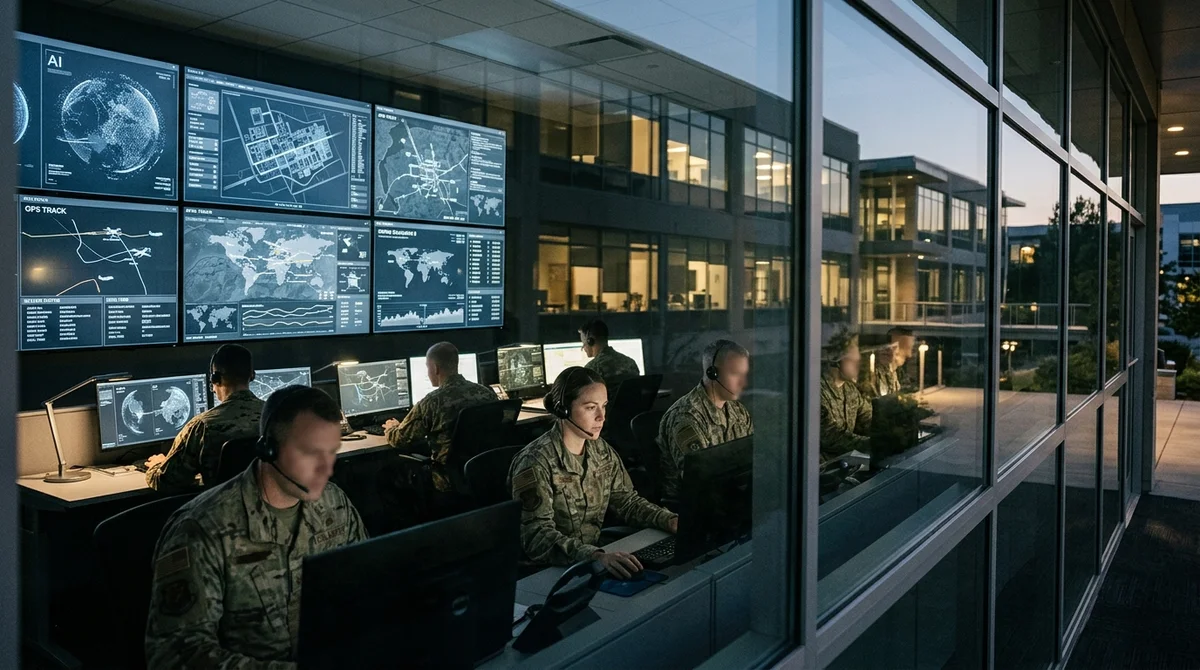
Google confirmed that it has allowed the Pentagon to use Gemini models in secret military systems on the condition of "for any lawful government purpose." On the same day, it became known that the company withdrew from a U.S. Department of Defense competition for voice control technology for autonomous drone swarms on February 11.
What's in the contract
This is not about developing a separate weapons product, but about access to the API of Google's commercial models in the Pentagon's closed networks. This is a continuation of existing cooperation: previously, Gemini was deployed for approximately three million employees of the defense department at the unclassified level. Now access is being expanded to classified circuits—isolated networks where systems are used for mission planning, intelligence analysis, weapons guidance, and target decision-making.
The very wording of the deal leaves the department with a very wide corridor of application. The contract includes disclaimers about the undesirability of mass domestic surveillance and autonomous weapons without human involvement, but they look more like a declaration than a strict technical ban. Moreover, the Pentagon can request changes to the model's security settings and filters, and Google does not have the right to block the department's lawful operational decisions in real time or after the fact.
- Gemini use is permitted for "any lawful government purpose"
- Access is provided specifically in secret, isolated networks
- Google provides API access to commercial models, not a separate military model
- The contract contains limitations in principle, but it is unclear how to verify them in practice
Why the dispute doesn't settle
The deal was confirmed on April 28, 2026, one day after an open letter from Google employees to Sundar Pichai. More than 580 people signed the letter, including DeepMind researchers, directors, and vice presidents. Their main argument is simple: if models operate in air-gapped networks, then the company effectively does not see what requests are sent, what responses are generated, and how those responses are then used by the military within secret systems in practice.
"The only way to guarantee that
Google will not be associated with such harm is to refuse any classified workloads."
Because of this, formal disclaimers in the contract look weak to critics. If the supplier cannot observe the model's use in a closed circuit, then the ban on mass surveillance or autonomous weapons use without humans becomes more of a paper promise. For part of the Google team, the difference between "we don't build weapons ourselves" and "we give models for secret military tasks" looks more legal than substantive. This became the core of the internal conflict.
Why Google withdrew
In parallel, it became known that Google advanced further in the Pentagon's competition with a $100 million prize fund, which required technology for managing autonomous drone swarms with voice commands. According to Bloomberg, the company notified the government on February 11, 2026, that it would no longer participate in the program, after its application had passed the preliminary selection.
The reason was formally cited as lack of resources, but this was preceded by an internal ethical review. This is where Google's logic becomes visible. Google appears to be willing to sell access to universal models as infrastructure, but is not willing to directly develop a specialized system for managing a drone swarm.
In other words, the boundary is drawn between supplying a general-purpose tool and creating a specific combat application. For the legal and PR side, this is an important distinction because it allows distancing from the role of developer of a specific weapons interface. The problem is that in practice, this boundary quickly blurs.
If the same model ends up within classified circuits where mission scenarios, intelligence data, and target designation are used, the difference between "general AI" and "military function" becomes much less obvious. This is precisely why the news of withdrawal from the competition did not settle the questions about the deal itself, but rather made the internal contradiction more visible and fueled the dispute within Google even more.
What it means
Google demonstrates how major AI companies are normalizing military contracts: direct weapons projects can still be rejected, but access to base models for classified infrastructure is already becoming the new norm. For the market, this is a signal that the dispute is no longer about the fact of cooperation with the defense establishment itself, but about where the real, not declarative, boundary of control over model use lies—and whether it exists at all in closed military networks.
Delegate Deep Research, Coding & Workflows to an AI Agent
Deploy autonomous multi-step execution with NomadNet Agent (agent.nomadnet.ai) — automated web research, data synthesis, code generation, and complex task orchestration.
The AI world, distilled — once a week
Seven stories that actually mattered, hand-picked. No noise, no reposts, no press releases.
Done! Check your inbox for a confirmation.