Elon Musk positioned himself as humanity's chief defender in lawsuit against OpenAI
Elon Musk testified in the case against Sam Altman and OpenAI, constructing an image of a man who thought about humanity's safety from the very beginning. In…
AI-processed from The Verge; edited by Hamidun News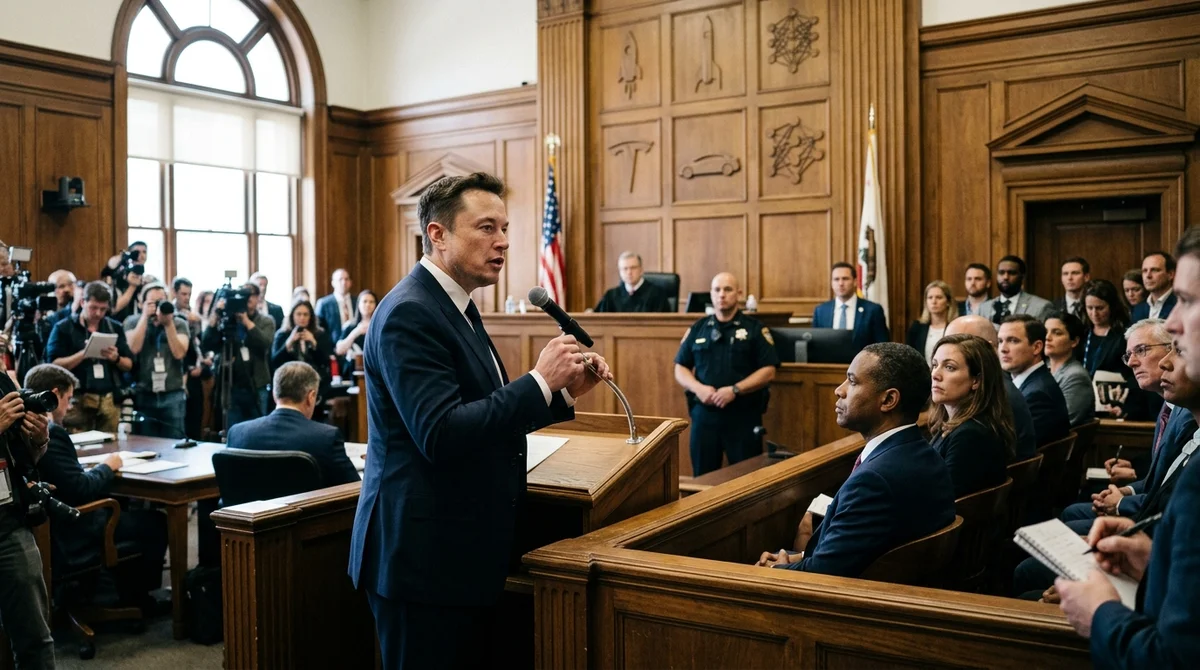
On April 28, 2026, at the OpenAI trial, Elon Musk made a bet not so much on documents as on his own image. Before the jury, he tried to present himself not as an aggrieved co-founder, but as a man who has spent years building companies for one goal — the safety of humanity.
Biography as Argument
Instead of quickly getting to the heart of the dispute, Musk began with a long excursion into the past. He reminded the jury that he grew up in South Africa, came to study in Canada with 2,500 Canadian dollars in traveler's checks, a suitcase of clothes and books, and then went through his entire entrepreneurial trajectory in detail — from Zip2 and PayPal to SpaceX, Tesla and other current projects. Such an approach looked deliberate: in court, he was building a story not about a corporate conflict, but about a consistent personal mission that he has apparently been carrying out for decades.
Next, Musk linked his companies to this same line. He described SpaceX as insurance for life as we know it, and Tesla as a response to the risk that dependence on fossil fuels poses to the environment and people in general. However, in court he even controversially claimed that he founded Tesla.
But for the rhetoric in the courtroom, this was secondary: it was important for Musk that the jury see in him not just a billionaire, but a man who repeatedly invests in projects with a large public purpose.
One Mission for AI
Musk applied the same logic to artificial intelligence. He said he has been concerned about AI risks since his student years and considers the technology a double-edged sword: it can either cure diseases and make people richer, or destroy everyone. In his formulation, humanity faces two scenarios — utopian, like in Star Trek, and bleak, like in Terminator.
That is why, according to Musk, he participated in creating OpenAI: not for another startup, but to try to direct the development of powerful AI in a safe direction. This thesis is important for the entire line of the lawsuit. Musk argues that OpenAI abandoned its original nonprofit mission for humanity's benefit and turned into a structure where commercial interests increasingly dominate.
According to court materials, the lawsuit filed in 2024 demands the removal of Sam Altman and Greg Brockman, challenges the company's current corporate model, and raises the question of whether OpenAI had the right to deviate so far from its founding principles.
- SpaceX — protection of civilization in the long term
- Tesla — reduction of dependence on fossil fuels
- OpenAI — attempt to make AI development safe
- The lawsuit — attempt to return the company to its original mission
The Blow to Altman
From these statements, Musk assembles a simple image for the jury: he is a man who warned of risks and sacrificed resources for the common good, while Sam Altman is a manager who took the project in a different direction. The contrast here is key. If Musk speaks the language of existential threat and salvation, then Altman in such a frame turns out to be not a visionary, but a defendant who broke a promise. For the court, this is not just emotion: the more convincing the story about a betrayed mission, the easier it is to present OpenAI's commercial turn as a deliberate breach of the original deal.
"You can't steal a charity," Musk said.
Musk did not stop there and warned that an acquittal for the defendants would create a dangerous precedent for the entire American charitable system. But there is also a weak point in such a moral attack: it makes the outcome of the case dependent not only on legal documents, but also on trust in the storyteller himself. Especially since Musk's critics have long pointed to the disconnect between his public rhetoric about saving humanity and how his own structures distribute influence, money, and control around his business interests.
What This Means
The court case between Musk and OpenAI's leadership is increasingly turning into a dispute not only about corporate structure, but also about the right to speak on behalf of humanity's good. If the jury accepts Musk's version, pressure on OpenAI will intensify not only legally, but also reputationally. For the entire AI industry, this is a signal: promises about open science, safety, and public mission may one day return to the courtroom — already as verifiable obligations, not as a beautiful marketing layer.
Want to stop reading about AI and start using it?
AI News is a curated feed of AI/tech news. Hamidun Academy teaches you to use AI systematically in your work.