AWS Brings Amazon Into Battle With Microsoft and Salesforce, Putting AI Agents Above SaaS
AWS is launching a new attack on the corporate software market, but now not through email and documents, but through AI agents for logistics, hiring, and…
AI-processed from TNW; edited by Hamidun News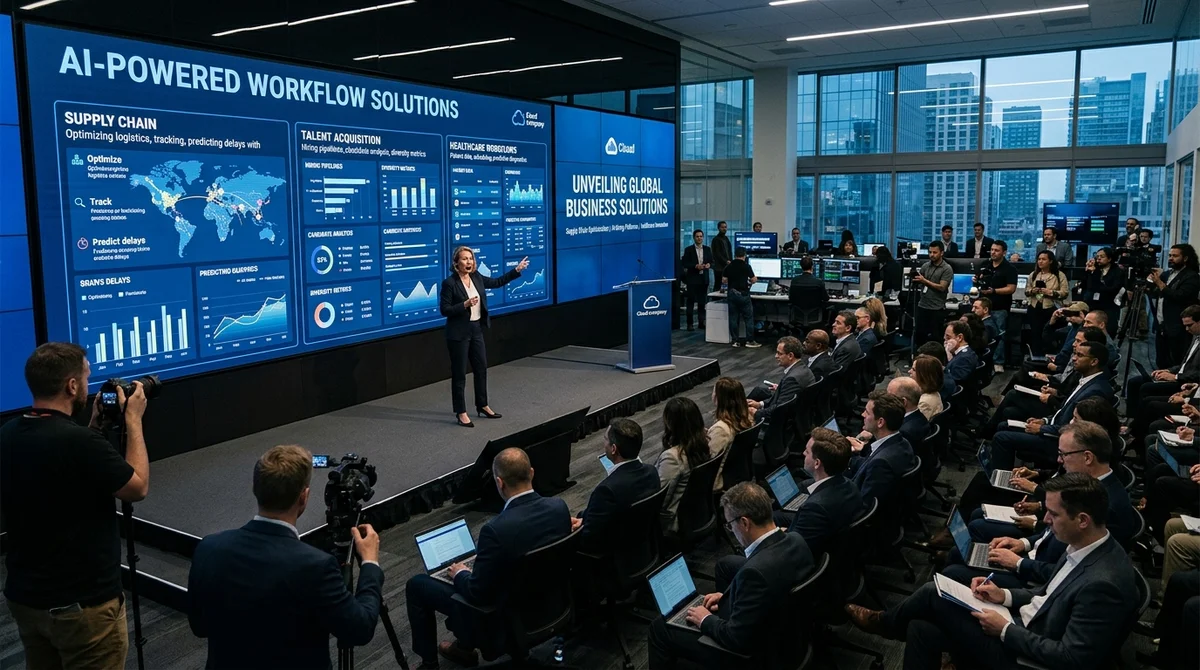
Amazon is making yet another attempt to enter the corporate software market, but this time not through email, documents, and video calls, but through AI-agents for specific workflows. AWS has introduced a line of applications for logistics, hiring, and healthcare and directly targeted the market long dominated by Microsoft, Oracle, and Salesforce.
AWS's New Bet
AWS's core idea is that companies no longer necessarily need a traditional set of separate SaaS applications for each task. Instead, Amazon proposes AI-native tools that take on the process themselves: building forecasts, analyzing failures, talking with candidates, and collecting data without constant human involvement. For AWS, this is a notable shift: previously the company sold primarily infrastructure, and now it wants to earn at the application level, where hundreds of billions of dollars circulate. The new lineup includes several products, each grown from Amazon's internal systems:
- Connect Decisions — a supply chain management platform that uses AI-agents to forecast demand, analyze incidents, and conduct scenario planning.
- Connect Talent — a mass hiring service that schedules calls on its own, conducts voice interviews, and evaluates candidates by skills, not just resume.
- Connect Health — a set of five AI-agents for healthcare: from patient identity verification to scheduling appointments, creating clinical notes, and medical coding.
- Amazon Quick — a separate AI assistant that works on top of Google Workspace, Microsoft 365, Zoom, and Salesforce even without an AWS account.
Why Amazon Is Changing Course
AWS doesn't hide that Amazon has had attempts to sell office software before, and they didn't take off. WorkDocs was shut down in April 2025, Chime in February 2026, and support for WorkMail will end in March 2027. These products went head-to-head against Microsoft on its own territory: email, video calls, documents — universal tools for office workers.
The new approach is different: Amazon is not going into general productivity, but into narrow operational scenarios where it has its own expertise and real operational data. It's also telling how AWS presents this strategy within the company. Amazon Connect contact center was renamed Amazon Customer Connect, emphasizing that this is no longer a separate service but the foundation for a broader product line.
In 2025, this direction reached annual revenue of $1 billion, and now AWS clearly sees it as a platform for expansion into business applications. According to AWS marketing director Julia White, the absence of large SaaS legacy has become an advantage: Amazon doesn't need to protect the old licensing and interface model.
"We don't have large
SaaS legacy that needs protecting," explained Julia White.
Who Will Amazon Compete With
The problem for Amazon is that the corporate software market has long been divided, and the incumbent players have a huge head start. Microsoft has about 450 million corporate users of Microsoft 365 who can gradually be switched to Copilot. Oracle and Salesforce spent years collecting data on customer business processes and are already embedded in critical workflows.
Even if AI-agents technically can replace some familiar applications, enterprises are not obligated to throw out their existing stack for this. It's easier for them to add AI features where employees already work every day. Amazon's bet is different.
The company believes that in the era of agent interfaces, what matters most is not the installed base of office software, but infrastructure relationships with customers and its own operational expertise. AWS has the world's largest cloud base, and Amazon itself has one of the most complex logistics systems on the planet and vast experience in mass hiring. If AI truly begins to replace applications rather than just supplement them, this could give AWS a chance to enter the SaaS market from a different angle.
If not, the new products risk repeating the fate of WorkMail and Chime.
What This Means
Amazon is no longer trying to be just another office application vendor. It's betting that AI-agents will become the new interface for business processes, and the winner will be whoever already has the infrastructure, data, and streamlined operations. For the entire market, this is yet another signal: the debate is no longer about where to embed AI, but about whether it can displace traditional SaaS itself.
Want to stop reading about AI and start using it?
AI News is a curated feed of AI/tech news. Hamidun Academy teaches you to use AI systematically in your work.