Elon Musk accused OpenAI in court of abandoning its public mission and shifting to profit
Elon Musk testified in the lawsuit against OpenAI, Sam Altman and Greg Brockman. He argues that the company, conceived as a public-mission structure, has…
AI-processed from Bloomberg Tech; edited by Hamidun News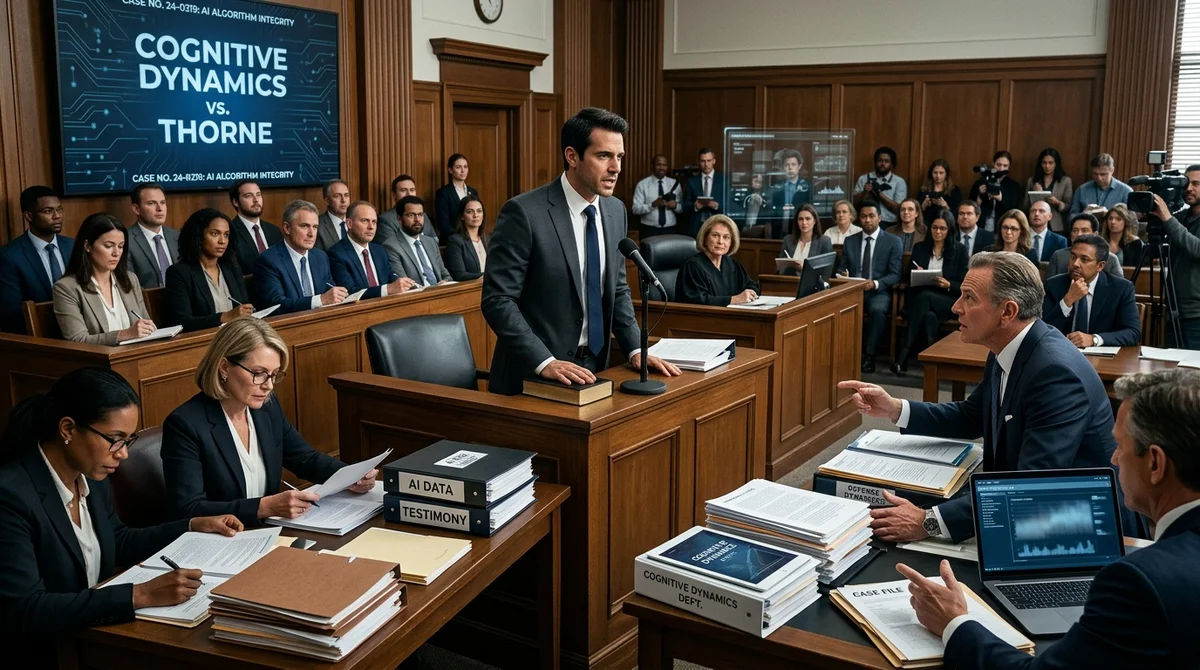
Elon Musk testified in court in the lawsuit against OpenAI, Sam Altman, and Greg Brockman, stating that he filed the suit to halt the company's departure from its original public mission. According to him, an organization created as a structure with charitable goals has transformed into a commercial project, and this shift sets a dangerous precedent for the entire artificial intelligence market.
The Essence of the Lawsuit
At the hearing, Musk directly stated that he considers OpenAI's transition from a model centered on public good to a profit-driven business wrong. The suit is directed not only against the company itself but also against two of its co-founders — Sam Altman and Greg Brockman. At the heart of the dispute is the question of whether an organization can fundamentally change its logic after gaining trust, talent, and influence through the promise to work in the interest of society rather than shareholders. This makes the case more significant than an ordinary corporate conflict.
OpenAI has long held a unique place in the AI ecosystem: its decisions influence the market, safety standards, and how other labs explain their own missions. Therefore, the dispute concerns not just who is right within one company, but how seriously the industry should treat statements about "benefit to humanity" if the structure and incentives then radically change.
Why the Dispute Is Broader
Musk's complaint centers on a problem that has long loomed over generative AI: developing powerful models requires enormous amounts of money, computational resources, and partnerships, yet many companies publicly continue to speak in the language of open science, safety, and public responsibility. When a gap emerges between these two modes, conflict is almost inevitable. In such a case, the court examines not just formal documents, but the meaning of promises on which early reputation and public trust were built.
- the legal status of the company and its obligations to a public mission
- control over key developments and who receives economic benefit
- boundaries between a charitable shell and commercial monetization of technology
- precedent for other AI startups that begin with idealistic rhetoric
This is precisely why the case is being watched closely far beyond the circle of former co-founders. If such a transformation is deemed permissible without serious consequences, the market receives a simple signal: a public mission can be a convenient starting framework, and then give way to ordinary corporate logic. If, however, the court deems such promises meaningful, investors, regulators, and partners will need to scrutinize AI companies' charters, agreements, and public statements more rigorously at an early stage.
What Is at Stake
For OpenAI and its leadership, the dispute carries not only legal but also reputational risks. When a conflict enters the public sphere and one of the most prominent participants in the company's early history testifies under oath about a wrong turn, the question is no longer simply about personal grievance or a struggle for control. It touches on the legitimacy of the entire model in which a public goal is first declared, and then an increasingly profitable business machine is built around it.
"Plunder" of a charitable organization.
The harsh language in the lawsuit's headline shows how Musk is attempting to frame this conflict: not as a dispute over shares or ambitions, but as a principled case of mission substitution. Even if the court does not fully accept this interpretation, the very fact of such testimony increases pressure on major AI market players. They will have to more clearly explain whom they answer to, where the boundary lies between public promise and commercial goal, and who makes final decisions when these interests diverge.
What This Means
This trial could become one of the first major tests of how binding public promises by AI companies about working "for humanity's benefit" are considered. For the market, the conclusion is simple: mission no longer looks like a neutral slogan — it increasingly becomes a subject of court, politics, and questions about who actually receives the technology that was created.
Want to stop reading about AI and start using it?
AI News is a curated feed of AI/tech news. Hamidun Academy teaches you to use AI systematically in your work.