Super Micro Co-Founder Pleaded Not Guilty in Nvidia Server Shipments to China Case
Super Micro Co-Founder Yi-Hsiang "Wally" Lau pleaded not guilty in the case of alleged illegal diversion of Nvidia-based servers to China. The hearing took…
AI-processed from Bloomberg Tech; edited by Hamidun News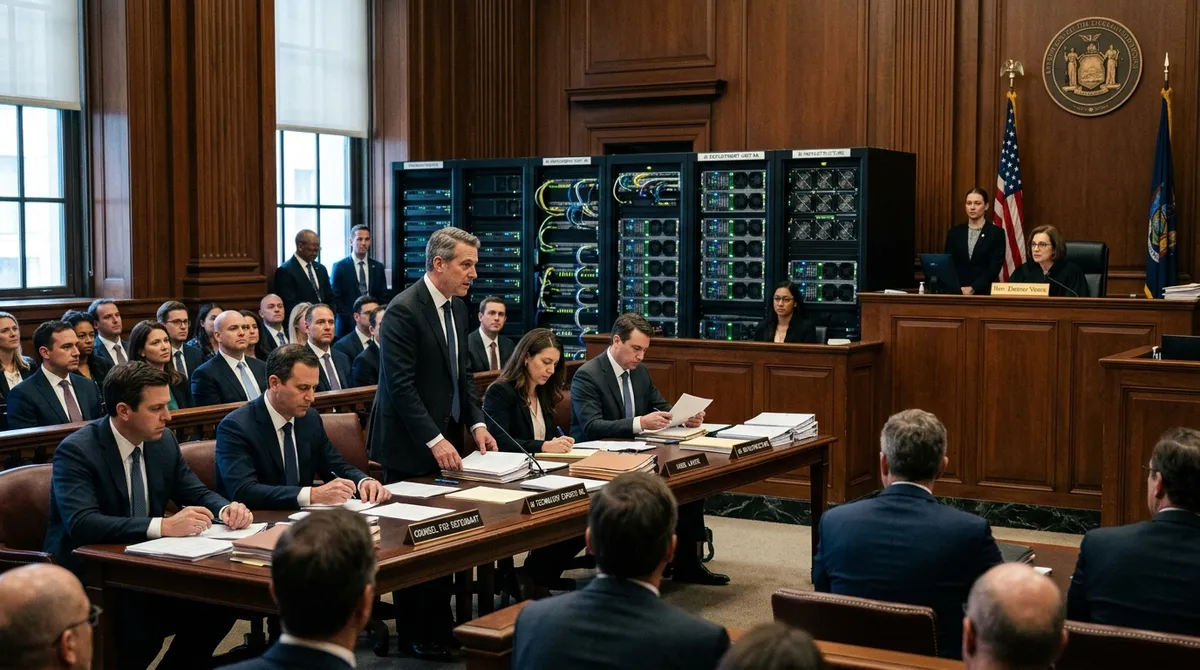
Super Micro co-founder Heng-Yi "Wally" Liao pleaded not guilty in Manhattan court to charges of allegedly illegally redirecting Nvidia-based servers worth billions of dollars to China. For the market, this is no ordinary corporate dispute, but a criminal story surrounding one of the most sensitive segments of the AI supply chain: the machines on which modern models are built and launched. The hearing took place in New York on Wednesday, April 1, 2026.
It was there that Liao formally rejected the charges brought against him. According to the investigation, he helped illegally redirect Super Micro servers equipped with Nvidia technology to China. The case materials reference shipments worth billions of dollars, and the very wording of the charge immediately makes the story significant far beyond a single company.
Here, it's important not just the amount. Much more important is the subject matter itself: high-performance servers with Nvidia accelerators are today considered the basic infrastructure for training, deploying, and scaling artificial intelligence systems. Any questions about their supply route automatically become questions about control over critical computing resources.
Super Micro has long held an important place in the server ecosystem. The company is known as a supplier of hardware platforms for data centers, corporate computing, and AI workloads, while Nvidia remains the leading supplier of accelerators for the artificial intelligence market. Therefore, the combination of these two names in a criminal case immediately raises its significance.
If the prosecution proves that the shipments indeed bypassed established rules, this will become not just a problem for a specific defendant, but a signal for the entire industry. Manufacturers, integrators, distributors, and corporate buyers will have to look much more strictly at how deals are structured, who the end recipient of the equipment is, and which internal procedures actually work versus which exist only on paper. For buyers of AI equipment and data center operators, this is also a reminder that the key risk now lies not only in the availability of accelerators and shipping deadlines.
Of equal importance are documents, the chain of intermediaries, transparency of goods origin, and the supplier's ability to prove the legality of the entire transaction from the first invoice to the final installation in the rack.
The more expensive and powerful the computing system, the higher the likelihood that it will be treated as an object of heightened control. A separate risk in such stories relates to the fact that the boundary between ordinary commercial logistics and violations of requirements for sensitive technologies is often invisible to an outside observer, but for the court it is fundamental. This is why the trial against the co-founder of a major server manufacturer will be considered not just as a personal case, but as a test of the reliability of control mechanisms in the AI hardware industry.
Even the mere fact of the charges is capable of strengthening pressure on compliance teams, lawyers, and managers responsible for international sales. For investors and partners, this is also an alarming indicator: such trials almost always mean additional checks, reputational costs, and a more cautious approach to cross-border transactions, especially when high-powered computing systems are involved.
For now, the main thing here is simple: no guilty plea has occurred, which means the legal battle is only beginning. The court still needs to assess the evidence, arguments from the defense, and how justified the version about illegal redirection of servers to China actually was. But it is already clear that the case extends beyond the biography of one manager.
It demonstrates how politically, economically, and technologically charged the AI infrastructure market has become. Where previously the discussion focused mainly on delivery speed and hardware performance, now component origin, goods route, and rule compliance come to the forefront. For the entire industry, this is a reminder: the era of neutral treatment toward powerful computing systems has ended, and any lapses in control over their movement can quickly turn into a criminal case with international resonance.
Want to stop reading about AI and start using it?
AI News is a curated feed of AI/tech news. Hamidun Academy teaches you to use AI systematically in your work.