Cato Institute: US Needs to Accelerate AI Infrastructure and Energy Investments
The US cannot simply talk about AI leadership—it requires real infrastructure. Cato Institute researcher Kevin Frazier argues that energy capacity and data…
AI-processed from Bloomberg Tech; edited by Hamidun News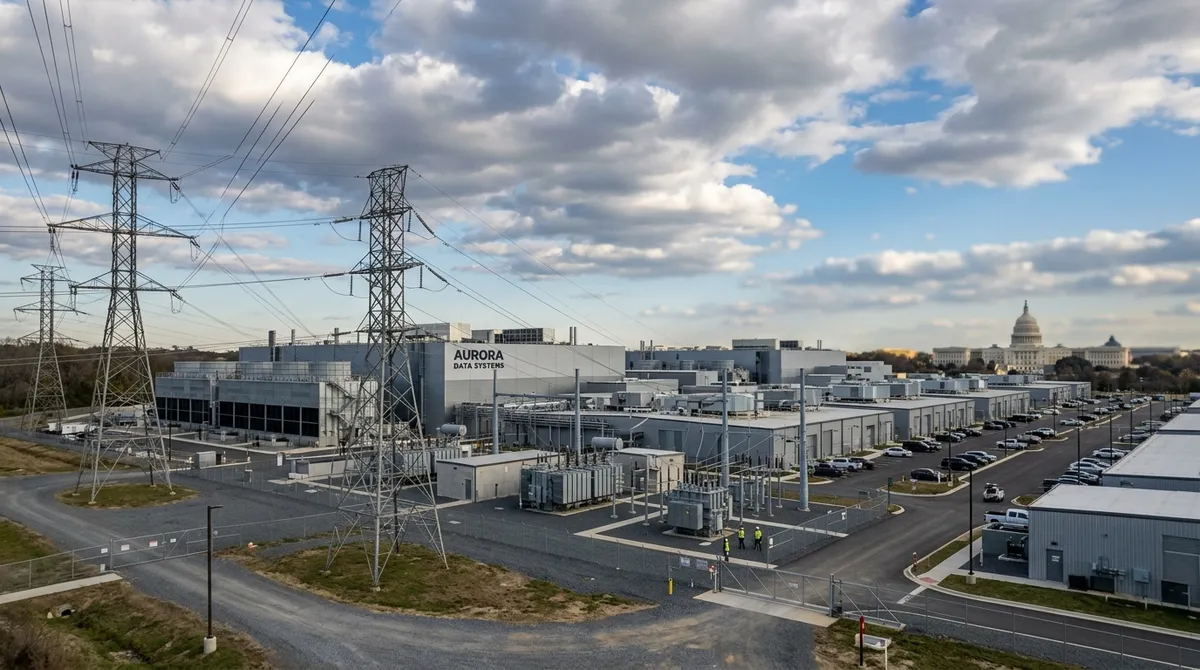
The US risks running up against not a shortage of AI ideas, but a shortage of electricity, facilities, and coherent infrastructure policy. If the country truly wants to maintain leadership in artificial intelligence, it needs not only to discuss model regulation but also to accelerate investments in energy, networks, and data centers.
It is precisely this gap between political ambitions and physical infrastructure that Kevin Fraser, a visiting scholar at the Cato Institute, draws attention to. According to him, Washington is now trying to understand what a national framework for AI should look like and what tools can support the stated goal of technological leadership.
This is an important shift: the conversation about the AI market is gradually moving beyond discussions of model risks, copyright, and safety. A more grounded question comes to the fore—is the country capable of quickly deploying the computing power needed to train and maintain modern AI systems.
A national framework in this context is not only rules for developers, but also a clear signal to investors, data center operators, and energy companies. The key bottleneck here becomes infrastructure. Large data centers require not only chips and servers, but also enormous amounts of electricity, grid connection, land, cooling, and building permits.
A single modern AI campus can consume hundreds of megawatts, and in some cases, power needs approach the level of a small city. Meanwhile, new generating capacity, transmission lines, and substations take significantly longer to build than it takes to launch new models and services.
As a result, the technology cycle accelerates, but the energy and construction cycles do not. Precisely because of this, even with available capital and demand, launching new capacity can be delayed for years.
For companies, this means rising costs, delayed timelines, and more cautious investment decisions. For Washington, it transforms AI from a purely digital issue into a matter of industrial policy.
The national framework in question should probably cover not only AI usage rules but also conditions for scaling it: access to energy, predictable regulatory requirements, project coordination, and clear incentives for private investment.
The balance between federal and local approaches is also important, since many real barriers arise at the level of states, utilities, and municipalities.
If the government wants American companies to build infrastructure domestically, they need a planning horizon. Businesses can invest billions in computing clusters, but they won't do so at the previous pace if grid connection, permitting procedures, and local constraints become unpredictable.
Fraser's argument is significant also because it shifts the focus in discussions about US leadership. An AI leader is not only someone with stronger models, but also someone who can quickly build the entire supply chain—from energy and data centers to network infrastructure and access to computing power.
In this logic, not only AI developers win, but also energy companies, industrial real estate developers, equipment manufacturers, and regions capable of moving through approvals more quickly. The losers are jurisdictions where AI demand already exists but the physical infrastructure has not kept pace.
This also changes the composition of AI boom beneficiaries: part of the added value will go not only to software but also to heavy infrastructure.
The conclusion is quite practical: the next phase of the AI race will be determined not only by the quality of algorithms but also by the speed of construction. If the US wants discussions about technological leadership to be more than a declaration, it will need to synchronize its AI strategy with energy, networks, and capital projects.
Otherwise, a capacity deficit will become a constraint that no model alone can overcome. And that is precisely why the debate about AI increasingly becomes a debate about who can faster turn computational demand into real megawatts, buildings, and connected server capacity.
Want to stop reading about AI and start using it?
AI News is a curated feed of AI/tech news. Hamidun Academy teaches you to use AI systematically in your work.