OpenAI Buys Tech Show TBPN to Strengthen Influence Over AI Discourse
OpenAI acquires tech show TBPN—a daily three-hour program for Silicon Valley audiences. The company says the deal enables more direct, open discussion with…
AI-processed from Guardian; edited by Hamidun News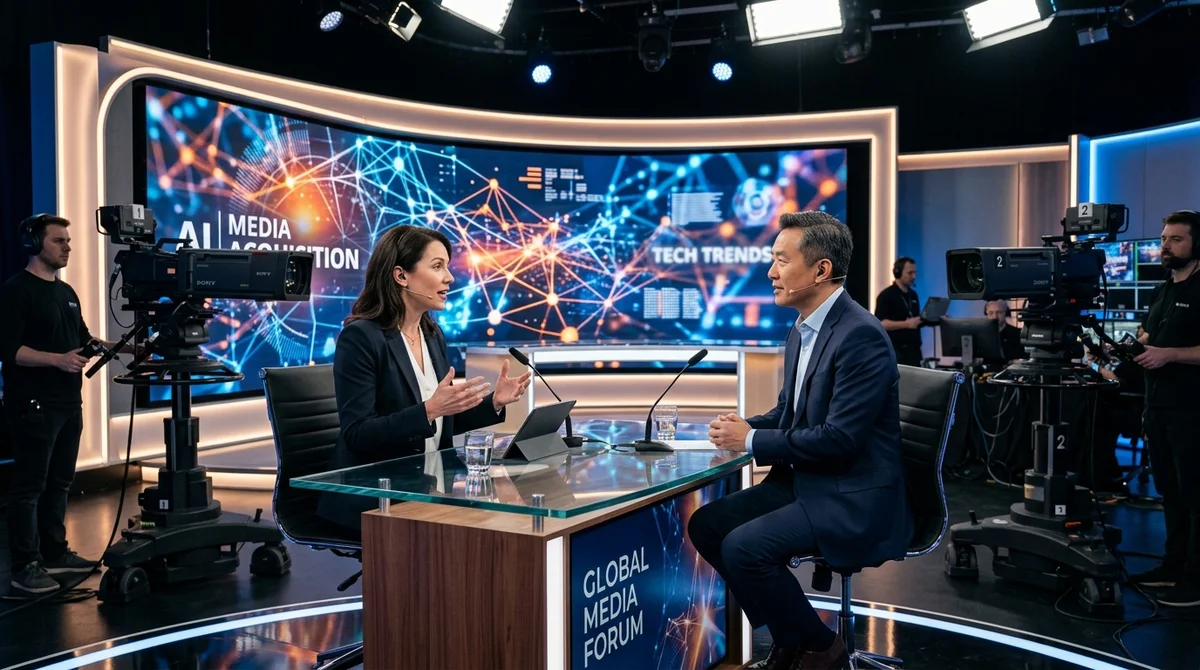
OpenAI has decided not to limit itself to model and service development and is entering another sensitive zone—media. The company is acquiring TBPN, a daily tech show closely followed in Silicon Valley, and in doing so, gains not just a platform with an audience, but a channel through which it can regularly influence the tone and framing of discussions about artificial intelligence. For the market, this is an important signal: major AI players are now competing not only for technologies, users, and infrastructure, but also for the right to explain to society what is actually happening and how it should be understood.
TBPN is not a niche podcast that airs occasionally, but a full-fledged daily show. Its hosts, John Cogan and Jordy Hayes, conduct three-hour live broadcasts on weekdays from Los Angeles. The broadcast features startup founders, venture capitalists, and prominent figures from the technology industry.
The show airs simultaneously on several major platforms—X, YouTube, and Spotify—so it functions as a media product, as an entry point for professional discussion, and as a tool for shaping the agenda within the startup ecosystem. TBPN has already developed its own style: for example, the program is known for a gong ritual, struck when guests announce a new funding round. The financial terms of the deal are not being disclosed by either side.
However, OpenAI has articulated the strategic meaning of the acquisition quite clearly. Fijy Simo, head of strategy at the company, explained to employees that OpenAI wants to communicate more naturally and directly with a broad audience at a moment when AI is rapidly transforming the market and public agenda. The logic is clear: the stronger the influence of technologies on work, education, creativity, and regulation, the higher the stakes in the public conversation about the risks, benefits, and rules for using such systems.
For OpenAI, this is an attempt not to cede this discussion entirely to journalists, competitors, politicians, and random viral narratives. At the same time, OpenAI specifically emphasizes that TBPN will retain its current programming, will select its own guests, and will maintain its editorial decisions. The value of such a format rests on audience trust and the sense of genuine conversation, so the promise of editorial autonomy looks not like a cosmetic detail for the deal, but as a necessary condition.
Otherwise, the project would quickly lose weight as a platform for industry discussion. But even with such guarantees, the question of independence does not disappear: when a media asset is owned by one of the most influential companies in the AI market, viewers will inevitably scrutinize the balance of topics, the selection of speakers, and the boundaries of permissible criticism more closely. For the hosts themselves, this deal also appears to be a logical continuation of long-established connections with the OpenAI ecosystem.
John Cogan called the acquisition a moment that closed the circle: according to him, OpenAI CEO Sam Altman financed his first company back in 2013. Later, Cogan intersected with the Y Combinator ecosystem, which Altman once led, and then worked at Founders Fund. There, as he recounted, one of his first notable deals was a funding round for OpenAI after ChatGPT's rise in late 2022.
Against the backdrop of these connections, the deal appears not as a random turn of events, but as the result of a long history of relationships within the same technological circle. Cogan even had to clarify on air that the news was not an April Fools' joke. For OpenAI, the acquisition of TBPN is not simply a brand expansion, but a step toward vertical integration of influence: from developing models and interfaces, the company is moving toward its own media circuit.
If previously technological companies mainly tried to obtain favorable press coverage or launch corporate blogs, now the question is about owning an already-established external platform with a loyal and professional audience. This can help OpenAI communicate its positions more quickly, test public messaging, and maintain the attention of those who invest, build startups, and make product decisions around AI. The main takeaway is that the competition for the future of AI is increasingly moving beyond laboratories and data centers.
One must win not only in model quality but also in the ability to set the language of discussion. OpenAI's acquisition of TBPN shows that the company considers media presence part of its strategic infrastructure. If the company truly maintains the editorial autonomy of the show, this could become a rare experiment at the intersection of technology and media.
If not, the market will see yet another example of how a major player attempts to control not only the product, but the very conversation about it.
Want to stop reading about AI and start using it?
AI News is a curated feed of AI/tech news. Hamidun Academy teaches you to use AI systematically in your work.