SpaceX Prepares Record IPO as OpenAI and Anthropic Approach Stock Market Debut
SpaceX filed a confidential IPO application and could go public as early as June with a valuation exceeding $1.75 trillion. If the deal closes, it will be…
AI-processed from Bloomberg Tech; edited by Hamidun News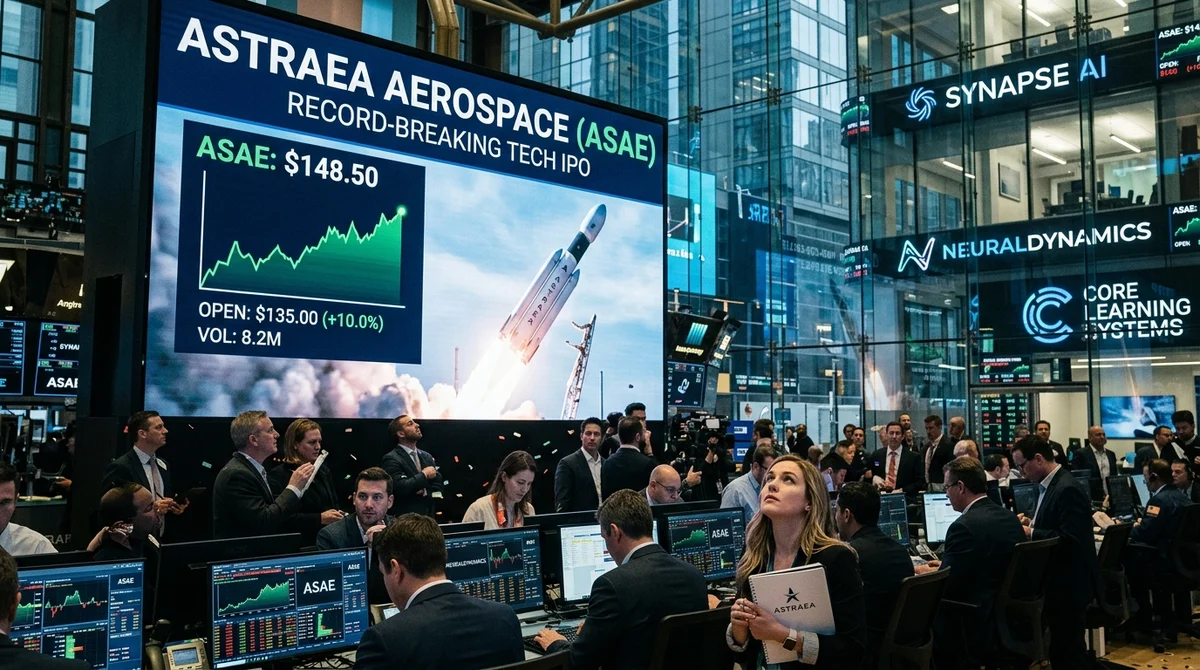
SpaceX could become not just the largest IPO in history, but a signal of a new phase in the AI market: after many years when the most expensive tech companies preferred to remain private, investors can finally get direct access to businesses that burn tens of billions of dollars on computing, satellites, and infrastructure. If the offering goes as planned, 2026 will quickly transform from a year of anticipation into a year of mega-offerings — and following SpaceX, OpenAI and Anthropic could head to the stock exchange. According to Bloomberg, on April 1, 2026, SpaceX confidentially filed IPO documents in the US.
The company could go public as early as June and is targeting a valuation above $1.75 trillion. At such a scale, it's not just about a major offering, but a potential record: the deal size could reach $75 billion, notably higher than the historical benchmark of Saudi Aramco, which raised $29 billion in 2019.
For Wall Street, this is a rare chance to list a company that could become one of the world's most valuable public companies on its first day of trading. Interest in SpaceX is driven not only by the brand and Elon Musk's profile. Inside the company, there are already two revenue engines that investors can easily understand: the launch business and Starlink satellite internet.
According to Bloomberg Intelligence's estimates, these are what bring in the bulk of revenue, which in 2026 could approach $20 billion. The AI direction is still notably smaller: after the xAI deal, SpaceX has become even more associated with artificial intelligence, but the contribution of this segment to revenue, by the same estimates, is still measured at less than $1 billion. That is, investors are being offered not a pure bet on chatbots, but a hybrid of space infrastructure and AI ambitions.
This is precisely why SpaceX's possible debut is important for the entire sector. The market has long been waiting for the largest private AI companies to stop living on venture rounds and start explaining their economics to public shareholders. According to Fortune citing Crunchbase data, already in the first quarter of 2026, venture investments in startups grew to approximately $300 billion, with the lion's share of capital going into AI.
But private money is not infinite: the race for models, data centers, chips, and corporate contracts requires capital volumes that are easier and cheaper to attract through the stock exchange. A successful SpaceX IPO could demonstrate that the market is ready to digest companies with gigantic valuations and complex business structures. OpenAI and Anthropic appear to be carefully watching this signal.
Bloomberg names OpenAI as one of the companies maintaining maximum flexibility in case of going public. Anthropic's window looks even more concrete: at the end of March, Bloomberg reported that Claude's developer is considering an IPO as early as October 2026. Moreover, both companies are approaching the public market with different stories.
OpenAI is betting on scale, mass distribution of its products, and enormous computing power. Anthropic sells itself as a more disciplined player with a strong position in the corporate segment and a focus on safety. For investors, this will be not just a choice between two models, but a test of which AI economics looks more convincing today.
There is also a downside. The larger these offerings, the more they risk draining liquidity from the rest of the IPO market. Fortune writes that the global offering market in 2025 already began to revive: 1,293 IPOs took place, attracting approximately $171.
8 billion, which is 39% higher in volume than a year earlier. But SpaceX, OpenAI, and Anthropic are so massive that they are capable of either breathing new energy into the market or, conversely, commanding almost all the attention and money of institutional investors. The public market loves growth, but even more it loves transparency, predictability, and clear margins — and AI companies still have questions about this.
The main conclusion is simple: the conversation about the future of AI ceases to be purely venture-driven. If SpaceX really goes public in summer 2026 and opens the door for OpenAI and Anthropic, investors for the first time will be able to massively buy not just a dream of the next technological platform, but a very expensive, capital-intensive, and risky business. For the industry, this is a moment of maturation.
For the market, a stress test of how ready it is to pay for AI not in private deals, but in daily quotations.
Want to stop reading about AI and start using it?
AI News is a curated feed of AI/tech news. Hamidun Academy teaches you to use AI systematically in your work.