Anthropic and Claude Cowork: 10 work tasks AI removes from humans
Claude Cowork from Anthropic is presented not as a human replacement, but as a second brain for routine work: it collects context, prepares briefings, drafts…
AI-processed from Habr AI; edited by Hamidun News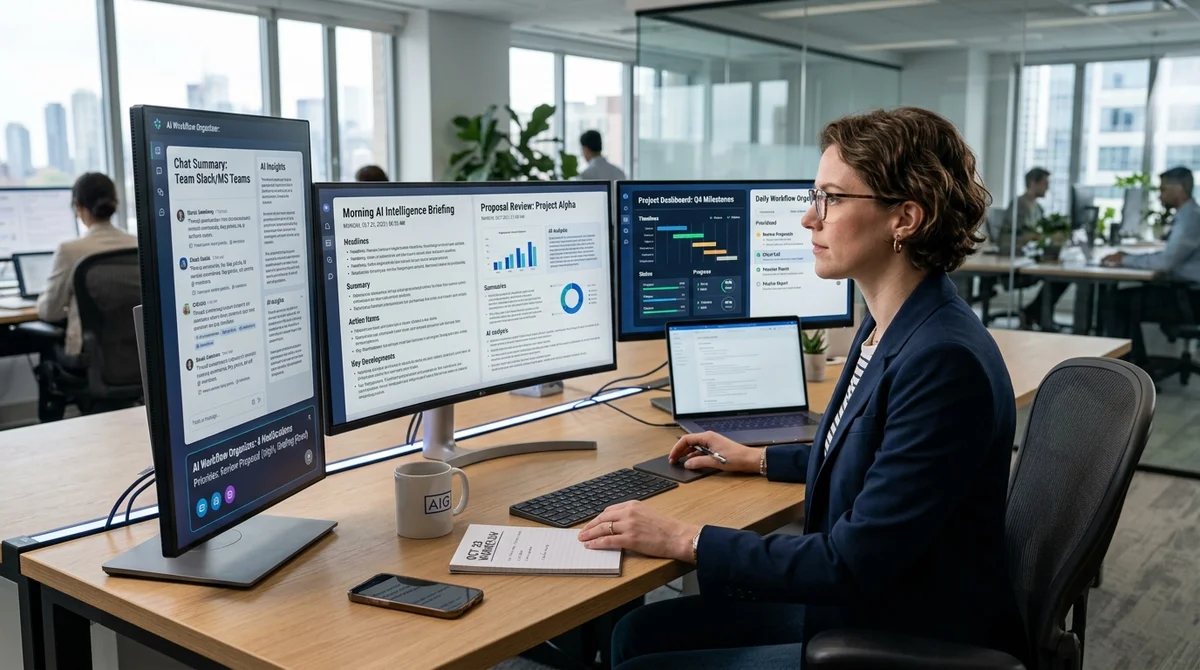
Claude Cowork from Anthropic in this case looks not like another chat with polished answers, but like a working layer on top of everyday routine. The core idea is simple: AI doesn't make decisions instead of a person, but removes friction before them. It collects context from files, correspondence, and services, prepares drafts, extracts important details from old discussions, and transforms the chaos of tabs, chats, and documents into a clear working surface. The gain here is not only in the speed of text generation, but in the fact that dozens of small actions disappear from the day—actions that seem trivial individually but collectively consume hours and attention.
At the heart of the scenario is Claude Cowork, an agentic desktop research preview from Anthropic, introduced in January 2026. Its difference from a typical AI chat is that memory is tied not to a single session, but to a project. Inside Projects you can keep instructions, a knowledge base, history, documents, and scheduled tasks, then connect external services through MCP connectors. As a result, a sales project remembers clients, cases, and pricing policy; a content project knows tone and formats; and an HR workspace remains isolated. This is an important shift: instead of templated automation with fragile rules, a contextual copilot emerges that continues work from where it left off yesterday.
The practical part is built around ten tasks that were previously done manually. Among them are morning briefing, commercial proposals, draft responses to clients, weekly project statuses, meeting preparation, ticket creation from voice messages, invoice generation, GitHub Issues setup, and initial analysis of incoming requests.
In strong scenarios, Claude does three things at once: pulls data from multiple systems, compresses it into a short and readable format, and supplements the result with past context. A morning daily review that used to take 30–40 minutes becomes a three-minute read. A commercial proposal for a new client can be obtained in 30 seconds, then 15–20 minutes spent on review, edits, and argument verification instead of two or three hours of manual assembly. The same applies to client correspondence: AI surfaces agreements from old messages, finds task status, and offers a draft response that only needs to be brought to final tone.
Limitations are equally important to note. The author directly states that this model doesn't work in a plug-and-play format. One scenario takes ten minutes, another takes an evening, and commercial proposals required almost a week to load good examples, explain calculation logic, and achieve personal style. Scheduled tasks in the desktop version depend on the computer being on; custom integrations via API and MCP remain a barrier for non-technical users; and the product itself is still in preview.
In parallel, a neighboring class of tools is forming—messenger assistants like OpenClaw and Claude Code Channels, where the same memory and action pattern is transferred to Telegram and provides access to work context from a phone. What does this mean in practice: the AI market is shifting from one-off chats to project partners that remember history, see tools, and prepare material for decision-making. But the boundary of responsibility doesn't disappear anywhere.
AI can gather, compare, and suggest; however, pricing in proposals, letter tone, task priority, and client decisions still remain with the human. If you maintain this boundary, the effect is noticeable: by rough estimates from the article, such a setup returns 15–20 hours per week and, equally importantly, eliminates the fatigue of constant switching between tabs, chats, and repetitive routine.
Want to stop reading about AI and start using it?
AI News is a curated feed of AI/tech news. Hamidun Academy teaches you to use AI systematically in your work.