How Artificial Intelligence Helps Clothing Brands Design Fashion's Future
Artificial intelligence is becoming a new working layer in the fashion industry: it accelerates design, helps forecast demand, reduces waste, and makes…
AI-processed from MarkTechPost; edited by Hamidun News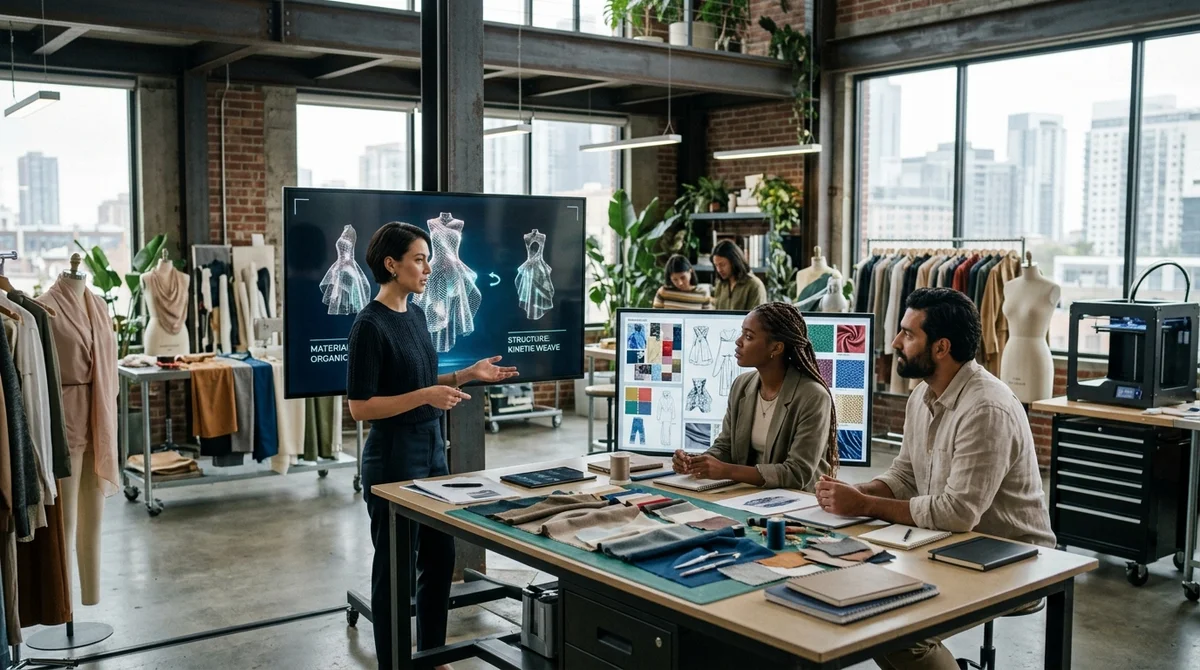
Artificial intelligence is rapidly transforming from auxiliary software into a full-fledged layer of the fashion industry: it participates in sketch creation, predicts demand, optimizes factories, and even changes how people try on and buy clothes. But the deeper algorithms penetrate into fashion industry processes, the sharper become the questions about authorship, transparency, and where automation ends and human decision-making begins. Not long ago, a collection launch looked traditional: moodboards, fabric selection, hand-drawn sketches, lengthy approvals, and many iterations.
Now at this stage, generative tools are increasingly involved. The article notes that, according to the McKinsey State of Fashion 2026 report, more than 45% of global fashion brands have already implemented AI services for design to reduce development timelines. Systems like Adobe Firefly, Midjourney, and specialized platforms for the fashion industry help gather moodboards, generate silhouette variants, create technical packs, and even quick 3D prototypes from text descriptions.
For designers, this is not a replacement for taste, but a way to accelerate rough work and quickly explore more ideas. The effect of AI is most visible in trend forecasting. If previously guides were shows, buyer reports, and seasonal reviews from major agencies like WGSN, now the cycle has become much shorter.
Trends are born not only on the runway, but also on social media, marketplaces, search queries, and videos. Multimodal models can simultaneously analyze text, images, and videos to find early signals: growing interest in certain colors, materials, styles, or microesthetics. Platforms like Heuritech build dashboards for brands with almost live feedback on demand, allowing them to adjust collections not by manager intuition, but by data on audience behavior.
For the industry this is important not only for speed, but also for ecology. Fashion remains one of the most polluting sectors: the article cites an estimate that it accounts for 2% to 8% of global carbon emissions and about 20% of global wastewater. AI tools here work as a practical mechanism for reducing losses.
Demand forecasting helps release less surplus goods, digital samples reduce fabric waste for physical prototypes, and planning models adjust production volumes to actual demand. On factories, computer vision and deep learning models find defects earlier, predictive maintenance reduces downtime risk, and digital twins allow running production scenarios before launching a line. As a result, quality stability, safety, and supply chain manageability increase.
A separate front of change is consumer experience. Online stores increasingly rely less on crude segmentation by gender, age, or price and increasingly adapt to the intent of a specific person. If a customer likes muted tones, the system will show them first; if they're looking for an outfit for an event, recommendations will be built around the task, not just around similar products.
Add to this virtual try-ons: services like DressX Agent let you create an avatar from a selfie, try on items digitally, and choose from hundreds of brands. For online retail this is especially valuable because returns in the fashion segment remain an expensive and chronic problem, and accurate virtual try-ons can significantly reduce them. But along with efficiency comes discomfort.
Virtual influencers, fully digital characters created for advertising and content, are increasingly entering the industry. They don't tire, don't fall into reputation scandals, and can appear in any clothes and any scene on a brand's request. At the same time, the amount of AI-generated images in campaigns is growing, along with questions about consent, digital doubles, displacement of human labor, and audience trust.
A telling episode is the discussion of GUESS's AI advertising in Vogue in 2025, after which the topic of model rights and transparency in the use of their images became even more prominent. The main conclusion of the article is that fashion is not moving toward complete displacement of humans. Rather, a new creative stack is forming, where human vision sets the direction, and AI adds speed, scale, and precision.
The winners will not be brands that simply plugged in a fashionable tool, but those who managed to integrate it into the process transparently and thoughtfully. Against this background, it's unsurprising that the market for fashion industry technology, according to estimates in the material, should exceed $8.2 billion by the end of 2026: for the industry the question is no longer whether AI is needed, but how deeply and responsibly to apply it.
Want to stop reading about AI and start using it?
AI News is a curated feed of AI/tech news. Hamidun Academy teaches you to use AI systematically in your work.