Bank of England and WTO warn: Iran conflict strikes at fragile AI-boom economy
War around Iran could hit AI harder than expected: the industry depends on cheap energy, while its data centers and infrastructure are largely financed through debt. The Bank of England and WTO warn that soaring oil and electricity costs could deepen investor skepticism, especially given the widening gap between sector revenue and massive capital expenditures.
AI-processed from Guardian; edited by Hamidun News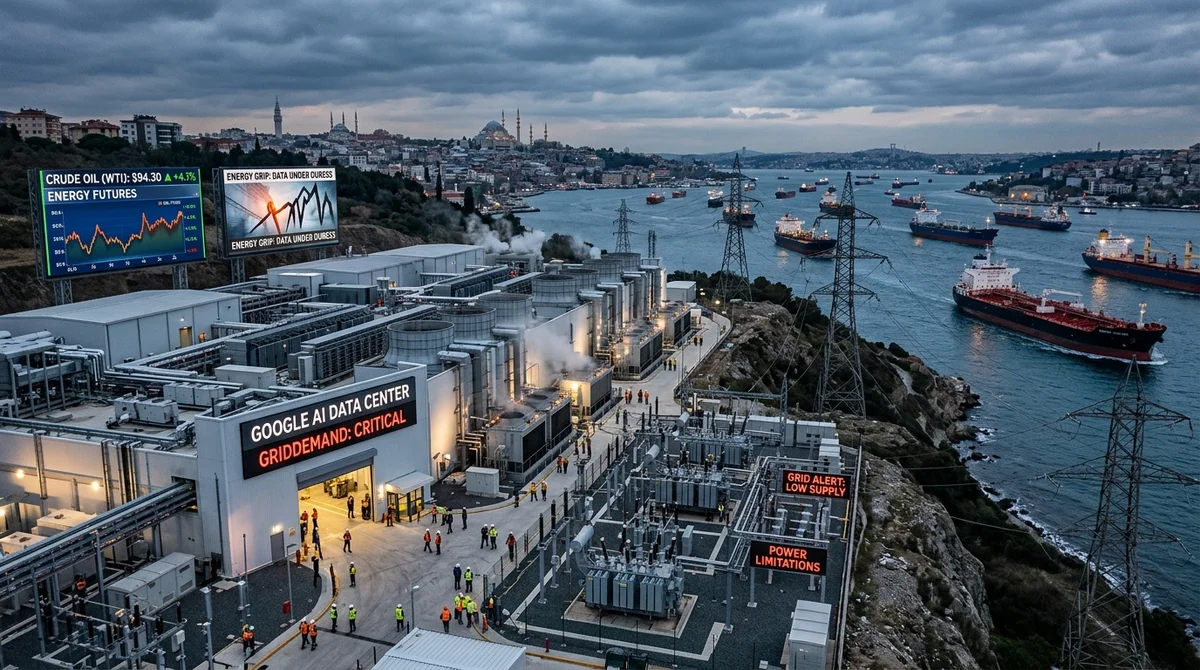
The conflict around Iran could strike not only at gasoline and oil prices, but at the very economy of the artificial intelligence boom itself: the industry critically depends on cheap energy, builds infrastructure on borrowed money, and has yet to prove it can quickly recoup giant investments. The logic here is straightforward. If the conflict drags on and disruptions in the Strait of Hormuz keep pushing up oil prices, not only fuel will become more expensive, but also electricity, logistics, and component manufacturing.
For AI, this is especially sensitive because training models, operating clouds, and running data centers require enormous amounts of energy. Even if the US as an oil exporter weathers such a shock more easily than many other countries, American tech companies still cannot fully isolate themselves from the global rise in costs. And it is precisely in the US that a significant part of the investment frenzy around generative AI is concentrated today.
An additional risk is that the sector's financial model still looks fragile. The Bank of England in its latest review of risks to the financial system noted: even before the escalation around Iran, investors began questioning whether expected returns from very large AI investments would materialize. Against this backdrop, any new costs are capable of intensifying pressure on valuations.
The regulator separately pointed out that war could increase anxiety due to the energy intensity of supply chains for key components and the operation of data centers. In other words, the market was already doubting the pace of AI payback, and more expensive energy makes these doubts even stronger. The same concerns echo at the level of world trade.
The WTO's chief economist Robert Staiger warned that a prolonged period of high energy prices could noticeably slow down AI investments. This matters not only for tech companies, but for the entire US economy: according to the WTO, 70% of American investment growth in the first three quarters of last year came from goods and infrastructure related to artificial intelligence. If this flow begins to slow, the impact will be wider than one industry.
It's no longer just about demand for chips and servers, but about construction, facility leasing, credit availability, and expectations in the stock market. Another problem is the financing structure. Lawyers at Quinn Emanuel in a recent review showed how skewed the basic metrics of the AI sector are: the industry's revenue last year was about 60 billion dollars, while capital expenditures reached approximately 400 billion.
The gap is covered by debt and complex financial schemes. Major players and infrastructure providers like CoreWeave borrow enormous sums to quickly build new data centers. Some obligations are taken off balance sheets into special structures that own facilities, receive future rental streams, and borrow against them.
Then such debts can be combined, broken up, and resold to pension funds and asset managers. Over the past two years, according to the same analysts, about 120 billion dollars in data center debt has already been moved off balance sheets. This structure makes the sector especially vulnerable to external shocks.
If energy becomes more expensive for an extended period, operating costs rise, investors become more cautious about new loans, and consumer demand and interest rates underperform expectations. In the tightly connected AI ecosystem, problems at one node easily spread further — through facility lessees, cloud providers, creditors, and holders of securitized debt. This is why even moderate growth in energy costs could become a trigger for a reassessment of the entire AI boom.
The main takeaway is that the debate around AI now hinges not only on model quality or deployment pace, but on the old economy — oil, electricity, cost of capital, and debt transparency. As long as the industry's revenue significantly lags behind the scale of investments, any prolonged energy shock is capable of turning the story of technological growth into a story of financial vulnerability. For the market, this is a signal: AI remains not only a major bet on the future, but also one of the most energy-sensitive industries here and now.
Executive AI Consulting, Custom Agents & Team Workshops
Work directly with Zhemal Khamidun at hamidun.com — enterprise AI architecture, production RAG & multi-agent systems, and executive training.
The AI world, distilled — once a week
Seven stories that actually mattered, hand-picked. No noise, no reposts, no press releases.
Done! Check your inbox for a confirmation.