Trump Administration Promotes Anthropic in Banks While Pentagon Sues the Company
The Trump administration finds itself in an awkward position: the Pentagon squeezed Anthropic out of defense contracts, while the U.S. Treasury and Federal…
AI-processed from TNW; edited by Hamidun News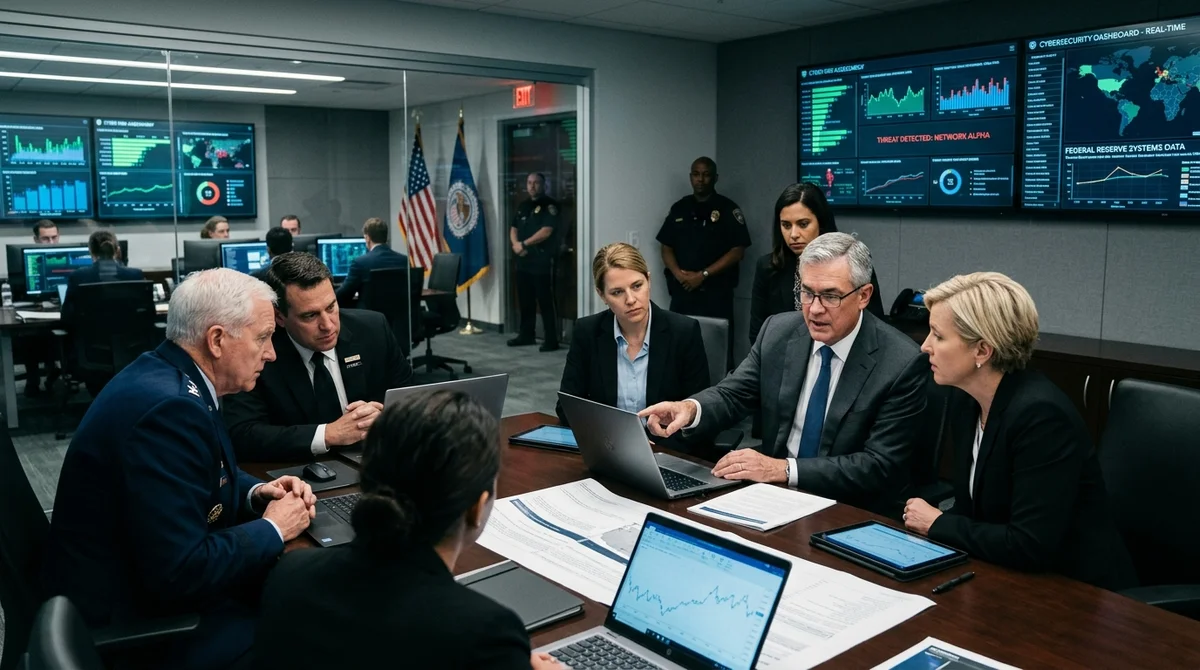
Anthropic found itself at the center of a rare conflict in American tech policy: the Donald Trump administration effectively squeezed the company out of defense contracts, yet almost simultaneously began promoting its most powerful AI tool among the country's largest banks. On April 13, it became known that the U.S.
Treasury and the leadership of the Federal Reserve recommended that JPMorgan Chase, Goldman Sachs, Citigroup, Bank of America, and Morgan Stanley test the Mythos model to search for cyber vulnerabilities. For Washington, this is not just another pilot project: it involves a system that some agencies consider too risky, while others already see as a useful layer of protection for critical financial infrastructure. The paradox stems from the fact that the Pentagon previously recognized Anthropic as a supply chain risk.
This was because the company refused to remove two fundamental limitations from its models: a ban on use in fully autonomous weapons and a ban on mass surveillance of American citizens. After this, Pentagon chief Pete Hegseth demanded a reconsideration of the terms of cooperation, and when Anthropic refused, the company was denied access to Defense Department contracts. The conflict quickly reached the courts: one federal judge temporarily blocked measures against Anthropic, but on April 8, an appeals court refused to halt the restrictions during proceedings.
As a result, the company remains excluded from defense projects but can work with other government agencies, including the economic wing of the administration. This is the gray zone where Mythos entered. According to Anthropic's description, the model was not specifically trained for cybersecurity, but such capabilities emerged as a consequence of the overall improvement in code reasoning quality and autonomous operation.
During tests, Mythos found thousands of zero-day vulnerabilities in major operating systems and browsers. Due to the sensitivity of these capabilities, Anthropic did not release the model into open access and launched a closed Project Glasswing program for approximately 50 organizations. It already includes Amazon Web Services, Apple, Google, Microsoft, Nvidia, Cisco, CrowdStrike, Palo Alto Networks, and JPMorgan Chase.
Additionally, the company promised up to $100 million in credits for use and another $4 million in direct support to open-source organizations related to security. For banks, the logic is clear: if the model truly can find vulnerabilities before internal teams or standard scanners do, it's better to use it in defense before similar tools end up with malicious actors. It is reported that banks are testing Mythos not only for finding holes in infrastructure but also for tasks related to detecting fraud risks and automating compliance processes.
Interest in the model has extended beyond the U.S. British regulators, the Bank of England, and structures responsible for financial system resilience are already discussing what new threats and advantages such a level of automated vulnerability detection entails.
At the same time, there is skepticism around Mythos. Some security experts doubt that the loud claims about thousands of critical discoveries are already sufficiently confirmed by independent verification. The industry also voices the opinion that the format of "too dangerous for public release" simultaneously works both as an element of responsible control and as a strong commercial argument for large corporate clients.
But even if we remove the marketing component, the very reaction of banks and regulators shows: major institutions now perceive such models not as laboratory experiments but as tools of strategic cyber defense, which could change the rules of infrastructure protection. The main takeaway for the market is that the dispute over Anthropic has long gone beyond a single Pentagon contractor. The Mythos story shows how difficult it is for the government to simultaneously punish a developer for refusing to weaken protective barriers and depend on its technologies in critical infrastructure.
If the largest U.S. banks truly embed Mythos in their defense processes, the administration's position will look even more contradictory: for the military sector, Anthropic is supposedly too risky, yet for the financial system, it is almost essential.
And this is no longer a private conflict over a contract but a signal about how quickly advanced AI models are becoming an element of national security and financial stability.
Want to stop reading about AI and start using it?
AI News is a curated feed of AI/tech news. Hamidun Academy teaches you to use AI systematically in your work.