US Treasury Department Seeks Access to Anthropic's Mythos Model for Vulnerability Testing
The US Treasury Department wants access to Anthropic's Mythos model to begin searching for vulnerabilities. This is not about implementation for efficiency…
AI-processed from Bloomberg Tech; edited by Hamidun News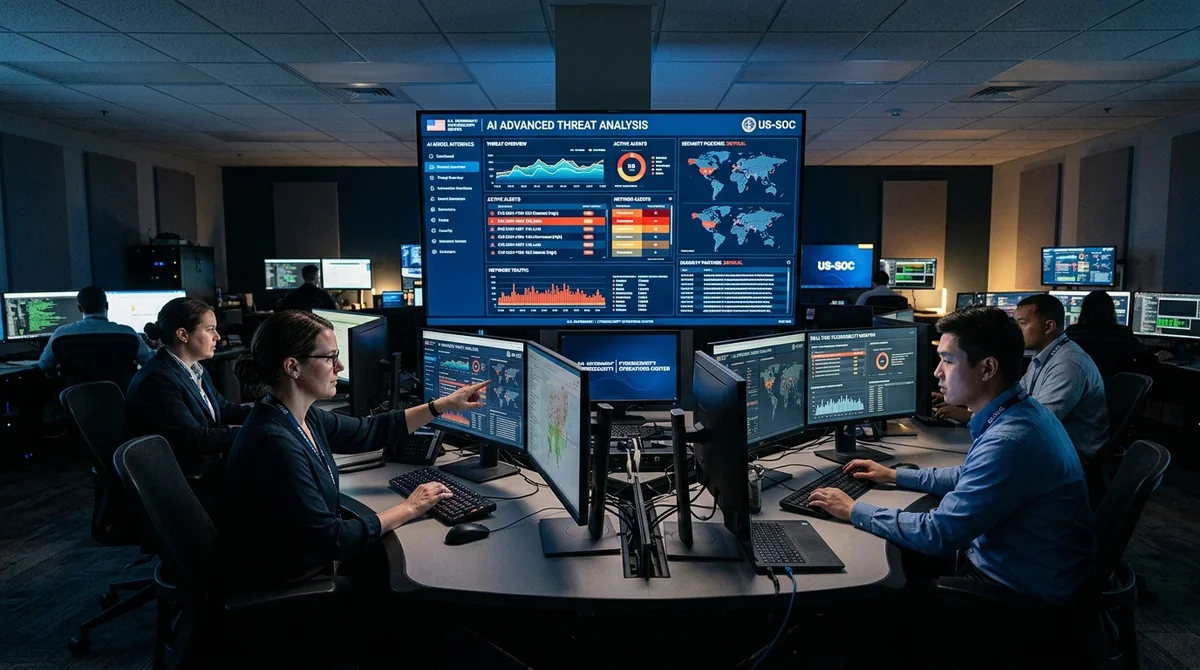
The U.S. Department of Treasury is seeking access to Anthropic's Mythos model to begin searching for vulnerabilities in the system before its wider deployment in sensitive scenarios.
The fact of such a request itself demonstrates that American government agencies are transitioning from general discussions about AI to practical testing of specific models for reliability, controllability, and resistance to misuse. According to available information, the Treasury Department's technology team is attempting to gain access to Mythos. The goal appears to be not the implementation of the model for productivity, but specifically a security audit: specialists want to understand where the system may fail, how it behaves under atypical queries, and whether it can be forced to exceed its own constraints.
Official details about the testing format have not yet been disclosed, nor has there been confirmation that Anthropic has already granted access. Technical specifications of Mythos itself are also not being disclosed, so it is premature to judge whether this is an internal, specialized, or product being prepared for wider deployment. For the U.
S. government, such work makes logical sense. The more actively government agencies consider AI for data analysis, document preparation, employee support, and automation of internal processes, the higher the cost of errors.
In the case of federal systems, problems could be more than just reputational. There could be leaks of sensitive information, circumvention of protective mechanisms, generation of unreliable recommendations, or model behavior that can be deliberately provoked. Therefore, access to the model at an early stage is just as important as public developer promises about security.
If the Treasury team actually begins testing, it will likely search for typical vulnerabilities in modern generative systems. Such testing usually includes attempts to bypass built-in restrictions, obtain dangerous responses, extract hidden instructions, test resistance to prompt injection attacks, and evaluate how the model handles confidential data and long-context scenarios. This does not mean that such problems have already been discovered in Mythos.
Rather, it is a standard set of questions that today apply to any advanced model, especially if it could potentially be used by high-accountability organizations. The choice of company deserves special attention. Anthropic has long built a reputation as a developer that prioritizes safety and controlled model behavior.
If even such systems elicit government demand for direct access for independent stress testing, it underscores a new standard in relations between authorities and AI companies: general assurances are insufficient; real testing by the customer or regulator is required. For developers themselves, this means additional pressure—they must prepare not only for market competition but also for increasingly rigorous technical audits. The story matters also because it shifts the very logic of government interest in AI.
Until recently, officials mostly discussed rules, risks, and framework approaches. Now the focus is shifting toward specific models, specific scenarios, and specific vulnerabilities. This is a more practical stage: instead of abstract regulation, there are attempts to understand how a system behaves under real stress conditions.
For the market, this signals that trust in cutting-edge models will increasingly be built not on presentations but on results of independent testing. The main conclusion is straightforward: government is beginning to treat advanced AI systems the same way as other critically important technology—first access, then testing, and only then possible deployment. For Anthropic, this could become a test of the maturity of its approach to safety, and for the entire market—a sign that the era of informal promises is ending and the era of mandatory verification is beginning.
Want to stop reading about AI and start using it?
AI News is a curated feed of AI/tech news. Hamidun Academy teaches you to use AI systematically in your work.