Anthropic Presented Mythos as Too Dangerous an AI Model — and the Problem Extends Beyond Banks
Anthropic did not release Mythos to the public and effectively stress-tested the entire cybersecurity industry. Following the April 7, 2026 announcement, the…
AI-processed from Bloomberg Tech; edited by Hamidun News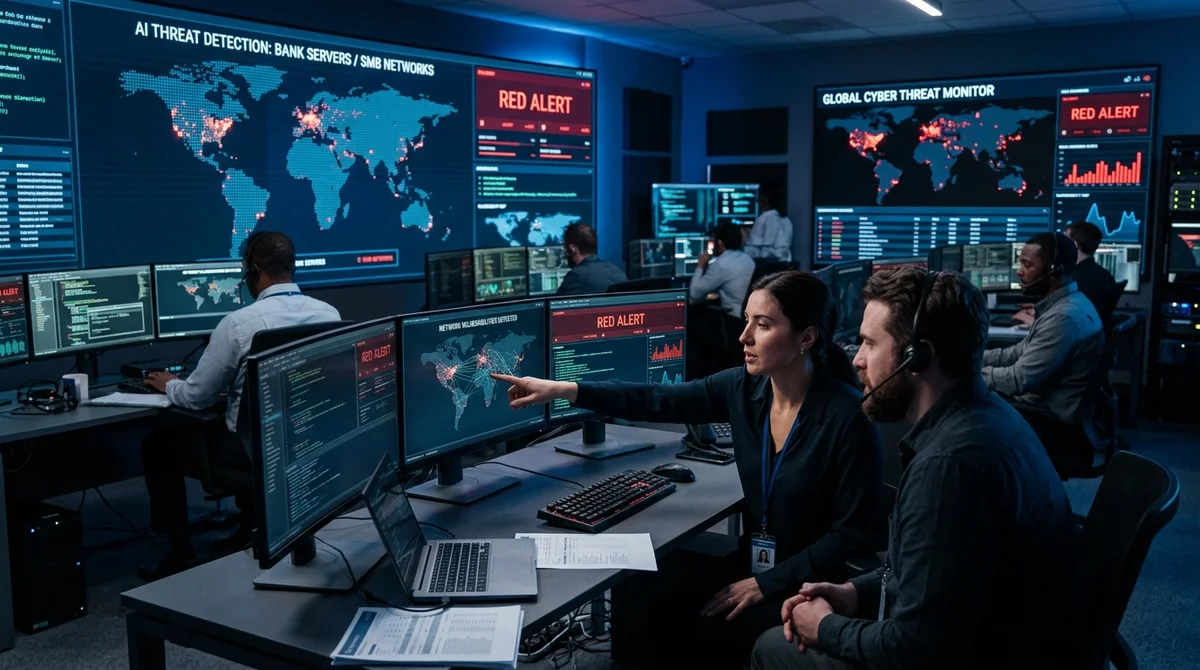
The story with Mythos is important not because Anthropic frightened bankers, but because it showed a new reality for all business: the time between discovering a software vulnerability and a real attack has almost disappeared. If companies used to live by the logic of "first we announce the vulnerability, then clients calmly install the patch," then with the emergence of more autonomous AI models, this scheme is beginning to break down. And the most vulnerable spot here is not Wall Street, but thousands of less protected organizations that have neither the staff of expensive specialists nor the budget for instant reconstruction of defenses.
When Anthropic on April 7, 2026 announced Mythos and simultaneously made clear that the model was too dangerous for regular release, the first reaction was predictable: this is primarily a problem for banks and critical infrastructure. A few days later, U.S.
Treasury Secretary Scott Bessent gathered the heads of the largest banks to ensure they took the threat seriously. For Anthropic, this became perfect advertising: the company got maximum attention, and at the same time raised an uncomfortable question about who exactly gets early access to such powerful technology. According to Bloomberg, the U.
S. Treasury Department itself is now also seeking access to Mythos. Meanwhile, access to the model already exists with the British AI Security Institute, which has effectively become one of the main independent arbiters on the topic of AI safety.
The institute's preliminary assessment boils down to an important thought: there is indeed a lot of noise around Mythos, but it doesn't come out of nowhere. The model is noticeably better suited than other popular AI systems for complex cyberattacks compared to regular chatbots like ChatGPT or Gemini. But it looks particularly dangerous not against the most protected targets, but against simplified and poorly defended systems.
This shifts the focus of the entire discussion. Large banks, as a rule, operate on one of the most protected IT perimeters in the world. The situation is much worse for small and medium-sized businesses, regional service companies, medical organizations, and any business where security was considered a secondary task for years.
For a long time, the industry lived by the model of responsible disclosure—that is, responsible disclosure of vulnerabilities. A vendor finds a problem, publishes a notice and offers a fix, and clients test the patch, agree on changes, and only then deploy it to production. At Microsoft, this has become routine like monthly Patch Tuesday.
In banks and large corporations, such a process can take weeks or months: IT teams must ensure that the update won't break old systems, critical integrations, and internal regulations. Before generative AI, this worked tolerably precisely because attackers usually needed even more time to figure out how to turn a published error into a working exploit. Now this margin is disappearing.
A couple of years ago, an attacker could copy a vulnerability description into a chatbot, ask it to study public repositories and find similar patterns in other software. Today, with the advent of agent models, the risk is increasing: such systems don't just suggest the idea of an attack, but can independently go through options, look for chains of weaknesses, and bring the attack to completion. Mythos, according to Anthropic's description, can link several non-fatal errors into a multi-step hacking scenario—much like a thief who first finds a half-open window, then opens the door from the inside, and then disables the alarm.
On its own, no single step gives full access, together—it does. This is an important shift also because generative AI has so far mainly reinforced old techniques: helped write more convincing phishing emails, create plausible deepfakes for calls, and accelerate routine attack preparation. Agent AI moves automation directly into the craft of hacking itself.
And here criminals have long had their own logic: they less often go headlong against the largest banks, because it's too expensive and complicated, and more often look for hospitals, small online stores, or companies with poorly configured infrastructure. For such targets, it's critical not whether the attacker has Mythos, but that the window between vulnerability disclosure and exploitation has shrunk to a dangerous minimum. According to zerodayclock.
com, the average time between public disclosure of a software error and creation of a working exploit has decreased from 771 days in 2018 to less than four hours now. What does this mean: Mythos is not just a striking story about "dangerously dangerous AI," but a signal that the former mode of cybersecurity is no longer working. Banks will probably be able to reorganize faster: they have people, money, and processes.
The main problem is everyone else. Small and medium-sized businesses will have to update systems almost in real time, and without new technical support and stricter regulatory rules, the market itself is unlikely to provide such speed.
Want to stop reading about AI and start using it?
AI News is a curated feed of AI/tech news. Hamidun Academy teaches you to use AI systematically in your work.