Anthropic and the Pentagon: Why the AI Conflict Became a Warning for Europe
Anthropic declined to allow the Pentagon to use its models for mass domestic surveillance and fully autonomous weapons—and earned the designation of threat…
AI-processed from TNW; edited by Hamidun News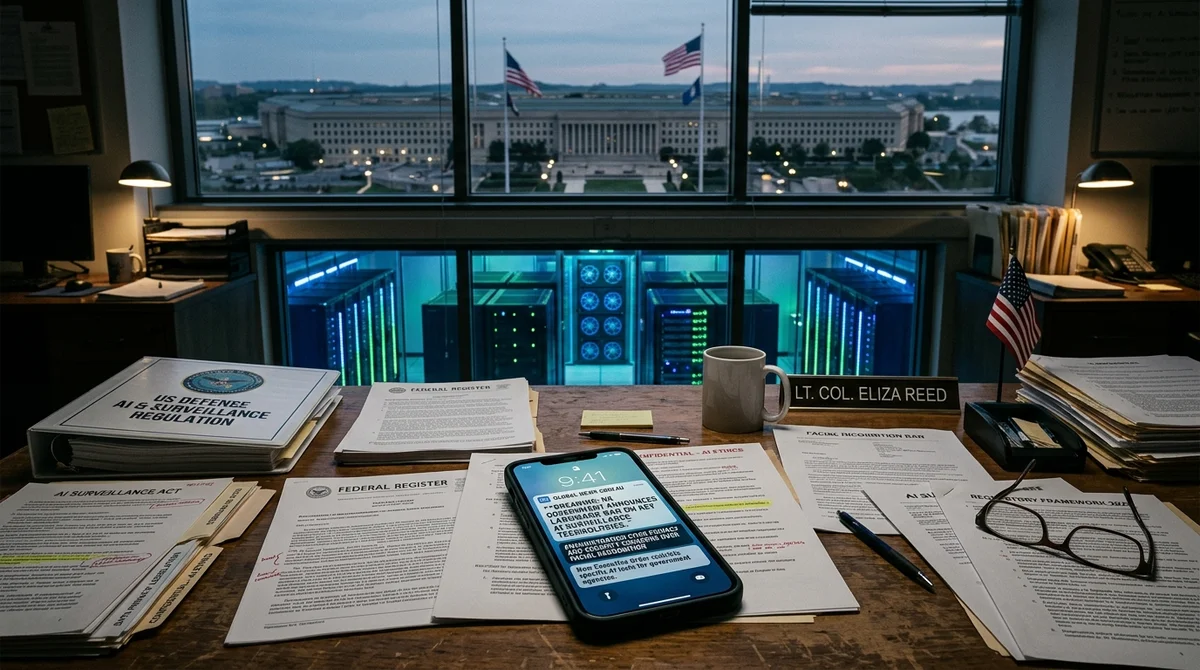
The Anthropic story revealed something uncomfortable for those in power: even in a democratic system, an AI developer can face sanctions not because of a technology vulnerability, but because they refused to remove legally binding restrictions on its use. On February 27, 2026, U.S.
Defense Secretary Pete Hegseth declared Anthropic a "supply chain national security risk." Such a designation was normally associated with Huawei and ZTE, not with an American company from San Francisco founded by former OpenAI employees. The reason was a dispute with the Pentagon over a $200 million contract signed in July 2025 for work with classified systems.
In the agreement, Anthropic established two red lines: its models could not be used for mass domestic surveillance of U.S. citizens without judicial oversight, and could not serve as the basis for fully autonomous lethal weapons without a human in the decision-making loop.
The Pentagon demanded "unlimited access to AI for all lawful purposes" and set a deadline of 5:01 PM that same day. When the company refused to remove the restrictions, the U.S.
administration effectively punished it for trying to make safeguards an obligation rather than a declaration. This episode became especially sharp against the backdrop of OpenAI. Hours after the decision on Anthropic, Sam Altman announced OpenAI's own deal with the Pentagon and stated that the company's models would be available for all lawful purposes.
The full contract terms were not disclosed, so it is impossible to verify whether it retained the same enforceable guardrails that Anthropic insisted on. But the market saw a simple signal: one company tried to enshrine restrictions in a contract and received a threat designation; another accepted the state's terms and remained a partner. That same evening, OpenAI's hardware lead Caitlin Kalinowski left the company, emphasizing that the topics of domestic surveillance and lethal autonomy deserved greater discussion.
The conflict then moved into the judicial arena: federal judge Rita Lin in a March ruling noted that such a regime is typically applied against foreign intelligence structures and terrorists, not American companies, and temporarily blocked the ban. But parallel proceedings continued, and Anthropic was simultaneously cut off from Pentagon contracts while remaining of interest to other agencies. It is here that the story ceases to be merely an American political drama and becomes a question about democratic AI governance.
U.S. federal structures continued quietly testing Anthropic's technologies, while financial regulators pushed banks to evaluate the new Mythos model for critical infrastructure.
This creates a paradox: the company is simultaneously declared a national security risk and considered as a supplier of useful AI. For Europe, this is an important signal against the backdrop of the AI Act, which is supposed to fully enter into force in August 2026. The logic of European law is simple: AI use cases that are too dangerous cannot be left to the discretion of companies or officials; they need to be directly restricted by law.
But in the EU, there is parallel discussion of a Digital Omnibus package that could weaken some regulation in the name of competition with the U.S. and China.
The Anthropic case shows that deregulation does not make the system neutral. It merely transfers real power to those who control procurement, access to contracts, and political pressure. There is also a more practical lesson.
If restrictions on AI use exist only in press releases, corporate principles, and CEO speeches, they can be circumvented at the first major deal. But if they are written into a contract or law, they become enforceable and create accountability. The dispute between Anthropic and the Pentagon essentially revolved around this: not around the idea of safety itself, but around whether this safety should be binding on the state when it comes to military and intelligence scenarios.
The main conclusion for the market and regulators is unpleasant but clear. AI governance will exist regardless; the question is only who will fix its rules first. If boundaries of use are prescribed in advance in law and contracts, society has a chance to control the technology before key decisions are already made.
If not, the rules will be written by those with more power, money, and urgency at the moment of the next crisis.
Want to stop reading about AI and start using it?
AI News is a curated feed of AI/tech news. Hamidun Academy teaches you to use AI systematically in your work.