Anthropic and Mythos model tested again by US agencies despite Trump ban
In the US, the formal ban on work with Anthropic is already diverging from practice: federal agencies and congressional committees continue testing the…
AI-processed from 3DNews AI; edited by Hamidun News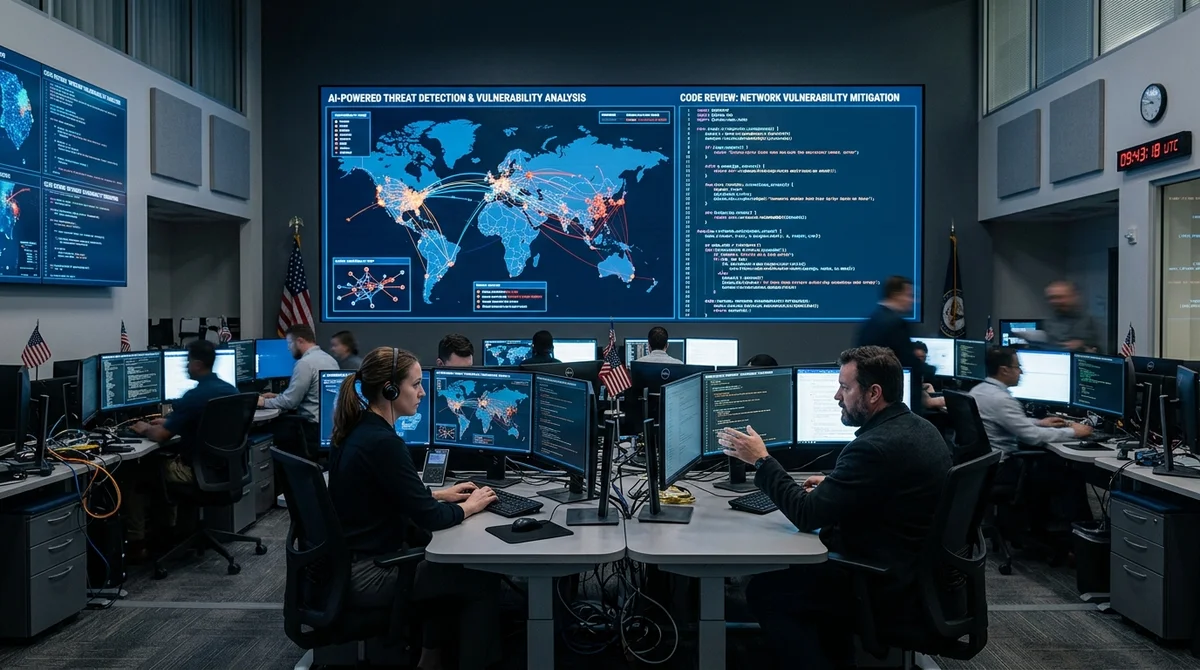
A formal White House ban on work with Anthropic proved weaker than American officials' interest in the new Mythos model: federal agencies and congressional staff continue requesting access to the system because its cyber capabilities are too valuable to wait for the end of the political conflict. According to Politico, the Center for Standards and Artificial Intelligence Innovation at the U.S.
Department of Commerce is already testing Mythos for its ability to find and exploit vulnerabilities. This is not a theoretical assessment, but a practical check of how useful the model is for cyber defense and system audits. Over the past week, staff from at least three congressional committees held or requested closed briefings from Anthropic to understand how Mythos can be applied to scanning cyber infrastructure.
In parallel, Anthropic co-founder Jack Clark stated that the company is discussing the model's capabilities with the Trump administration itself, although the Pentagon had previously severed business relations with the developer. Interest in Mythos is understandable. On April 7, 2026, Anthropic presented this system as its most powerful model for programming and agentic tasks—tasks where AI not only responds to a request but acts more autonomously.
In company materials and American press publications, Mythos is described as a tool of advanced security researcher level: the model can find vast arrays of vulnerabilities, reproduce them, and assemble working exploits. In internal tests reported by Axios, it successfully created proof-of-concept exploits on the first attempt in 83.1% of cases, found bugs in major operating systems and browsers, and even identified very old vulnerabilities that long went unnoticed in regular checks.
This is exactly why Anthropic did not release Mythos to open access. The company decided to limit the model to a circle of verified organizations and use it primarily in defensive mode—to check its own code, open projects, and critical infrastructure. Through Project Glasswing, over 40 organizations were brought into testing, including major cloud and IT players, and significant credits were allocated for work with the model.
The logic is simple: if such systems can already dramatically accelerate vulnerability discovery, it is more advantageous for the government and large corporations to use them to protect their networks before similar capabilities become widely available to attackers. Against this backdrop, the official conflict around Anthropic looks even more striking. In early March 2026, the Pentagon assigned the company a supply-chain risk designation following a dispute over the conditions for using its models in military environments.
According to American media, Anthropic attempted to maintain restrictions on the use of its systems for fully autonomous weapons and mass domestic surveillance, and authorities considered such limitations unacceptable. After that, the company's access to a number of federal procurement channels was effectively cut off, and the White House demanded that work with Anthropic cease through government lines. The developer is challenging these actions in court, arguing that the punishment is punitive in nature and far exceeds the scope of a normal contract dispute.
The situation shows a rare moment in the AI market when a state's political line came into direct contradiction with the practical interests of its own agencies. For the Pentagon, the issue comes down to control over the supplier and the conditions for applying the model. For civilian structures and lawmakers, the priority is different: to obtain a tool that helps find weaknesses in software faster and reduce the risks of major breaches.
Therefore, at the bureaucratic level, the ban begins to erode even before the dispute is resolved legally or politically. The main conclusion is that Mythos became not just another high-profile model, but a test of how states will handle dual-use AI tools. If a system simultaneously strengthens both defense and potential attack, a complete ban proves difficult to maintain in practice.
The Anthropic story shows: when it comes to cybersecurity and vulnerabilities of national scale, agencies are willing to circumvent even strict political decisions just to avoid losing access to the technology.
Want to stop reading about AI and start using it?
AI News is a curated feed of AI/tech news. Hamidun Academy teaches you to use AI systematically in your work.