Norwegian Stendr raises $5.4M for AI systems protecting Europe from drones
Norwegian Stendr raised an oversubscribed pre-seed round of $5.4M for AI systems designed to detect and track drones. The startup is led by Sky Mavis…
AI-processed from TNW; edited by Hamidun News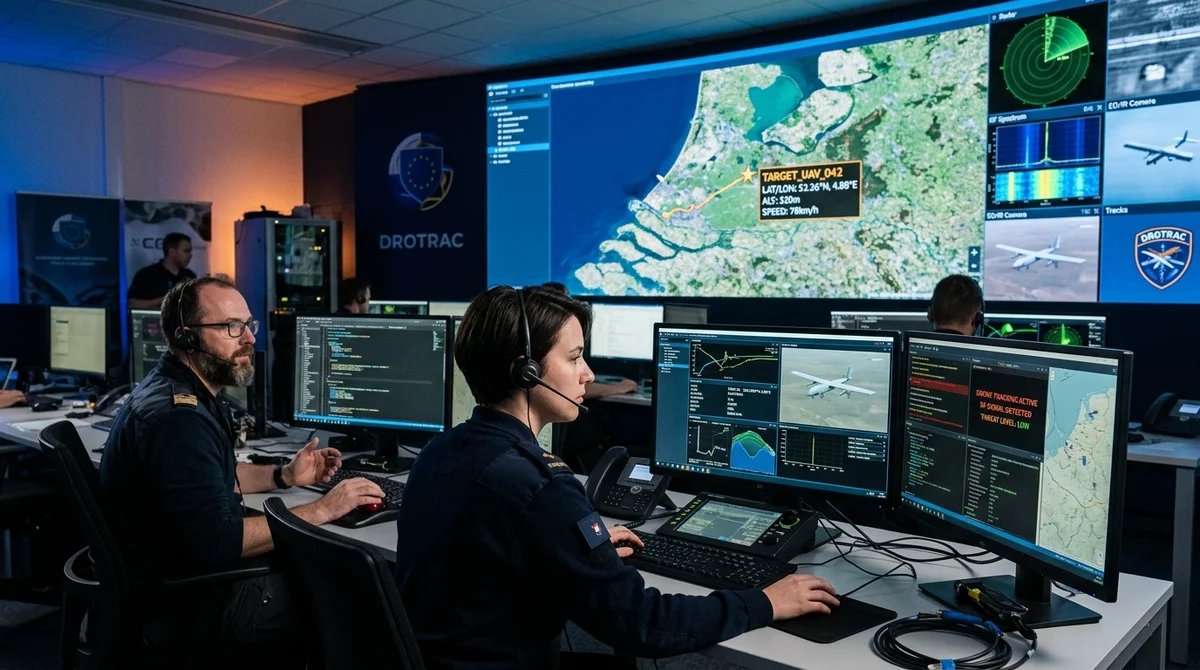
Norwegian Stendr Closes Oversubscribed Pre-Seed Round of $5.4M for AI-Powered Drone Defense Systems in Europe
Norwegian Stendr closed an oversubscribed pre-seed round of $5.4 million and is betting on one of the hottest niches in the defense market: detecting and tracking drones using AI. The startup is building a system that should not just spot UAVs, but collect data from multiple sensors into a unified picture, track targets, and quickly relay information to operators for response.
For Europe, this is no longer an experimental task but an applied necessity. The round was co-led by RainFall, ACME, and SkyFall. Sisyphus, Antler, StartupLab, Off Piste, Andoya Ventures, and a syndicate of European and global technology investors also participated in the deal.
The company is based in Oslo and from the outset has built a vertically integrated stack: proprietary hardware, software, and AI models for defense scenarios. Stendr will direct the raised capital towards accelerating multi-sensor technology development, expanding its engineering team, and strengthening its hardware capabilities, as well as supporting first deployments for customers in the defense sector. For a pre-seed stage, this is a notable signal: investors are willing to finance not just models and software, but also defense hardware if they see clear demand.
The project is led by Alexander Leonard Larsen—co-founder and former COO of Sky Mavis, the company behind Axie Infinity. In October 2021, Sky Mavis was valued at $3 billion after a Series B round of $150 million led by Andreessen Horowitz. But by March 2022, the company found itself at the center of the largest cryptocurrency hack at that time: the Lazarus group, linked to North Korea, exploited a vulnerability in the Ronin network and withdrew cryptoassets worth approximately $620 million.
Sky Mavis later compensated users and separately raised another $150 million from Binance and other investors to cover the deficit. For Larsen, this incident became a turning point: the focus shifted from growth at any cost to system resilience, security, and scenarios where infrastructure failure is too expensive. Stendr's initial specialization is counter-drone technology.
This isn't about expensive exotic platforms, but about mass-produced autonomous and semi-autonomous drones that might cost hundreds of dollars but can incapacitate equipment and infrastructure worth millions. This imbalance became especially pronounced in the Ukraine war and essentially rewrote the requirements for battlefield defense. Stendr wants to address the first and most underestimated part of the chain—detection, tracking, and complete situational awareness.
If a defender doesn't spot a drone in time and doesn't understand its trajectory, all subsequent countermeasures lose effectiveness. The company's mission is to provide European customers with their own system that doesn't depend on external suppliers at a critical moment. A separate emphasis is on European sovereignty.
Against the backdrop of EU efforts to reduce dependence on American defense suppliers, local technologies receive not only political support but also budget. In March 2026, the EU approved the European Defence Industry Programme with a budget of 1.47 billion euros for 2026–2027, and 30 million euros within it are specifically earmarked for joint procurement of integrated counter-drone systems.
In parallel, the market itself is growing rapidly: according to MarketsandMarkets estimates, the global counter-UAS segment could grow from approximately $6.6 billion in 2025 to $20.3 billion by 2030.
Andoya Ventures' participation also looks symbolic: this investor is linked to Andoya Space Centre, and the Northern European region is increasingly building its own defense and space infrastructure. For the market, this is an important case for several reasons. First, more and more founders from the consumer and crypto segments are entering defense, and they know how to quickly build product teams and work with global capital.
Second, investors are confirming that AI in defense is no longer just analytics and staff software, but real hardware on the front lines. And third, Europe is increasingly articulating its demand for its own technological security stack. If Stendr can quickly bring the system to real deployments, the company has a chance to occupy a very timely niche.
Want to stop reading about AI and start using it?
AI News is a curated feed of AI/tech news. Hamidun Academy teaches you to use AI systematically in your work.