US Court Ruled That Defendant's Correspondence with Anthropic's Claude Is Not Protected by Attorney-Client Privilege
A US judge has for the first time directly stated that correspondence with Claude regarding legal risks is not protected by attorney-client privilege or work…
AI-processed from TNW; edited by Hamidun News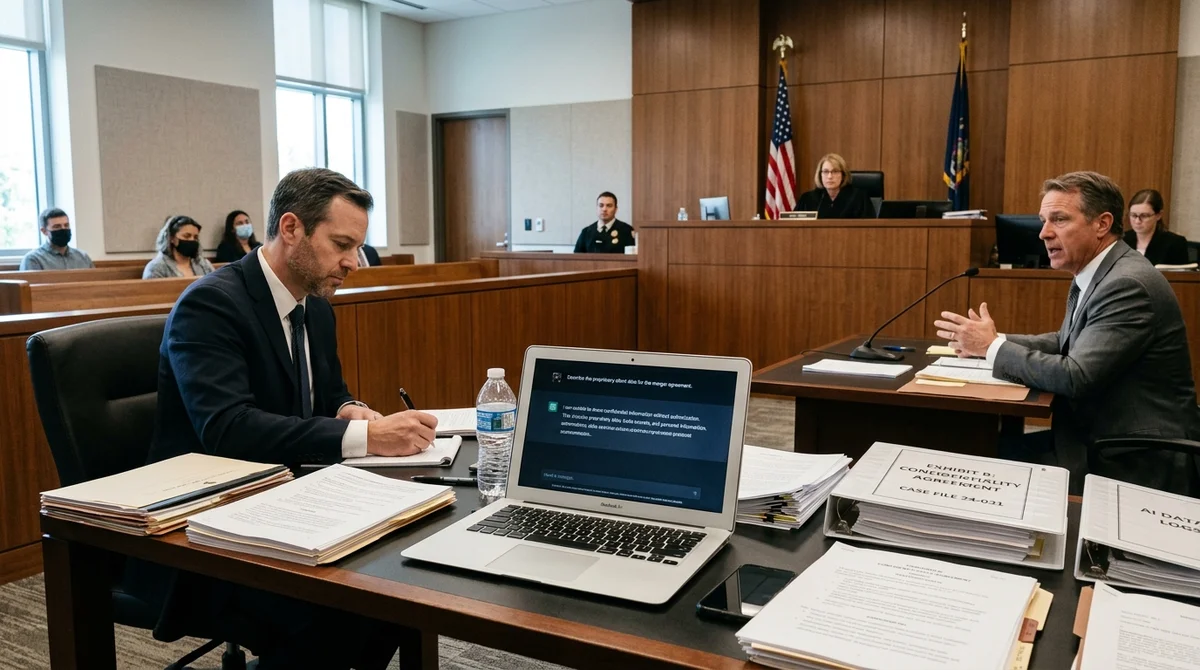
A US court has effectively drawn a clear boundary between consulting with a lawyer and chatting with a chatbot: if a person discusses their legal risks with Claude, such correspondence does not in itself receive attorney-client privilege protection. For users of generative AI, this is one of the most important legal signals in recent times: the convenience of a service does not make it a confidential advisor. This concerns a decision handed down in February 2026 by Judge Jed Rakoff in the case of Bradley Heppner, accused of fraud.
The court concluded that his dialogues with Claude from Anthropic about potential legal liability do not fall under either attorney-client privilege or work product protection. Essentially, the court viewed these chats not as professional interaction with a defender, but as communication with an external digital tool that is not granted the status of a lawyer. The first part of the court's position appears straightforward: attorney-client privilege arises where a client communicates with a licensed attorney for the purpose of obtaining legal assistance.
Claude, like any other public AI service, is not such an attorney. The second part is equally important: the court refused to treat such materials as work product. Typically, work-product protection safeguards preparation for litigation, strategies, and analytical materials created for a case.
But in the court's view, transmitting such reasoning to a public AI system destroys the expectation of confidentiality. Also significant is that the court was essentially evaluating not the quality of the model's answers, but the status of the communication channel itself. Even if the bot helps formulate arguments, gather questions for a lawyer, or describe possible consequences, this does not make the service a participant in protected legal interaction.
In other words, the problem is not that the AI makes mistakes or provides overly general advice, but that the user discloses sensitive information to a third party that is not bound by a professional obligation to keep client confidentiality. The key argument in the decision is the absence of any obligation on a publicly accessible AI platform to maintain confidentiality the way a lawyer or law firm does. It is precisely this point that makes the story broader than a single legal proceeding.
Many users are already accustomed to discussing sensitive topics with models: disputes with employers, tax issues, contract terms, business risks. The court essentially reminded: if data goes to a service that is not bound by professional confidentiality, you cannot expect the same level of protection. The practical effect could be notable far beyond criminal cases.
For companies, this decision shows that internal legal strategies uploaded to an external chatbot without special contractual and technical guarantees potentially become a vulnerable point in a dispute. For private users, it also establishes new discipline: AI can be used to structure questions, translate legal language into human language, or prepare a list of topics for a meeting with a lawyer, but not as a safe substitute for the lawyer themselves. It is especially risky to send confessions, factual descriptions of disputes, draft positions, and details that may have procedural significance to such services.
For AI companies themselves, this is an unpleasant but useful precedent. It strengthens demand for corporate work modes, private installations, stricter contractual terms, and clear boundaries for data use. The more actively models engage in legal, financial, and HR processes, the more business will ask not only about the quality of answers but also about what rights are retained after uploading sensitive information to the system.
The fact that this decision is called the first of its kind in the US makes it a benchmark for future proceedings, even if the final rules for dealing with AI chatbots will be refined in other courts. As generative models become increasingly integrated into workflows, the legal system begins to answer a question that has long remained in a gray area: is a conversation with AI considered private reflection by the user or is it already transmitting information to a third party. In this case, the court chose the second option.
The main conclusion is simple: a chatbot can help you think, but cannot provide the same legal protection that a live lawyer can. For the AI market, this is not a prohibition but a stark reminder of product boundaries. For users, it is a rule of hygiene: anything concerning legal risks, confessions, and defense strategy is better discussed with a lawyer than with a public model.
Want to stop reading about AI and start using it?
AI News is a curated feed of AI/tech news. Hamidun Academy teaches you to use AI systematically in your work.