Athena launches FabOrchestrator for MES automation in chip and electronics factories
Athena released FabOrchestrator — an agentic AI platform for MES in semiconductor and electronics manufacturing. The system answers data queries in natural…
AI-processed from TNW; edited by Hamidun News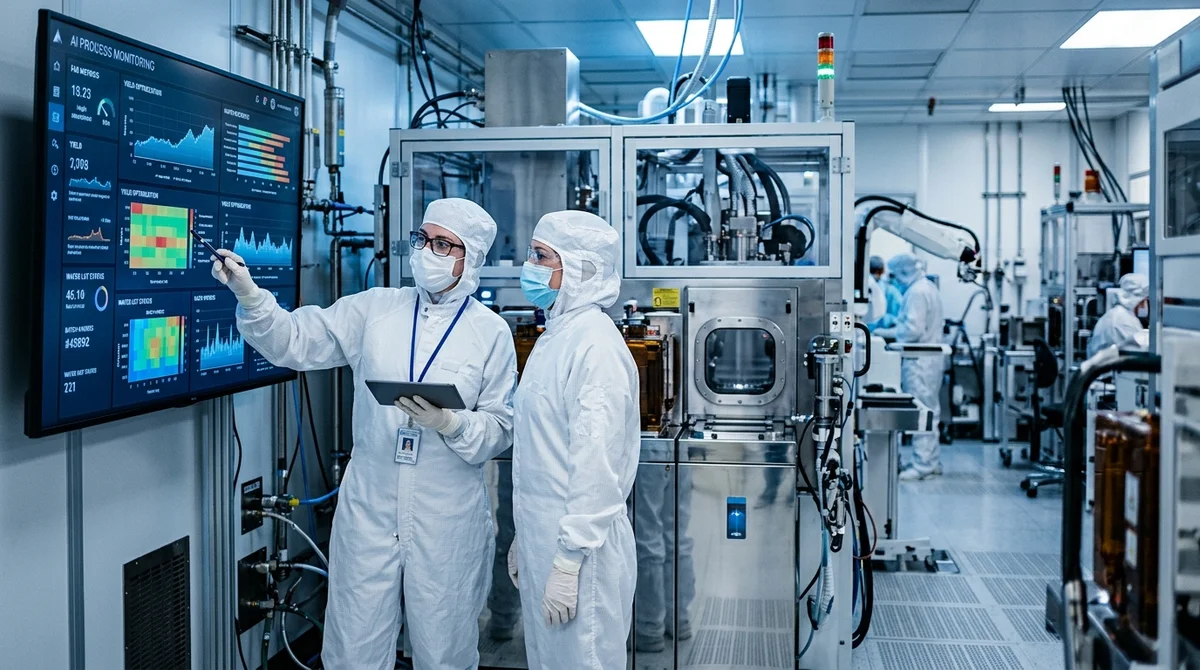
Athena Technology Solutions, an MES integrator from Fremont, has unveiled FabOrchestrator — an agentic AI platform for semiconductor and electronics manufacturing. The launch aims to eliminate the most expensive routine work from factory teams: manual reports, standard support tickets, system configuration questions, and some backend development around MES. For fabs where every data error can be extremely costly, this is an attempt to automate not the shop floor, but the layer of engineering work that supports it.
FabOrchestrator does not replace the existing production system, but sits on top of it. The platform is built around the MES solutions that Athena already implements with clients, primarily Siemens Opcenter and Critical Manufacturing. This is an important detail, because MES is one of the most sensitive parts of a factory's digital infrastructure: it tracks batches, routes, operations, equipment, process parameters, and change history.
In semiconductor manufacturing, where a single chip passes through hundreds of stages over weeks, this data layer is simultaneously extremely valuable and extremely complex to interpret. The product has four main modules. FabInsight allows engineers to ask questions of production data in plain language and get reports without SQL queries and manual searching across multiple dashboards.
AI Support Engineer handles routine MES support requests and escalates only atypical or risky cases to humans. Modeling Agent answers questions about MES modeling and configuration, and helps teams navigate updates and upgrades. Back-end Agent generates code snippets that accelerate implementation and refinement of production systems.
Essentially, Athena is trying to convert integrator expertise into a software layer that can scale as a product. Athena itself is not a giant in industrial software, but a relatively small integrator with about 120 employees. The company has been operating since 2011 and specializes in MES, PLM, and ERP for industries where precision and traceability requirements are especially high: semiconductors, electronics, medical devices, and clean energy.
This is why the launch looks logical: rather than building a universal enterprise assistant, Athena targets a narrow segment where it already has data, processes, vocabulary, and real customer pain points. LLM at Scale.AI from Bangalore became the AI partner, a firm that focuses on agent orchestration and integration of large language models into enterprise scenarios.
The individual functions of FabOrchestrator do not look revolutionary in themselves. Natural language queries on data, AI triage of tickets, and code generation have already become standard parts of the enterprise AI landscape. But manufacturing, especially semiconductor manufacturing, does not handle generic solutions well without strong domain customization.
Here, it is not enough to formulate an answer in elegant language, but to correctly understand the data model, relationships between process parameters, equipment constraints, and route logic. This is where universal assistants often deliver confident but not quite fit-for-purpose results. The timing also makes sense.
Major industrial software vendors are already adding agentic and AI capabilities to their platforms, and the market is increasingly moving from analytical dashboards to interfaces where the system not only shows data but also takes action on some of it itself. For Athena, this is a chance to occupy the niche between major vendors and factory teams: to offer not abstract AI strategy, but concrete time savings on reporting, support, and implementation. That said, the company has not yet disclosed pricing, confirmed customers, or timelines for broad deployments, so the commercial side of the story remains open.
For the market, the launch of FabOrchestrator is important not for loud claims about the "first Agentic AI Foundry," but as a test of a more pragmatic hypothesis: can a small specialized integrator convert accumulated expertise into a working AI product for the factory. If the answer is yes, the MES ecosystem will gain a new class of tools that makes complex production systems more accessible to engineers without deep manual work. If not, it will be another reminder that at the factory, it is not enough to simply add a chat interface on top of critical infrastructure — what's needed is AI you can trust not in a demo, but in real process.
Want to stop reading about AI and start using it?
AI News is a curated feed of AI/tech news. Hamidun Academy teaches you to use AI systematically in your work.