Accel raised $5B for AI startups and intensified the race for late-stage deals
Accel raised nearly $5B to more aggressively pursue late-stage rounds in AI companies. Of this, $4B will go to Leaders Fund V, with another $650M to a…
AI-processed from TNW; edited by Hamidun News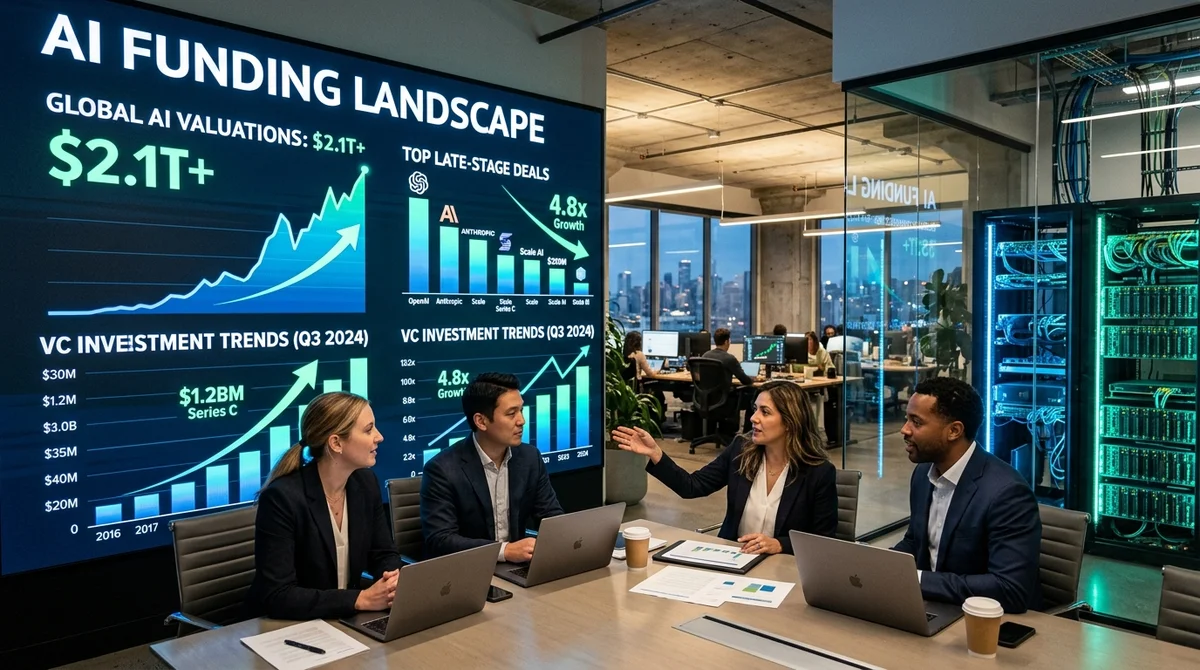
Accel has raised nearly $5 billion for a new cycle of major bets on artificial intelligence. The venture capital market is increasingly less like classic startup financing and more like a race for infrastructure budgets, where one fund is ready to write checks for $200 million and compete not with ordinary VCs, but with mega-funds, corporations, and sovereign investors. The new capital package consists of two parts: $4 billion will go into Leaders Fund V, and another $650 million into a sidecar fund, which allows increasing stake in the strongest deals, primarily within the existing portfolio.
According to Accel partners, the main fund is designed for approximately 20-25 investments in late-stage companies worldwide. Average check size is around $200 million. This format is needed not for pre-seed experiments, but for companies that have already found product-market fit, are rapidly growing revenue, and require capital at the scale of infrastructure projects.
The fund's logic is clear from its recent bets. Accel entered Anthropic last year at a valuation of around $183 billion. After this, the company closed a new round at approximately $380 billion, and the market saw offers implying a valuation of around $800 billion.
A similar story with Cursor: in June 2025, the fund invested in an AI code editor at a $9.9 billion valuation, in November the company raised a new round at $29.3 billion, and in March 2026 was discussing attracting capital at around $50 billion.
For Accel, these are not just successful deals, but a demonstration of why a large fund is needed: if you've backed one of the cycle's leaders, you need to be able to continue your bet, not watch from the sidelines as another fund buys up the round. And this is not just about two high-profile names. Accel's AI portfolio also includes Vercel, n8n, Recraft, and Code Metal.
In March, the fund together with Google AI Futures Fund launched the Atoms AI program for early teams looking for unoccupied niches in enterprise AI. In other words, the strategy is dual: on one hand, catch future winners as early as possible, on the other hand, maintain the ability to pour hundreds of millions into them when the market has already proven demand and growth speed. In practice, this brings venture capital closer to private equity and infrastructure financing.
Against the backdrop of this deal, you can clearly see how the entire market has changed. In the first quarter of 2026, startups worldwide attracted a record $297 billion—2.5 times more than the quarter before.
Andreessen Horowitz raised $15 billion, Thrive Capital closed more than $10 billion, Founders Fund is completing a $6 billion fund. Against this backdrop, Accel no longer looks like an exception, although just a few years ago raising $5 billion by itself would have been considered an event of the magnitude of a separate tech giant. The mid-market segment of venture capital is shrinking: major players are moving down the funding stages, and strong AI companies sometimes skip customary financing stages and grow from seed to multi-billion-dollar valuations in a year and a half.
Accel has historical experience to draw on. The firm was founded in 1983 and as early as 2005 invested $12.7 million for 10% of Facebook—a stake that was worth $6.
6 billion by IPO. But the new AI cycle is different in that the size of capital has become part of the product: to build models, data centers, hardware, robotics, or defense-tech, it's no longer enough to be just a good venture investor. You need to be able to make quick decisions and just as quickly find hundreds of millions for the next rounds.
That's why Accel specifically talks about future bets at the intersection of software and hardware—from robotics to infrastructure for AI data centers. The main conclusion is simple: the AI market has entered a phase where winners are determined not only by the best products, but also by the best balance sheets. For founders, this means access to money at almost industrial scale, if the company shows rare growth rates.
For investors—a higher ceiling for profits, but also more painful risk of overpaying at the peak of the cycle. And for the entire market—yet another confirmation that venture capital in AI has definitively transformed from hunting for startups into a struggle for infrastructure champions.
Want to stop reading about AI and start using it?
AI News is a curated feed of AI/tech news. Hamidun Academy teaches you to use AI systematically in your work.