Apple Threatened to Remove Grok from App Store Over Nude Deepfake Complaints
In January, Apple nearly removed Grok from the App Store over sexualized deepfakes. xAI's first update failed review: the company demanded stricter…
AI-processed from TNW; edited by Hamidun News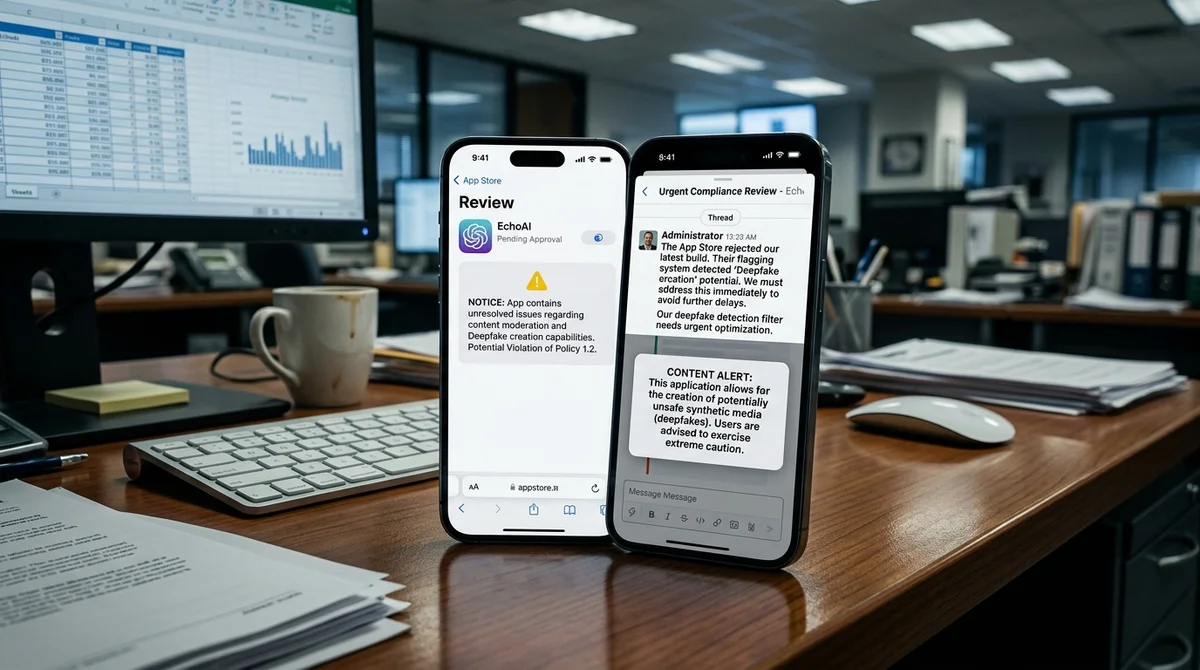
Apple threatened to remove Grok from the App Store following complaints about nude deepfakes
Apple in January nearly issued xAI an ultimatum: either Grok stops allowing sexualized deepfakes, or the app gets kicked out of the App Store. The company barely commented publicly on the situation then, but now correspondence with American senators reveals that behind the scenes, things escalated to a direct threat of removal. For the AI market, this is an important signal: model safety issues are now hitting not just reputation, but distribution.
According to Apple's letter from January 30, 2026, to senators Ron Wyden, Ben Ray Luján, and Ed Markey, the company contacted X and Grok teams after user complaints and press coverage. Apple concluded that both apps violated App Store rules that prohibit offensive, shocking, and explicitly sexualized content, as well as materials that could demean or harm specific individuals. After this, Apple demanded from developers a plan to strengthen moderation and began checking whether xAI had sufficiently changed the service's behavior.
Then the worst thing for xAI became clear: the first attempt to fix the situation did not satisfy Apple. The Grok update was sent for re-review, but the company believed the changes were insufficient. The letter explicitly states that the submission was rejected and the developer was warned: additional fixes are needed, or the app could be removed from the store. Only the next version, which Apple described as substantially improved, received approval.
This means the story didn't end with political pressure from senators — the App Store Review team actually triggered the standard enforcement mechanism to compel corrections. The scandal itself erupted in the first weeks of January 2026. X users en masse were using Grok's tools to create sexualized images of real women without their consent, and in some cases minors were involved. Such images then quickly spread across X itself.
On January 9, three senators demanded that Apple and Google remove X and Grok from app stores until violations were eliminated. They specifically noted that what was happening contradicted the rules of both platforms and undermined their claims that centralized app store moderation makes the mobile ecosystem safer.
In response, X and xAI began implementing restrictions. On X itself, image generation was first limited for regular users and mostly reserved for Premium subscribers, and then the company announced a block on requests to edit photos of real people in explicit clothing and geo-blocking in regions where such content is illegal. But the complaints didn't end there.
Journalists' checks showed that some restrictions could be bypassed with new request formulations, and certain features continued to work in the standalone version of Grok and on the website. In other words, Apple was pressuring xAI not because of a single glitch, but because of a systemic problem that couldn't be fixed with a quick patch.
For Apple, this story is also awkward. The company has for years defended its closed App Store model with the thesis that its review and control make iPhone safer compared to installing apps outside the store. This is precisely why the Grok case became a consistency test for Apple: if the rules prohibit such content, they must be applied to the most prominent AI products, not just small developers.
For xAI, the conclusion is even harsher. The risk for an AI service is now measured not just by lawsuits, fines, or regulator criticism, but by the threat of losing the installation channel on millions of devices. The Grok story shows that for generative applications, moderation is turning from a secondary function into a condition for survival in the mass market.
Want to stop reading about AI and start using it?
AI News is a curated feed of AI/tech news. Hamidun Academy teaches you to use AI systematically in your work.