Solidroad raised $25M to shift customer support quality control to AI
Solidroad raised $25M for an AI platform to monitor customer support quality. The startup, founded by former Intercom employees, audits 100% of calls, chats…
AI-processed from TNW; edited by Hamidun News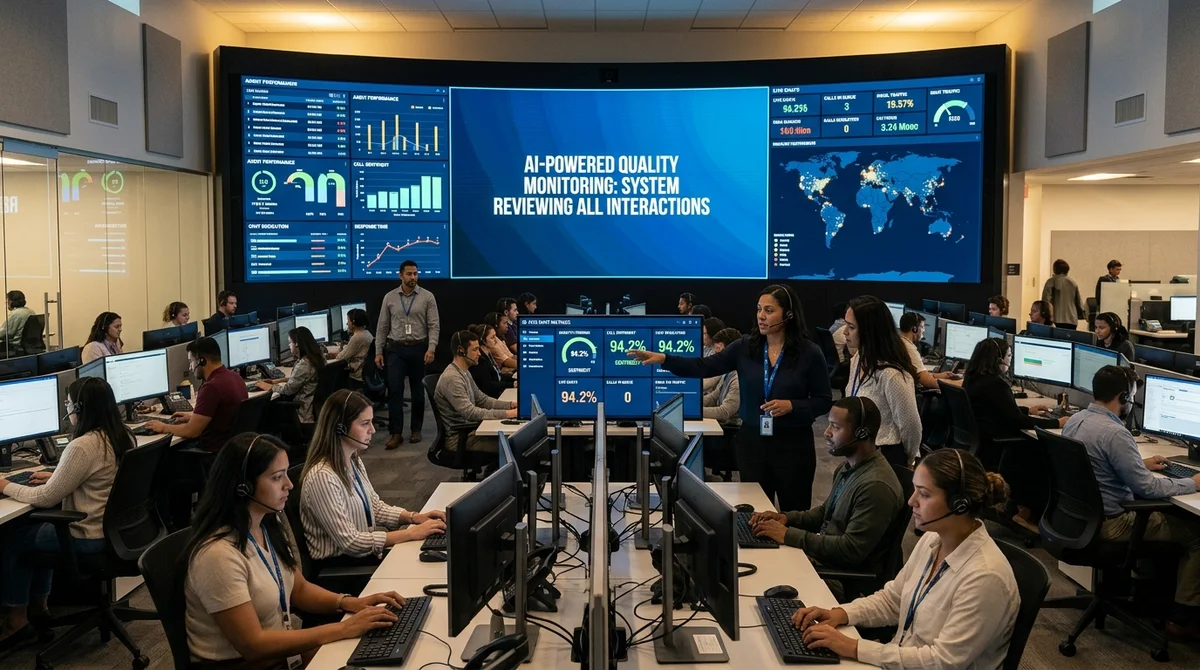
Solidroad is trying to close a weak spot in customer support: instead of selectively manually checking a few calls and chats, the company offers AI that evaluates every customer interaction and immediately shows where the team is losing quality, money, and customer loyalty. The startup with offices in Dublin and San Francisco raised $25 million in a Series A round led by Hedosophia. Previously, the company received $6.
5 million in seed funding from First Round Capital with Y Combinator participation, bringing the total raised to $31.5 million. Solidroad was founded in 2023 by former Intercom employees Mark Hughes and Patrick Finlay.
The company currently has around 20 employees, and among its clients are Ryanair, Crypto.com, Oura, as well as major outsourcing contact centers PartnerHero and Tech Mahindra. The company also entered the Y Combinator Winter 2025 batch, which helped it reach corporate customers in the US faster.
The problem that Solidroad is betting on has long been known to the market. In most support services, quality is manually checked on only 1–3% of interactions: a manager listens to a few calls, reads part of the correspondence, and assigns ratings according to an internal checklist. This process is slow, expensive, and tells you almost nothing about what happens in the remaining 97–99% of interactions.
Solidroad automates this control layer: the platform analyzes calls, chats and email correspondence, assigns ratings according to company criteria, identifies recurring errors, suggests who and what needs to be trained, and provides a complete picture of team quality. However, Solidroad is not selling the idea of completely replacing support employees with bots. Its position is rather that support staff will remain, but they need a more accurate feedback and training tool.
This approach distinguishes the company from some AI startups that bet on autonomous first-line agents. For corporate clients, this is an important argument: implementing AI in quality control is usually easier to approve than replacing operators. An additional plus is readiness for enterprise sales.
Solidroad has already obtained SOC 2 and ISO 27001 certifications, which for a young company with twenty employees looks like a deliberate bet on large clients and long-term contracts. According to the company, after implementing the platform, Crypto.com's customer satisfaction metric at launch increased by three percentage points and exceeded 90%.
For PartnerHero and Tech Mahindra, new agent onboarding time was cut by 50%. For the contact center industry, where margins are usually low and employee turnover is high, such metrics are more important than any general talk about AI. If the system truly helps bring employees up to speed faster and reduce the number of poor-quality contacts, its value is easy to calculate in money.
Against this backdrop, the idea of checking 100% of interactions instead of the standard sample looks not like pretty marketing, but as an attempt to turn QA from a formal procedure into a working management tool. The market around Solidroad has also matured. AI already processes a significant portion of customer interactions, and as automation grows, it becomes increasingly important not only to respond to the user, but also to understand how well a human or bot is doing it.
Major platforms like NICE, Verint and Genesys are already working in this field, as well as specialized players like MaestroQA and Klaus, which was previously acquired by Zendesk. Solidroad's bet is that an AI-native QA, initially designed to analyze all conversations and immediately tied to team training, will be able to occupy its niche before similar features are fully integrated into large contact center packages. Against the backdrop of huge AI funding rounds in recent quarters, $25 million looks moderate, but for a clear B2B segment with measurable ROI, this may be enough to quickly ramp up sales.
For the market, this is a signal that the next notable layer of AI in support is not just chatbots, but the quality control infrastructure around them. If Solidroad can prove sustainable ROI on large volumes of interactions, investors will have another example of how a narrow, clear B2B process turns into a standalone AI software category.
Want to stop reading about AI and start using it?
AI News is a curated feed of AI/tech news. Hamidun Academy teaches you to use AI systematically in your work.