OpenAI Introduced GPT-Rosalind for Drug Discovery and Biomedical Research
OpenAI introduced GPT-Rosalind — the first specialized series of models for biochemistry, genomics, and protein engineering. It was created for drug…
AI-processed from TNW; edited by Hamidun News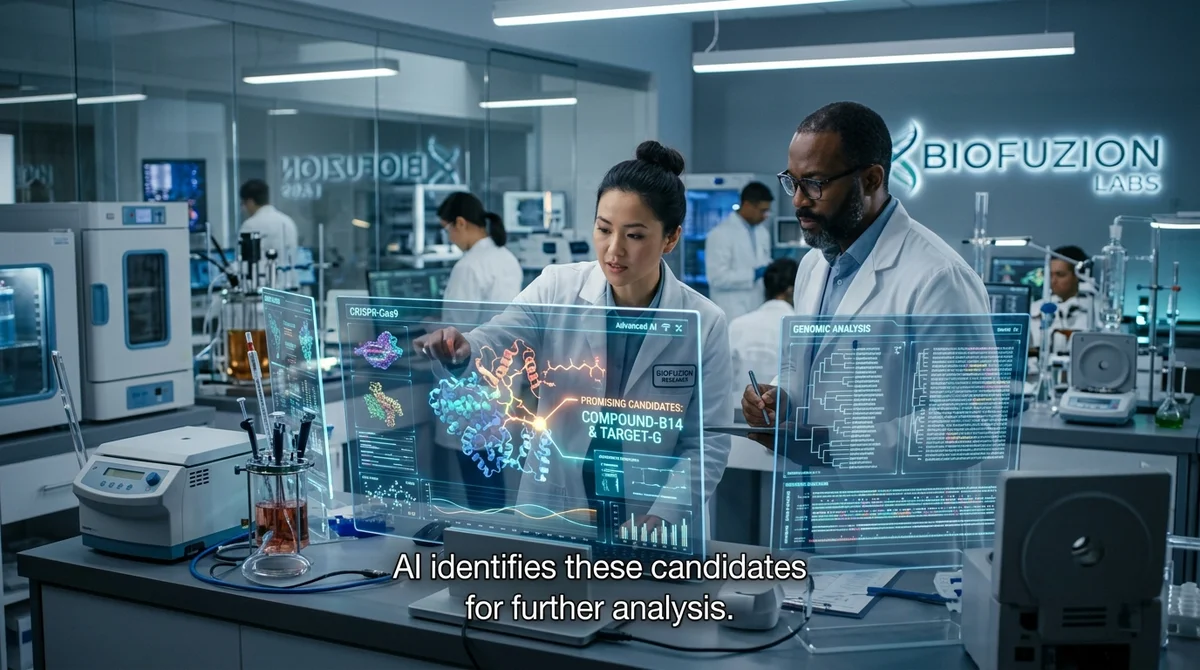
OpenAI is for the first time releasing a separate line of AI not as a universal assistant, but as a tool tailored to a specific scientific field. The launch of GPT-Rosalind demonstrates that the next stage of AI competition is shifting from general-purpose models to systems designed for expensive and complex professional scenarios. In this case, we're talking about biomedicine, drug development, and biomedical research, where the cost of error is high, and the value of even modest acceleration can be measured in months of work, millions of dollars, and enormous preclinical development budgets.
OpenAI describes GPT-Rosalind as the company's first specialized model series. It is tailored to tasks in biochemistry, genomics, and protein engineering—three domains where researchers must work with massive datasets, complex interdependencies, and large numbers of hypotheses. The name itself references the scientist whose work helped unlock the structure of DNA, and this well captures the product's positioning: not just another chatbot, but a model for scientific reasoning in the field of living systems.
Essentially, OpenAI is trying to demonstrate that cutting-edge models can be useful not only in office work and programming, but also in deeply specialized research. The practical focus here is on the early stages of drug discovery and assessment of promising candidates. In such processes, it is important to quickly compare scientific publications, experimental data, molecular properties, genetic dependencies, and likely directions for further investigation.
A specialized model can reduce the time spent on preliminary analysis, help teams more quickly filter out weak hypotheses, and better formulate strong ones. Even if it does not make final scientific decisions, savings emerge already at the stage of navigating vast amounts of information, where human teams typically spend many weeks comparing options and preparing the next experimental cycle. OpenAI, however, is not opening GPT-Rosalind for mass use.
Access is restricted to a trusted-access program that includes only verified corporate customers. Among the first named clients are Amgen, Moderna, and Thermo Fisher Scientific. Such a format makes logical sense: in biopharmaceuticals and adjacent fields, the data itself is sensitive, as are the possible consequences of errors and issues of result validation.
A limited launch allows the company to gather feedback in a controlled environment, test the real utility of the model on applied use cases, and simultaneously reduce reputational and operational risks that would be higher with an immediate public release. For OpenAI itself, this is also a strategic shift. Until now, the company has been associated primarily with general-purpose models that are then adapted to different industries by clients themselves.
GPT-Rosalind offers a different approach: the basic model itself is initially prepared for a specific domain, where what matters is not simply good answers, but the ability to navigate domain-specific language, scientific entities, and research processes. If this format proves successful, it is reasonable to expect the emergence of other vertical series—for law, finance, materials science, industrial research, and other segments where general-purpose AI often runs up against insufficient domain precision. The key conclusion is simple: the AI market is increasingly moving toward specialization.
The launch of GPT-Rosalind is important not only as a new OpenAI product, but also as a signal to the entire industry. Large models are becoming not just an interface for text, but part of the research loop in fields where decisions are made based on complex data and costly experiments. If OpenAI can prove the practical value of this approach with clients from pharma and scientific infrastructure, vertical AI models will quickly see a new standard of expectations across the entire industry—in quality, responsibility, and real value for science.
Want to stop reading about AI and start using it?
AI News is a curated feed of AI/tech news. Hamidun Academy teaches you to use AI systematically in your work.