Anthropic Negotiates Claude Mythos Access for U.S. Government Amid Pentagon Dispute
The U.S. administration is discussing with Anthropic the use of Claude Mythos Preview in federal systems—occurring at a moment when the company faces an…
AI-processed from 3DNews AI; edited by Hamidun News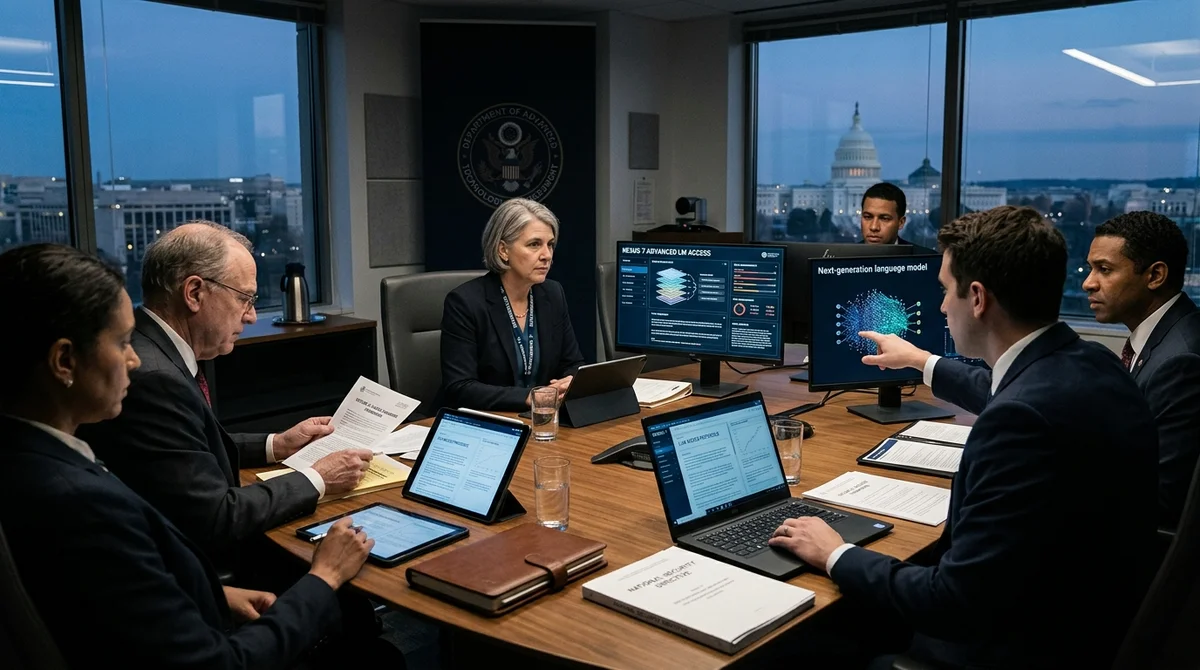
The White House has begun negotiations with Anthropic over access to the new Claude Mythos Preview language model for federal needs, and the very way the question is framed proves revealing: Washington wants to obtain a tool among the most powerful on the market, despite the company's prolonged conflict with the military department. On one level, this is a routine conversation about technology procurement; on another, it signals that competition for government AI contracts in the US is only intensifying. The crux of the story is that negotiations are happening in parallel with the Pentagon's attempts to include Anthropic on a list of unreliable suppliers.
Such a combination seems almost paradoxical. If some agencies are ready to discuss implementing a new model while others cast doubt on the company's status as a contractor, then there is no unified line within the government regarding major AI developers. For Anthropic, this is simultaneously a chance to enter the federal segment and a risk of suffering reputational damage that would complicate any long-term contracts.
Claude Mythos Preview, judging by the formulations, is being considered precisely as a powerful large language model capable of solving tasks where the quality of analysis, work with complex documents, and rapid response formulation matter. For federal structures, interest in such systems is understandable: they are needed not only for text generation, but also for searching through data arrays, preparing reports, supporting analysts, and automating routine processes. When it comes to the government sector, the question usually hinges not only on the model's capabilities, but also on access mode, security, data control, and the supplier's legal status.
In such negotiations, they typically discuss separately whether this will be a pilot for individual teams, limited access to the model, or full integration into departmental workflows. Against this backdrop, the Anthropic story illustrates well how the AI market for government is changing. Not long ago, the main question was which companies were capable of training top-tier models.
Now the next stage is—which of them will be able to pass political, regulatory, and infrastructure scrutiny. For a supplier, it is not enough to demonstrate a strong product. You must prove that the model can be used in a sensitive environment, that it fits compliance requirements, and that departments will not face risks after concluding a deal.
This is precisely why negotiations around Claude Mythos are important not only as news about one possible contract, but also as a test of the entire industry's maturity. The federal government remains one of the most attractive customers for AI companies: successful entry into this segment provides not only revenue, but also the status of a high-level technology partner. A separate layer of this story is political.
When the White House and Pentagon move in different directions, the market receives a mixed signal. For Anthropic's competitors, this is a window of opportunity: they can use the uncertainty to strengthen their own positions in negotiations with the government. For Anthropic itself, everything will depend on whether it can convert the administration's interest into a formal, clear, and protected format of cooperation.
Even preliminary access to the model for a limited circle of federal tasks would already be a notable achievement for the company, but any attempt at blockade from the defense bloc could sharply alter the trajectory. The main conclusion here is simple: for the government, the quality of AI models has become so important that it is ready to discuss access to them even amid internal bureaucratic conflict. And for the market, this means the struggle is no longer only for users and corporate budgets, but also for government trust as one of the most demanding customers.
If Anthropic manages to navigate this narrow corridor between politics, security, and technological demand, the company's position in the race of leading AI developers will be significantly strengthened.
Want to stop reading about AI and start using it?
AI News is a curated feed of AI/tech news. Hamidun Academy teaches you to use AI systematically in your work.