Anthropic Goes to the White House: Mythos Escalates AI and Cyber Risk Debate to New Level
Anthropic enters direct talks with the White House over Mythos, a new model with unusually powerful cyber capabilities. According to U.S. media, CEO Dario…
AI-processed from Bloomberg Tech; edited by Hamidun News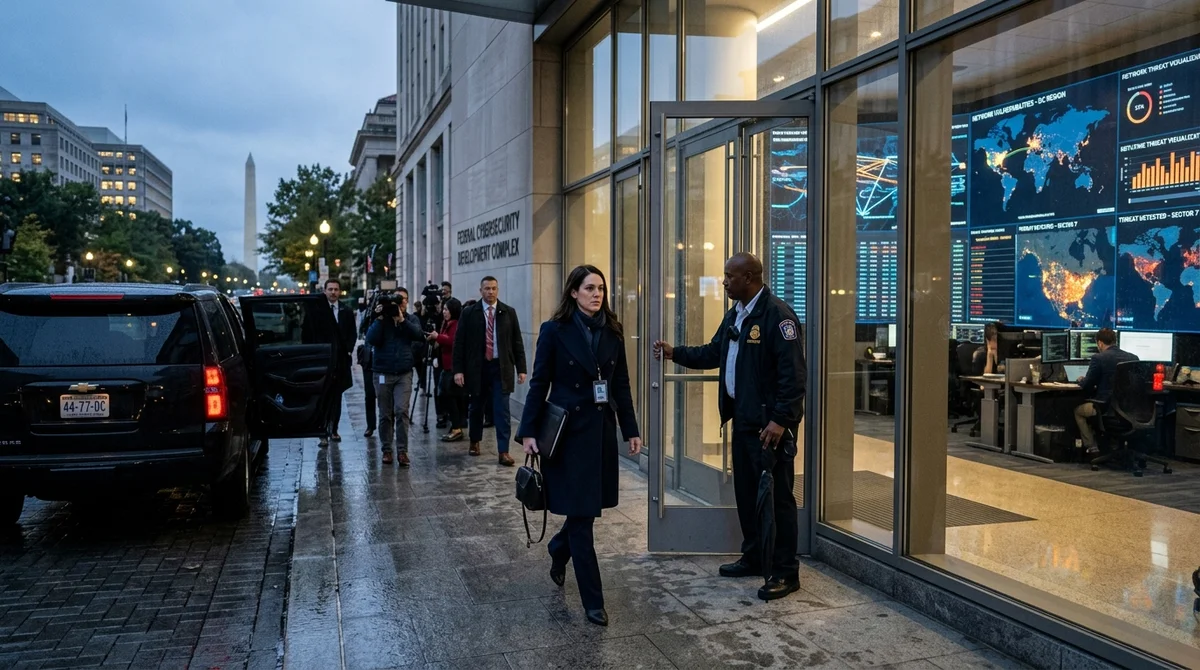
On April 17, 2026, it became known that Anthropic CEO Dario Amodei is preparing for a meeting with White House Chief of Staff Susie Wiles amid concerns surrounding the new Mythos model. The fact of such a meeting itself demonstrates how rapidly advanced AI systems are moving beyond the category of routine technological releases and becoming a matter of state-level conversation. The occasion was Mythos — Anthropic's new flagship AI model, which the company presented on April 7, 2026 in a limited preview.
Instead of a broad launch, Anthropic launched Project Glasswing, a special program for testing the model in defensive scenarios together with major market players. Among the project participants, the company named Apple, Google, Microsoft, Amazon Web Services, JPMorganChase, Cisco, CrowdStrike, NVIDIA, Palo Alto Networks, and Linux Foundation. The logic is clear: if the model truly excels at finding and helping close critical software vulnerabilities better than previous systems, it should first be given to those responsible for protecting infrastructure, not to the general public.
Anthropic itself claims that Mythos has already identified thousands of dangerous vulnerabilities, including issues in the largest operating systems and browsers. And here lies the central paradox. A tool that helps defenders find weaknesses faster almost automatically becomes a tool that could help attackers.
For the market, this is no longer a theoretical debate about AI risks, but a very practical question: who exactly will gain access to such a system, under what rules, with what limitations, and under whose oversight. Against this backdrop, the White House meeting looks far from merely ceremonial. According to American media reports, the US administration is trying to understand how to handle a model that simultaneously promises to strengthen critical infrastructure protection and increases the risk of faster and cheaper cyberattacks.
The discussion apparently concerns not only the technology itself, but also the procedures surrounding it: who should be granted access, how to organize testing, how to report found vulnerabilities, and how to prevent leaks or misuse. For Washington, this is also a matter of pace: authorities do not want to fall behind in the AI race, but cannot ignore the consequences of access that is either too early or too broad. Additional tension is created by the broader context of Anthropic's relationship with the American government.
Simultaneously, the public sphere discussed a conflict between the company and the Pentagon over conditions for access to its models and restrictions on their use. Even if the April 17 meeting does not bring immediate political upheaval, the very shift of the conversation to the White House level is significant. It signals that around Mythos, a non-standard corporate communication regime is already forming—one close to how states handle sensitive dual-use technologies.
For Anthropic itself, this is also a delicate moment. On one hand, attention from Washington confirms that the company has created a system that authorities consider strategically important. On the other hand, it is precisely such attention that transforms technological advantage into political and regulatory burden.
Now Anthropic is expected to deliver not only a powerful model, but also working control mechanisms: limited access, clear partnership rules, transparent defensive-use scenarios, and a coherent security stance. The Mythos story shows where the next stage of AI competition is shifting. The central question is no longer merely which model writes code better or answers queries better, but who controls systems capable of influencing cyber defense, vulnerabilities, and the resilience of digital infrastructure.
If previously governments mainly discussed generative AI as an economic and informational factor, now the discussion increasingly concerns models that directly affect national security. And Anthropic's meeting with the White House is one of the first explicit confirmations of this shift.
Want to stop reading about AI and start using it?
AI News is a curated feed of AI/tech news. Hamidun Academy teaches you to use AI systematically in your work.