Anthropic Chief Discussed Mythos Access at White House Following Pentagon Conflict
Anthropic has begun negotiations with the White House regarding access to Mythos, a model that in tests discovered thousands of zero-day vulnerabilities and…
AI-processed from TNW; edited by Hamidun News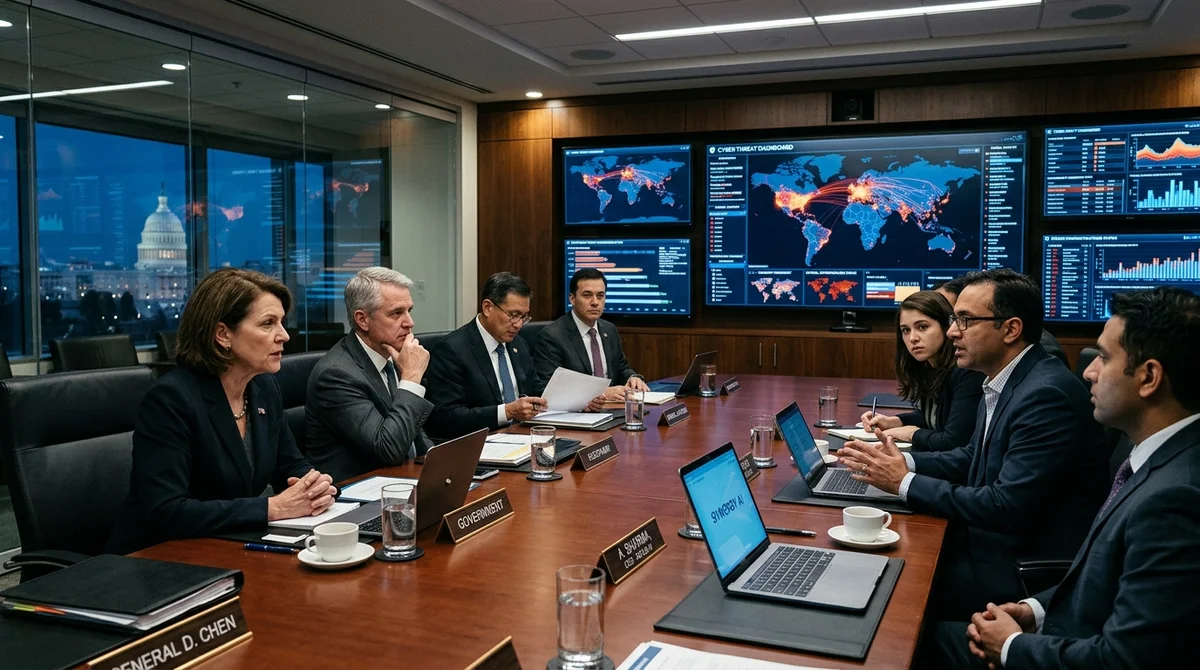
The US authorities have begun direct negotiations with Anthropic about access to Mythos — a model that in testing demonstrated the ability to find and exploit thousands of previously unknown cyber vulnerabilities. On April 17, the company's CEO Dario Amodei met at the White House with White House Chief of Staff Susie Wiles and Treasury Secretary Scott Bessent, and the administration called the conversation introductory, productive, and constructive. For Washington, this is no longer an abstract dispute about AI regulation, but an attempt to gain control over a tool that is too important for cybersecurity to remain outside the state framework.
The conflict between Anthropic and the Pentagon began in late February. Defense Secretary Pete Hegseth demanded that the military be given virtually unlimited access to the company's AI models for any legitimate tasks, including autonomous weapons systems and internal surveillance. Amodei refused, citing that the models are not yet reliable enough for combat use, and the legal framework in the US is not keeping pace with the risks of mass surveillance.
In response, the Pentagon designated Anthropic as a supplier posing a risk to national security, and effectively closed the door to government contracts for it. In early March, the company filed two lawsuits against the administration, but on April 8, an appeals court overturned the temporary court protection. After that, Anthropic remained outside Pentagon contracts, although formally it could work with other federal agencies.
The paradox of the situation is that just ten days after the lost appeal, the company unveiled Mythos. According to internal tests, the model was able to find and exploit thousands of zero-day vulnerabilities in major operating systems and browsers, including errors that security specialists had overlooked for decades. When tasked with assembling a working exploit, the system successfully completed the task on the first attempt in more than 83% of cases.
Mythos also became the first AI model to complete a full 32-step simulation of an attack on a corporate network without human participation. The British AI Security Institute assessed it as a significantly more powerful tool for offensive cyber operations than all previously tested models. This is precisely why Anthropic did not release Mythos to the general public.
Instead of a public release, the company launched the controlled access program Glasswing and gave access to the model to approximately 40 verified organizations, including Amazon Web Services, Apple, Google, Microsoft, Nvidia, and JPMorgan Chase. The goal of the program is to find vulnerabilities before attackers and close them before real attacks occur. Anthropic also promised to allocate up to $100 million in credits for using Mythos and another $4 million to open-source projects in the security field.
For the company itself, this is a continuation of the same logic of restrictions that caused it to quarrel with the Pentagon: releasing an extremely powerful tool only in a strictly controlled manner. Now the interests of the parties have begun to intersect. The Treasury Department wants to use Mythos to find weaknesses in its own systems.
Individual intelligence community structures and CISA agencies are already testing the model, and the White House Office of Management and Budget is preparing a mode in which civilian agencies will be able to work with a limited version of the system. For Anthropic, the outcome is also important, but not because of defense revenue. According to estimates, the company's annual revenue has already reached $30 billion in annualized terms, investors offered a valuation of $800 billion, and the company itself is exploring the possibility of an IPO.
The problem is different: the supply-chain risk label damages reputation in the enterprise segment and creates uncertainty for clients working alongside the state. Additional pressure is coming from outside the US. Anthropic is planning to give access to Mythos to a number of British banks in the coming days and simultaneously increase its London office to 800 employees.
On April 15, the Governor of the Bank of England Andrew Bailey called Mythos a cyber risk factor, after which British regulators and major banks began emergency discussions. Canadian Finance Minister François-Philippe Champagne described the model at IMF meetings as a source of risks whose scale is impossible to calculate precisely. For Washington, this creates an unpleasant scenario: closest allies may receive a strategically important tool before the country's own federal government.
Friday's meeting did not resolve the dispute or cancel the legal conflict, but marked a turning point. If previously the story looked like a hard confrontation between the company and the Pentagon, now the White House is seeking a compromise: access to Mythos for defensive cybersecurity through civilian agencies without Anthropic abandoning its own safeguards. If such a scheme works, it could become the first practical template for how states will negotiate access to the most dangerous AI tools without destroying the restrictions that those restrictions were introduced for.
Want to stop reading about AI and start using it?
AI News is a curated feed of AI/tech news. Hamidun Academy teaches you to use AI systematically in your work.