China: Washington's export bills could disrupt chip supplies
China responded to advances in new export restrictions on the semiconductor industry in the U.S. House of Representatives. Beijing believes that if adopted…
AI-processed from Bloomberg Tech; edited by Hamidun News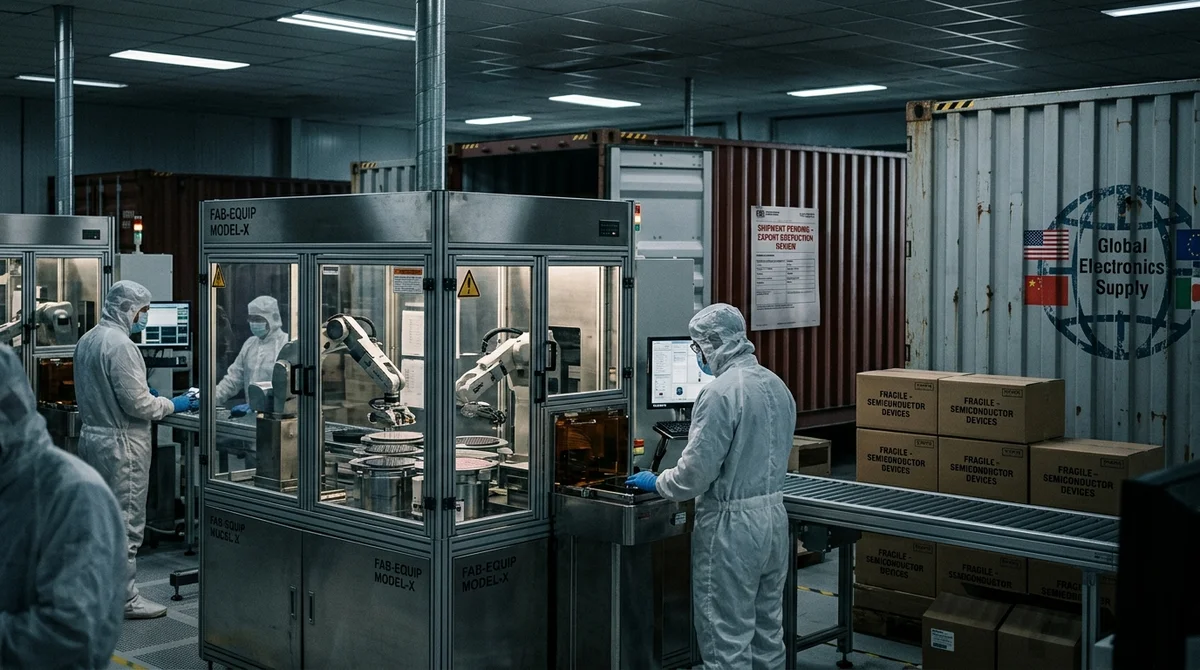
China warned that new export control bills in the United States could hit not only Chinese companies but the entire global semiconductor supply chain. After the House Foreign Affairs Committee advanced a package of measures targeting the chip industry on April 22, Beijing said it was closely monitoring the legislative process and assessing the possible consequences for its interests. The trigger for the response was a package of American export control initiatives, including the MATCH Act.
In general terms, it is aimed at further restricting supplies of critical equipment for semiconductor manufacturing to countries that Washington considers a strategic risk, primarily China. Simultaneously, the committee advanced other measures: they strengthen oversight of circumventing restrictions, toughen the regime for investigating violations, and expand pressure instruments around sensitive technologies. For the US, this is part of a broader line of containing China's technological growth in segments considered important for defense, AI, and industrial policy.
China's Ministry of Commerce on April 25 called this logic an abuse of the national security argument. The agency stated that if the respective bills are ultimately enacted, they will seriously undermine the international trade and economic order and significantly hurt the stability of the global semiconductor production and logistics chain. Beijing also made it clear that it does not intend to leave the matter unanswered: Chinese authorities promised to closely track the further movement of the bills, assess the damage to national interests, and if necessary, take measures to protect the legitimate rights of Chinese companies.
The reason for such a strong reaction is clear: the semiconductor market has long been organized as a deeply interconnected cross-border system. Chip design, software tools, manufacturing equipment, materials, factories, packaging, and final assembly are rarely concentrated in one country. Even pinpoint export bans can create a long chain of consequences: from supply delays and contract price increases to manufacturing line adjustments and reviews of investment plans.
The equipment segment for chip production is particularly sensitive, where critical competencies are distributed among American, European, and Japanese suppliers. If restrictions become broader and stricter, companies on both sides of the Pacific face not only direct bans but also increased legal uncertainty. An important nuance is that the semiconductor conflict has long gone beyond a bilateral dispute.
Previous US restrictions have already forced international partners to adjust licenses, service contracts, and product assortments for the Chinese market. As a result, some players lose revenue, some relocate assembly, and some accelerate localization. Therefore, even discussion of new rules affects decisions now: companies are building in scheduling buffers, reconsidering purchases, and being more cautious about long-term commitments.
For the industry, this is yet another sign that technological divergence between the US and China continues, even if the specific wording of the bills may still change in subsequent stages. In recent years, export controls have become one of the main tools of pressure in global competition for chips and computing power. Each new tightening hits the familiar market model, where equipment manufacturers, contract fabrication plants, chip developers, and corporate customers could rely on relatively predictable rules.
Now business must plan not only demand and capacity, but also political risk: where equipment can be purchased, which supplies will require licenses, and which contracts may be stopped due to new regulations. In the short term, we are not yet talking about an immediate cutoff of supplies, but about another raising of the stakes. But the very fact of advancing such bills already increases pressure on suppliers, accelerates the search for alternative channels, and pushes China toward an even more aggressive course on technological autonomy.
For the global market, this means more fragmentation, less predictability, and more expensive logistics in an industry without which neither electronics, nor the automotive industry, nor AI infrastructure works today.
Want to stop reading about AI and start using it?
AI News is a curated feed of AI/tech news. Hamidun Academy teaches you to use AI systematically in your work.