Oakland Court to Hear Elon Musk's Lawsuit Against OpenAI and Sam Altman Over Mission
A lawsuit filed by Elon Musk against OpenAI and Sam Altman begins in Oakland. The court will determine whether the company breached its nonprofit mission as…
AI-processed from TNW; edited by Hamidun News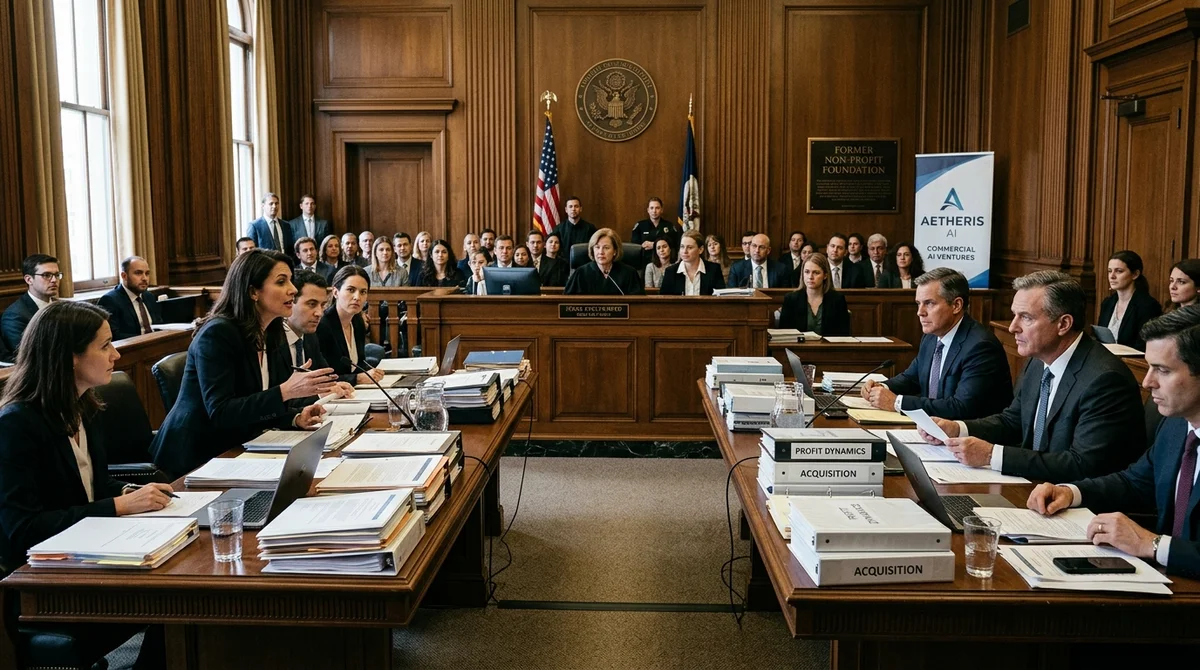
In Oakland, one of the most important trials for the AI industry is beginning: a jury will have to decide whether OpenAI violated its own non-profit mission when it transformed from a research organization into one of the most expensive players in the technology market. The lawsuit was filed by Elon Musk—one of OpenAI's co-founders, who donated at least $38 million to the project and now argues that the original promises were broken. Jury selection starts in federal court on Monday.
The central question of the case cannot be reduced to an ordinary corporate dispute between former partners. The court will have to determine whether OpenAI's transition from a charitable-logic structure to a model closely tied to commercial growth constituted a breach of charitable trust obligations—that is, obligations to the mission, donors, and the very purpose of the organization's existence. Unlike typical lawsuits over control and money, this one will also require examining the original intentions: exactly what was promised to project participants and the public when OpenAI was created as an alternative to the closed research labs of large corporations.
The form of the process itself is important: the question will be evaluated by a jury, which means the parties will have to translate complex corporate and legal schemes into the language of understandable promises, motives, and breaches. Musk participated in launching OpenAI in 2015 together with several notable figures from Silicon Valley. From the start, the project was presented as a non-profit laboratory that would develop artificial intelligence for public benefit, not for profit maximization.
Later, a hybrid structure with a commercial wing was built around OpenAI, and the success of generative models and ChatGPT transformed the company into one of the main symbols of the AI boom. This very turn—from research mission to enormous market value—became the core of the current conflict. The higher the company's valuation rose and the stronger its market influence became, the sharper the question: can one so radically change the management model without violating initial commitments?
On the side of the defendants are Sam Altman, OpenAI, and related entities. Although the main arguments will still unfold in court, it's already clear that the dispute will go beyond formal corporate architecture to the credibility of the company's internal history. From the headlines around the trial, it's evident that the focus will be on records, including diary notes from Greg Brockman and other early-period documents that may reveal discrepancies between public formulations and what was discussed internally.
If the jury finds these materials persuasive, the dispute over strategy will quickly turn into a dispute over trust in the versions told by the co-founders themselves. For OpenAI, the risks extend far beyond the reputation of individual leaders. A court ruling could affect not only the relationships between former project participants, but also the very logic of managing companies that grew out of non-profit initiatives.
OpenAI's success has long influenced the entire market: valuations of AI startups, investment structure, regulator expectations, and approaches to safety of cutting-edge models. Therefore, any court ruling on where mission ends and commercial interest begins will be closely studied far beyond this case—by investors, lawyers, competitors, and foundations supporting technology projects with public rhetoric. The main significance of this trial is that it examines not just Musk and Altman's personal conflict.
The jury effectively must answer a broader question: can one build a project on the promise to work in society's interests, and then rebuild it as a mega-expensive commercial business without legal consequences? For the entire AI industry, this is a test of how seriously the market and American courts are prepared to take companies' initial commitments when they create technologies of systemic scale.
Want to stop reading about AI and start using it?
AI News is a curated feed of AI/tech news. Hamidun Academy teaches you to use AI systematically in your work.