Nvidia: Jensen Huang calls DeepSeek's launch on Huawei chips a threat to the USA
Nvidia CEO Jensen Huang warned that DeepSeek's bet on Huawei chips and shift from CUDA to CANN could be a strategic blow to US AI positions. The Chinese lab…
AI-processed from TNW; edited by Hamidun News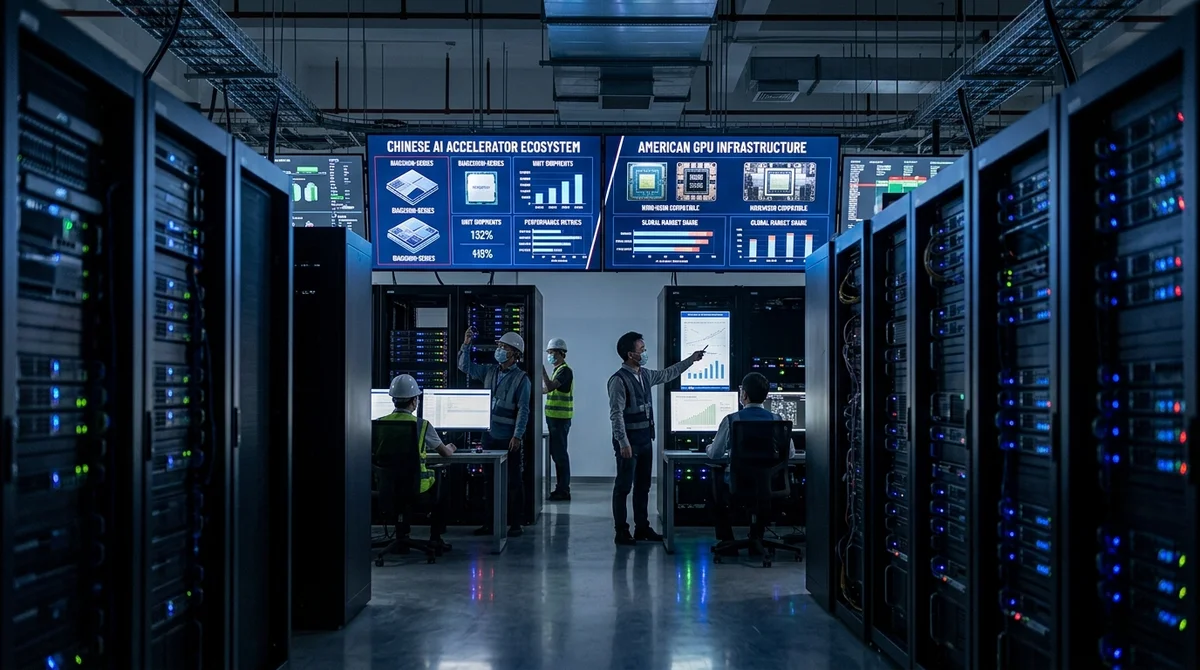
DeepSeek's transition from Nvidia's ecosystem to Huawei chips is not just a local story for the US about one Chinese developer, but a risk of losing the most critical lever of influence in the global AI market. This is how Nvidia CEO Jensen Huang described the situation: if powerful Chinese models begin optimizing not for the American stack, but for the Chinese one, the consequences will be strategic. In the Dwarkesh podcast, Huang stated that such a scenario would be a "terrible outcome" for the US.
The occasion was DeepSeek's preparation to launch V4 — a new multimodal base model expected to be presented before the end of April 2026. According to reports, the model is supposed to run on Huawei's Ascend 950PR processor. However, it's important to distinguish between training and inference: the model could have been trained on one set of accelerators and serve user requests on others.
The second part now looks like the main experimental field. The key threat to Nvidia and, more broadly, to American technological policy is related not only to the hardware itself, but to the software stack. DeepSeek spent several months rewriting base code for CANN — Huawei's software environment — and thus was leaving the world of CUDA, which Nvidia has been building for nearly two decades.
Even to this day, export restrictions on chip shipments to China haven't broken the dependency completely: if laboratories wrote code for CUDA, they still remained tied to the American ecosystem. Moving to CANN means an attempt to break this link and build parallel infrastructure without Nvidia as a required layer. For DeepSeek, this is a logical continuation of its previous strategy.
Its V3 model, released in late 2024, was trained on 2048 Nvidia H800 accelerators — chips specifically created for the Chinese market and later also fell under the ban. Then the company showed R1, a reasoning model that could compete with notably more expensive American systems. If V4 proves successful on Huawei Ascend, it will be the next demonstration: a Chinese laboratory is capable of building strong models not only cheaper, but with less dependence on American equipment.
In terms of pure performance, Huawei is still lagging. The Ascend 910C, the previous generation, delivered approximately 60% of Nvidia H100 performance in inference tasks, and H100 itself is no longer the best accelerator in Nvidia's lineup. According to estimates in the article, American chips are currently about five times more powerful than Chinese counterparts, and by 2027 the gap could widen to seventeen times.
Huawei plans to supply around 750,000 AI chips in 2026, but in total this is only 3–5% of Nvidia's aggregate computing power. Yet what worries Huang is not the current gap, but the trajectory: China can compensate for weaker hardware with the scale of energy resources, number of researchers, and quality of optimization. This has already manifested in DeepSeek R2.
The model was delayed several times due to problems training on Huawei equipment, and ultimately the company had to return to Nvidia accelerators for training, leaving Chinese chips mainly for inference. This episode shows that in heavy training the gap is still real. But commercial value emerges not only at the training stage.
If inference on Huawei proves stable enough and economically sound, the market could accept a scheme in which American accelerators cease to be mandatory at least on the deployment side. Against this backdrop, the paradox of export restrictions is particularly striking. Nvidia has resumed production of more powerful H200 chips for the Chinese market, but according to the company, the Chinese side is blocking their import, protecting its domestic producer in the form of Huawei.
Nvidia's CFO previously stated that the company has effectively received no H200 sales in China. Simultaneously, political pressure is intensifying in the US: lawmakers are discussing whether to add DeepSeek, Moonshot AI, and MiniMax to the export restrictions list. It turns out that measures designed to slow down China may be additionally accelerating the assembly of China's own AI stack.
For the market, this means a shift in the very logic of competition. The question is no longer just about who has the fastest chips, but about who controls the standard environment for developing and deploying models. If DeepSeek proves that a large multimodal system can operate competitively on Huawei Ascend and CANN, several pillars of American advantage will be under pressure: the world's dependence on CUDA, arguments for export control, and the habit of building AI infrastructure around Nvidia by default.
This appears to be what Huang fears — not today's defeat, but a scenario in which the Chinese alternative ceases to be an experiment and becomes a standard path for the entire industry.
Want to stop reading about AI and start using it?
AI News is a curated feed of AI/tech news. Hamidun Academy teaches you to use AI systematically in your work.