Manitoba prepares strict ban on social media and AI chatbots for minors
Manitoba is set to ban minors from accessing not only social media but also AI chatbots. This is among the strongest signals from regional authorities: the…
AI-processed from Bloomberg Tech; edited by Hamidun News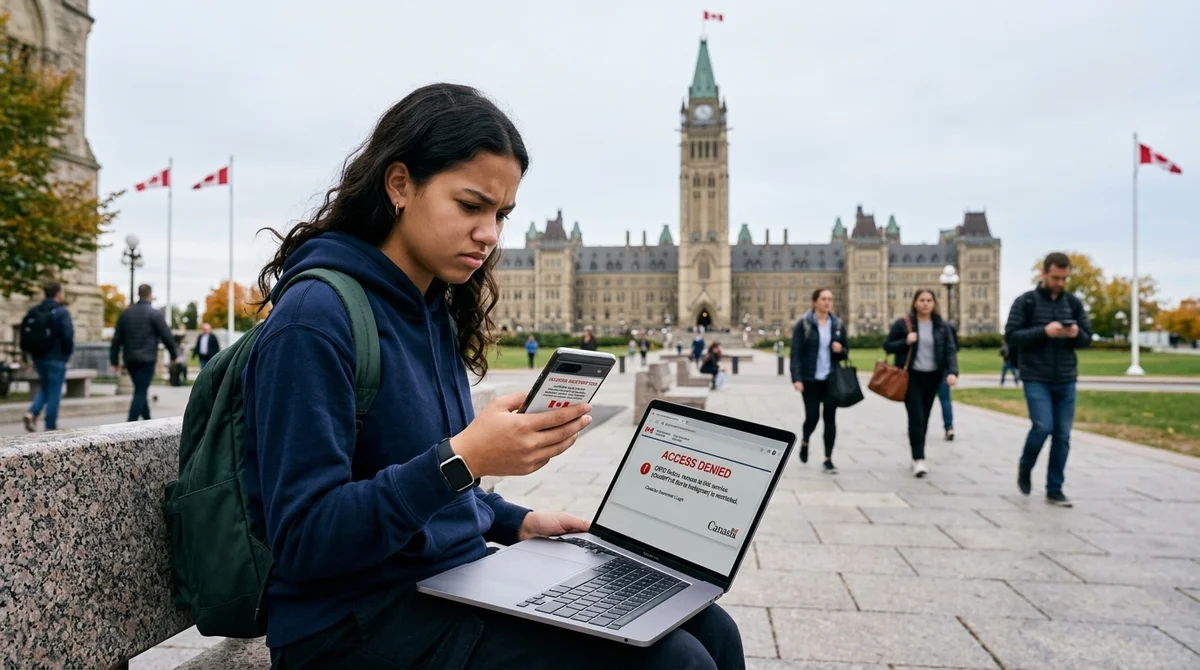
The Canadian province of Manitoba is preparing one of the strictest regional measures against digital platforms for teenagers: authorities want to block young users' access to both social media and AI chatbots simultaneously. If the initiative is formalized into law or mandatory rules for services, we are no longer talking about recommendations for parents and schools, but about direct restriction of access to two key types of online products used daily by children and adolescents. The wording itself is particularly telling, because both familiar social networks and generative AI ended up in one package.
Until now, the main political pressure in such discussions has been focused on platforms with infinite feeds, algorithmic ranking, and engagement mechanics. Manitoba, based on the province's leadership statements, is expanding this framework: now conversational AI services that answer questions, help with homework, maintain dialogue, and increasingly become everyday tools for young people are considered potentially risky digital environments for minors. The logic of such a decision is understandable.
Regulators have long been concerned about social media's dependence on endless scrolling, pressure from recommendations, harmful content, cyberbullying, and impact on adolescents' self-esteem. AI chatbots have a different risk list, but no less sensitive: confident errors in responses, overly human-like communication style, possibility of discussing dangerous topics without sufficient restrictions, and collection of user data during dialogue. For adult audiences, these issues are already considered serious, but in the case of children and adolescents, political reaction almost inevitably becomes stricter.
Yet the main question is not the ban itself, but the mechanics of its enforcement. To truly restrict minors' access, platforms need a way to verify age, which means the role of ID verification increases, along with control from app stores, device operators, or the services themselves. Any such scheme immediately triggers a dispute over privacy: to keep children out of a product, the system usually needs to collect more data about all users, including adults.
Therefore, such initiatives almost always find themselves at the intersection of several conflicts simultaneously — between security and confidentiality, between freedom of access and platform obligations, between the powers of regional authorities and the capabilities of global technology companies. Another important point is symbolic. When regional authorities place AI chatbots in the same category as social media in the context of child protection, they are effectively changing the tone of the entire discussion around AI.
Previously, such services were more often discussed as tools for productivity, information search, or education. Now a different perspective is increasingly visible: a chatbot is not just an assistant, but an independent media environment that can shape user habits, trust, and behavior. For companies developing consumer AI, this is a bad signal: the more actively a product enters everyday communication, the higher the chance of receiving regulation under the logic of protecting minors.
It remains unclear who exactly in Manitoba will be classified as young people, how quickly authorities will attempt to implement the ban, and whether exceptions will be provided for educational scenarios. Technical details have also not been disclosed: whether the obligation to restrict will fall on the platforms themselves, device manufacturers, or intermediaries like app stores. But even without these answers, the statement already shows the direction of movement.
Politicians no longer want to discuss social media separately, neural networks separately, and children's online safety separately. All of this is beginning to come together in a single regulatory circuit. For the market, this means one simple thing: the stage when AI products could grow rapidly under the argument that "this is just a new interface to information" is ending.
If Manitoba's initiative gains traction, other regions will find it easier to propose similar measures, and platforms will have to design children's restrictions, age filters, and more transparent usage rules in advance. Otherwise, the question of minors' access to AI will be decided not by product design, but by top-down bans.
Want to stop reading about AI and start using it?
AI News is a curated feed of AI/tech news. Hamidun Academy teaches you to use AI systematically in your work.