Rio Tinto and the copper race: how the AI boom forces the US to urgently scale mining
The artificial intelligence boom sharply increases electricity demand, and with it — copper needs for data centers, grids and substations. The US has barely…
AI-processed from Bloomberg Tech; edited by Hamidun News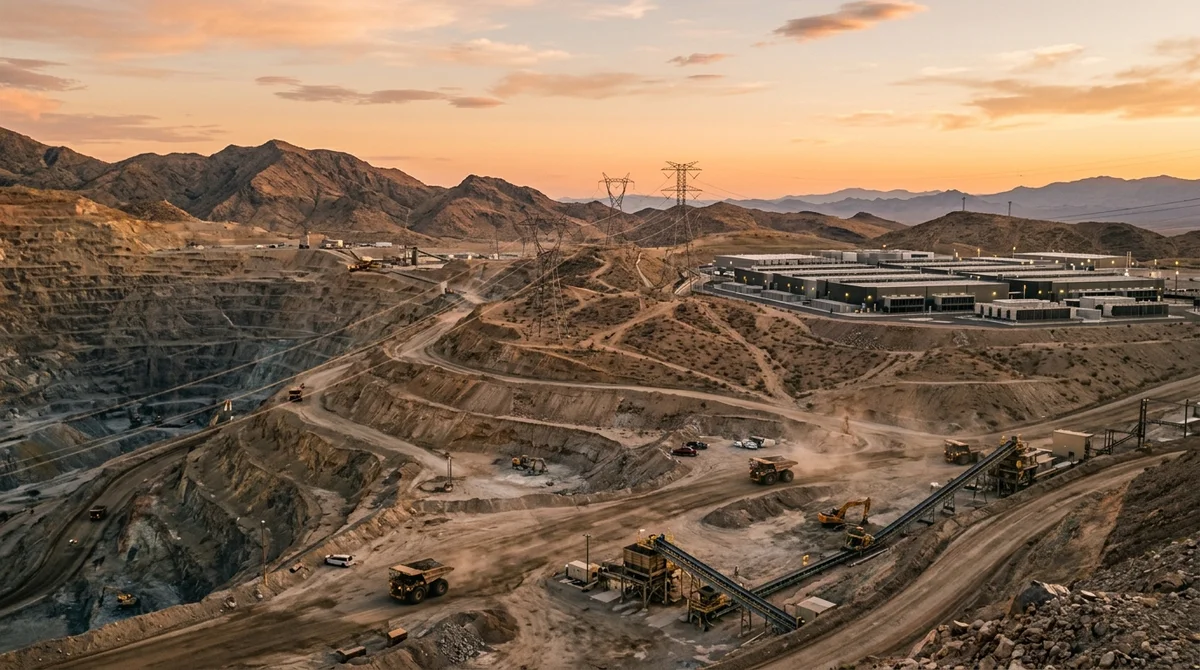
Artificial intelligence is changing not only the market for chips and cloud services, but also the raw materials map of the world. As companies build new data centers and expand power systems under the load of AI, copper is turning into one of the most scarce and strategically important materials. For the US, this is particularly acute: domestic metal production has stagnated for decades, and import dependence has been growing at precisely the moment when the need for reliable energy infrastructure began to accelerate sharply.
Copper is needed at virtually every level of AI infrastructure. It is used in cables, transformers, distribution systems, cooling systems, electric motors, and network equipment. The more data centers that are put into operation, the higher the load not only on server racks, but also on power transmission lines, substations, and regional power grids. As a result, demand is driven by two processes simultaneously: the development of computing power for training and running models, and parallel modernization of power grids, without which this entire growth cannot be physically powered. AI does not eliminate existing energy consumption but rather layers on top of it, so the requirements for network bandwidth and reserves are growing much faster than before.
The problem for the US is that copper mining within the country has not been growing for a long time at rates that would match the new industrial cycle. The industry has effectively lost momentum: old capacities were not offset by new ones, and the launch of major projects was constantly postponed. Against this background, the Resolution project in Arizona, which Rio Tinto is developing, is particularly notable. It shows two things at once. First, the country still has large undeveloped resources. Second, converting them into actual market supply is extremely difficult.
New mines require years of coordination, environmental assessments, infrastructure investments, and enormous capital. Even when a project looks promising on paper, the path from licenses to industrial production can take years, and sometimes more than a decade. Additional pressure comes from costs. The cost of construction, equipment, energy, and labor is rising, and the timelines for implementing such projects are becoming increasingly unpredictable. For investors, this means higher risk; for industry, it means the likelihood that domestic supply will lag behind demand.
Moreover, demand for copper in the AI era cannot simply be postponed: data centers, new transmission lines, and generation facilities are being built right now, and delays in material supplies quickly turn into construction delays. If the US cannot increase copper mining and processing quickly enough, the market will compensate for the deficit with imports, and in conditions of increasingly fierce global competition for raw materials.
A separate strategic issue is processing. Even if domestic mining increases, control over the value chain depends not only on mines but also on capacity for enrichment, smelting, and refining. China has strong positions here, playing a key role in global processing and able to influence the balance of supplies. This also changes the nature of the discussion itself: it is now about not only the profitability of raw material projects, but also about who controls the critical infrastructure of the new technological wave.
As a result, for the US, the issue comes down to industrial resilience, energy security, and the ability to quickly build infrastructure for the new wave of computing. The main conclusion is that the AI boom launches not only a race for models, accelerators, and data centers, but also a much less visible race for basic materials. Copper is becoming a bottleneck for power grids and digital infrastructure, and therefore a factor in national competitiveness.
If the US wants to maintain its pace in the AI economy, it will have to solve several tasks simultaneously: speed up permitting procedures, reduce investment barriers, and rebuild its own production chain. Otherwise, the key resource for the era of artificial intelligence will continue to be controlled by external suppliers, and the pace of AI sector development will depend not only on chips and models, but also on how quickly the country can mine and process metal.
Want to stop reading about AI and start using it?
AI News is a curated feed of AI/tech news. Hamidun Academy teaches you to use AI systematically in your work.