Elon Musk and Sam Altman Head to Court: OpenAI Mission Dispute Reaches New Heights
A lawsuit filed by Elon Musk against Sam Altman, OpenAI, and Microsoft begins trial in California. Musk contends that OpenAI abandoned its original nonprofit…
AI-processed from Guardian; edited by Hamidun News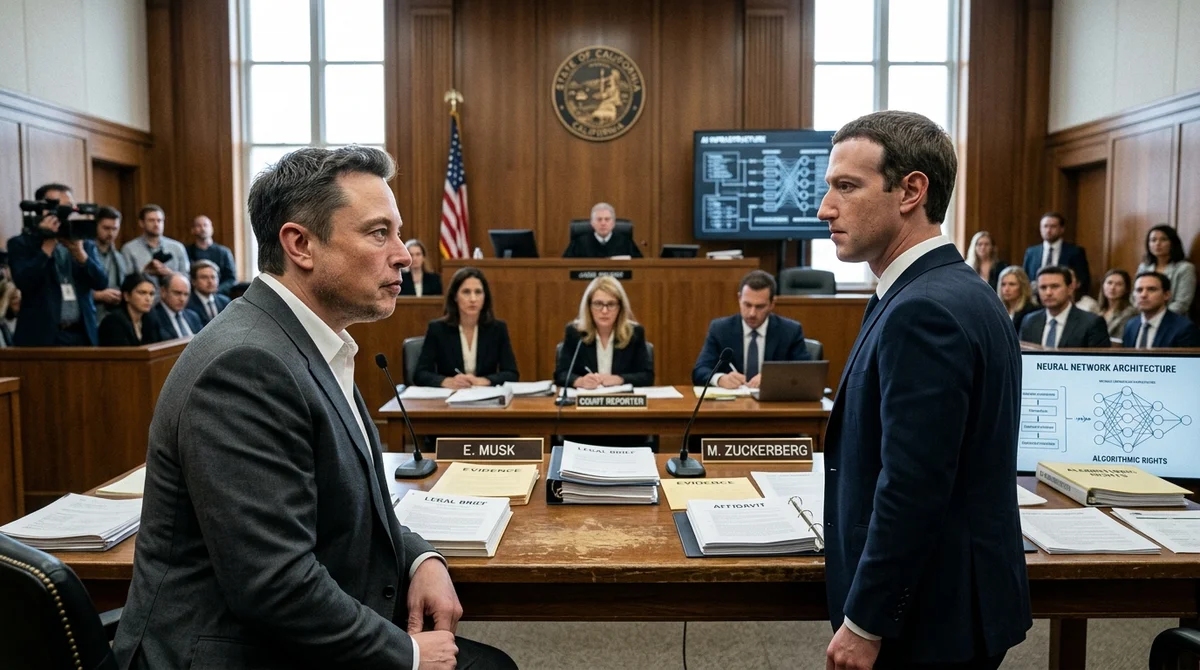
The legal conflict between Elon Musk and Sam Altman is reaching a new level: the dispute over the purpose for which OpenAI was created will now be heard in the federal court of California. Musk argues that the company's initial non-profit mission was violated, and OpenAI's structure has shifted toward commercial interests over time. For the industry, this is not simply a personal feud between two of Silicon Valley's most prominent figures, but a public test of whether promises about AI benefiting everyone can be reconciled with big money, corporate alliances, and the struggle for influence.
Musk's lawsuit is directed against Altman, OpenAI itself, company president Greg Brokman, and Microsoft, whom he considers a key partner in the project's controversial transformation. The case materials include allegations of breach of contract, fraud, and unjust enrichment. According to Musk's account, the agreements under which OpenAI was launched envisioned a different development model and different priorities.
The trial begins in the Oakland federal court: on Monday, April 27, jury selection is scheduled, with opening statements from both sides expected later in the week. The proceedings are expected to take between two and three weeks.
The significance of the trial extends far beyond formal claims. The court should hear internal correspondence from Musk and key OpenAI executives, which may show how exactly both sides understood the mission at the start and when their positions finally diverged. Among potential witnesses are Musk himself, Altman, and Microsoft CEO Satya Nadella.
This is already being regarded as a rare case where closed discussions about power, strategy, and money within the AI industry can become part of public legal proceedings. For OpenAI, this is a risk of reputational damage; for Musk, it is an opportunity to establish his version of history before the market and regulators. OpenAI itself rejects the accusations and argues that Musk's actions are motivated not by protection of the initial principles, but by personal conflict and jealousy of the company's success.
This defense line is no less important than the legal arguments themselves: it shifts the dispute from the realm of corporate structure to the realm of motivation. In other words, the court will need to evaluate not only documents and formulations of early agreements, but also the context of years-long animosity between people who once participated together in creating one of the world's most influential AI organizations. In this sense, the trial will almost inevitably become a media event, where every new detail will be interpreted not only by lawyers but also by investors, competitors, and politicians.
Particular interest is raised by Microsoft's role. Although the main public line of the conflict is built around Musk and Altman, the involvement of the largest technology partner makes the dispute far wider than a private quarrel between former co-founders. If details about the distribution of influence, commercial incentives, and the actual decision-making mechanism at OpenAI emerge during the hearings, this will intensify the already acute questions about who actually controls key AI platforms.
Against the backdrop of the global race for generative AI, such questions have long ceased to be an internal company matter: they affect the market, access to technologies, and trust in promises about the industry's safe development. The main conclusion is simple: the Musk v. Altman court case is not only a dispute about old agreements, but a test of transparency for the entire AI ecosystem.
If the proceedings show that even the most prominent players in the industry have no common answer to the question of mission, control, and the limits of commercialization, the consequences will extend far beyond a single lawsuit. For the market, it is a signal that the struggle for the future of AI is increasingly taking place not only in laboratories and boardrooms, but in the courtroom.
Want to stop reading about AI and start using it?
AI News is a curated feed of AI/tech news. Hamidun Academy teaches you to use AI systematically in your work.