Seedance 2.0 draws attention with hyper-realistic generation of people and scenes
Seedance 2.0 is a multimodal model that works with text, images, audio and video. Buzz around it stems not only from video quality but also from its nearly…
AI-processed from Habr AI; edited by Hamidun News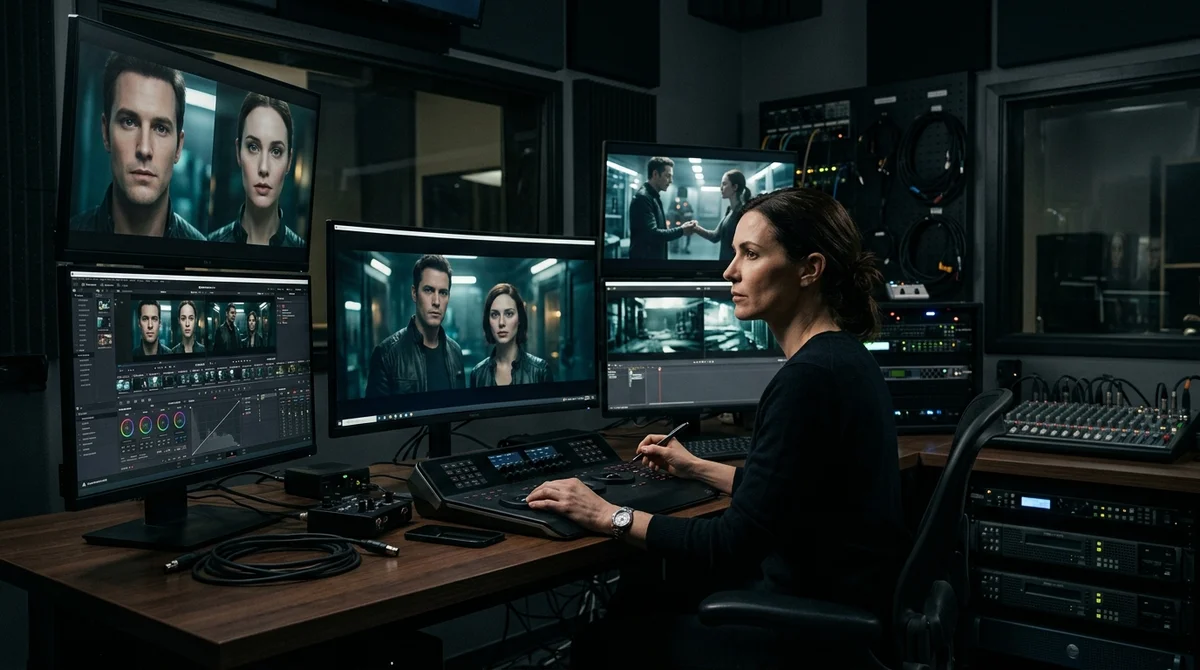
Seedance 2.0 has quickly become one of the most discussed video generation models, although its public release has been notably delayed relative to market expectations. The reason for this interest is clear: the system is capable of creating such photorealistic scenes with people, characters, and cinematic lighting that videos can easily be mistaken for actual footage.
It is precisely this combination of quality and unsettling realism that has elevated the model from the circle of ordinary AI news into the category of technologies followed not only by developers but also by a wide audience. In essence, Seedance 2.0 is a unified multimodal system that works not only with text but also with images, audio, and video.
This approach is important because it makes the model not simply a video generator from a prompt, but a more versatile tool for assembling scenes from different types of source data. A user can provide a description, rely on a reference image, add audio as an additional input, or refine existing video material. For the market, this is a step from individual demo reels to more complex production, where AI becomes part of a full content creation process.
In practice, such a scheme opens up several scenarios at once. Some creators will be able to quickly assemble concept videos and test ideas without expensive shooting, others will adapt visual style for advertising campaigns, music videos, or short narrative clips. The very fact of combining different input modes is also important: the smaller the gap between a textual idea, a visual reference, and the final moving image, the closer such models come to the role of a universal editor rather than a toy generator for one-off experiments.
Special attention to Seedance 2.0 is connected to how it handles the depiction of people. If previously weak points of video models were unnatural facial expressions, awkward movement plasticity, and "plastic" image quality, here the emphasis has shifted toward photorealism.
This is precisely why videos with recognizable faces and characters that looked almost like fragments of a film or advertising campaign quickly began to circulate around the model. Visually, such a result is impressive, but at the same time raises the old question in a new form: the better the generation, the harder it is for viewers to distinguish synthetic footage from real shooting without additional markers and context. The delay in public release against this backdrop looks not like a coincidence but as a perfectly logical consequence of the system's own capabilities.
When a model can convincingly reproduce a person's appearance, the mood of a scene, and the texture of a film frame, developers inevitably face more stringent questions about safety, moderation, and permissible use scenarios. For the industry, this is a familiar crossroads: on one hand, such tools drastically lower the barrier to entry into video production and give authors, marketing teams, and studios a new level of speed; on the other hand, they intensify the risks of deepfakes, substitution of visual evidence, and mass production of convincing but false content. At the same time, the very architectural idea of multimodality makes Seedance 2.
0 particularly notable against competitors. It is no longer about generating one beautiful short clip from a text prompt. A broader scenario is emerging: the user assembles a scene from multiple inputs, maintains stylistic consistency, and continues an existing fragment.
If such tools become more stable and accessible, the market will receive not only eye-catching viral examples but also a practical set of tools for advertising, educational videos, scene prototyping, and rapid pre-production. The main conclusion is that Seedance 2.0 attracted attention not simply by image quality, but by a shift in the realism standard.
This is a case where technological progress simultaneously expands creative possibilities and sharpens the question of trust in images as evidence. The more convincing AI video becomes, the more important will be the rules of use, labeling of synthetic content, and tools for verifying the origin of videos.
Want to stop reading about AI and start using it?
AI News is a curated feed of AI/tech news. Hamidun Academy teaches you to use AI systematically in your work.