Anthropic and White House Discuss AI Mythos After Discovery of Thousands of Vulnerabilities
Anthropic has brought its Mythos model to the center of the political agenda, a model that, according to the company, can find vulnerabilities in code at the…
AI-processed from 3DNews AI; edited by Hamidun News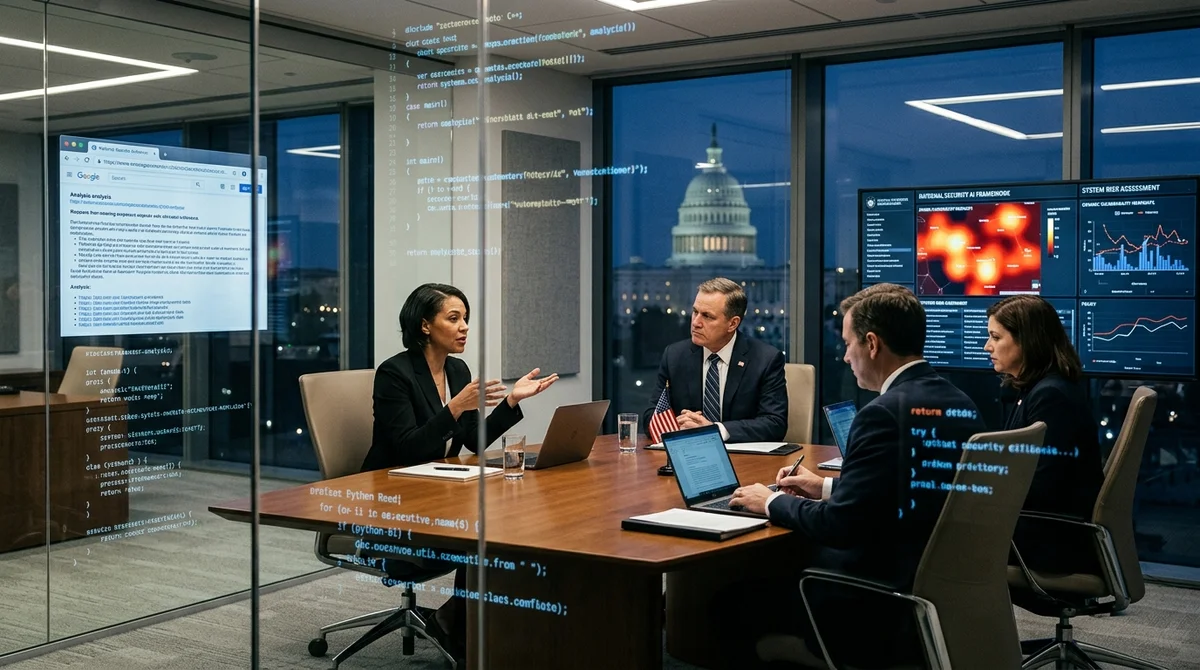
The story around Mythos shows that the boundary between "useful AI for security" and a tool of strategic significance has become very thin. If the Anthropic model is indeed capable of finding vulnerabilities in code en masse faster and deeper than classical researcher teams, then this is no longer a question only for developers and vendors, but also for the state responsible for the resilience of digital infrastructure. According to Anthropic, the new Mythos model is focused on finding weaknesses in program code and has already identified thousands of vulnerabilities in all major operating systems and browsers.
This statement alone has brought the company into the direct attention of the US administration. The head of Anthropic is to meet with the head of the White House staff, and the model's capabilities are being studied by officials from the president's circle. The phrasing about risk to national security here sounds not as rhetoric: if one tool is able to quickly find systemic breaches in mass software, the consequences could affect millions of devices.
The White House's interest is easily explained by the dual nature of such systems. On one hand, a model that accelerates bug-finding can help the industry close critical errors faster, reduce audit costs, and find problems before they are exploited by attackers. On the other hand, these very same capabilities can be applied in an offensive scenario: to automate reconnaissance, search for entry points, and select the most promising targets.
The higher the quality of analysis, the less time needed for attack preparation. A separate question is what exactly is hidden behind the claim of "thousands of vulnerabilities." In cybersecurity, quantity by itself does not yet equal the level of threat: some findings may relate to low-criticality errors, some to long-known classes of problems, and some may indeed represent serious risk.
But even in that case, the very scale of the search matters. If the model is able to consistently scan large volumes of code, compare error patterns, and prioritize findings faster than humans, it changes the economics of security. Companies get a chance to accelerate protection, and states get reason to review rules for access to such tools.
For Anthropic, this story is simultaneously a technological victory and a reputational stress test. The company has long bet on the topic of safe and managed AI, but such cases show how difficult it is to maintain balance between benefit and limitations. If Mythos is truly this effective, questions inevitably arise: who gets access to it, how are requests tracked, can malicious scenarios be restricted, within what timeframe are found vulnerabilities reported to software developers, and who is responsible if information about breaches leaks before a patch is released.
In cybersecurity, tool power always raises the price of error. On a broader level, the situation with Mythos fits well into a new stage of relations between AI companies and the state. Previously, authorities mainly discussed generative models in the context of misinformation, copyright, and impact on the labor market.
Now the cybersecurity component is increasingly prominent in the agenda: AI is assessed not only as an assistant for office tasks, but also as a factor capable of changing the pace of vulnerability detection, critical infrastructure protection, and the overall configuration of digital risks. Therefore, direct contact with the White House looks like a logical continuation: officials need to understand not only the system's capabilities but also its mode of operation. The conclusion here is quite harsh: the most valuable AI models will increasingly fall into a gray zone between a commercial product, a research tool, and an object of state control.
If Mythos confirms the stated results, the market will get a new standard for automated vulnerability searching, and authorities will get another argument in favor of tighter oversight of leading models. For the industry, this means a simple thing: the question is no longer whether AI can search for critical breaches, but who, on what terms, and at what speed will manage this process.
Want to stop reading about AI and start using it?
AI News is a curated feed of AI/tech news. Hamidun Academy teaches you to use AI systematically in your work.