Atech from Copenhagen Raises Undisclosed Pre-Seed from Lovable, Sequoia Scout and a16z Scout
Atech from Copenhagen raised an undisclosed pre-seed and aims to simplify hardware creation the way vibe-coding simplified software. The platform lets users…
AI-processed from TNW; edited by Hamidun News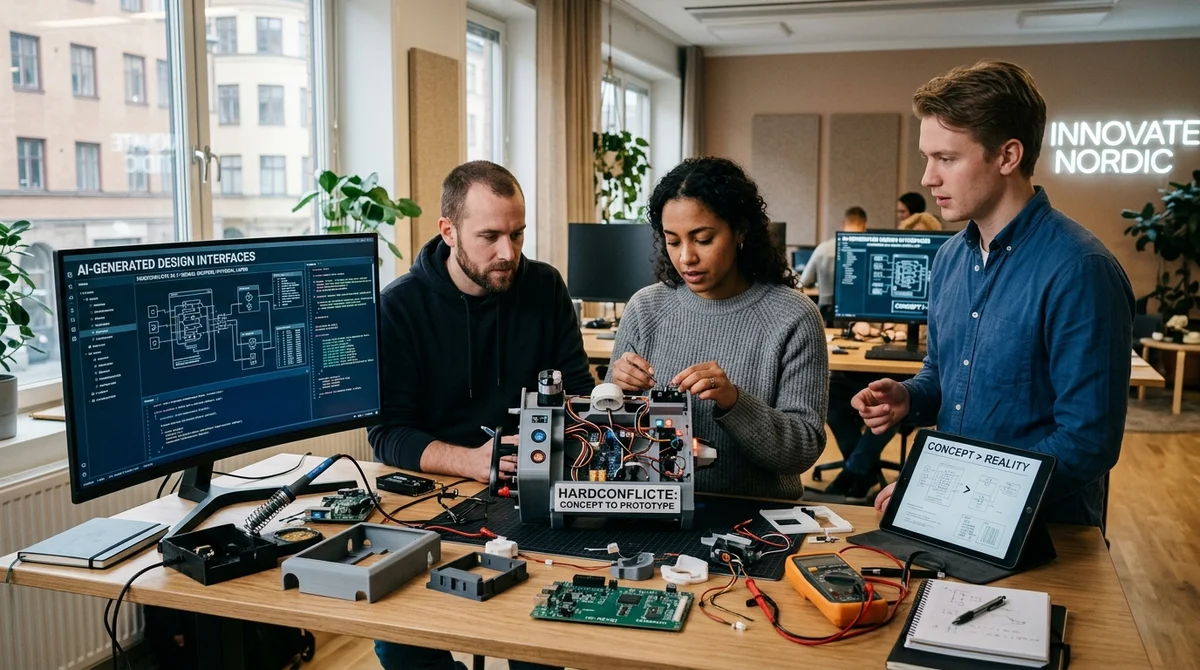
Atech wants to do for hardware what vibe-coding did for web development: turn an idea expressed in plain language into a working prototype. The Copenhagen startup has already secured pre-seed funding from a notable group of investors, and most importantly, public support from Lovable, one of the most prominent players in generative development. The round amount is not disclosed.
Among the investors are Nordic Makers, Emblem, Lovable itself, as well as the Sequoia Scout Fund and Andreessen Horowitz Scout Fund. For an early stage, this is a strong set of names, but accuracy matters here: this is not about classic direct investment from Sequoia or a16z in the company, but rather participation of their scout programs, through which network partners and founders can make small investments in young startups. For Atech, this is less about the volume of capital and more about a market signal: the team has caught the attention of people close to the most influential venture capital brands.
The startup was founded by Vladimir Baran, Thomas Erik Harmer, and David Stølmark. Atech's product is built around an idea the company calls vibe-engineering for hardware. A user describes a device in plain language, and the platform is supposed to return a working prototype, taking on the technical complexity under the hood.
Essentially, the team wants to create for physical products the same level of abstraction that modern AI tools have given to software development. Today a web application can be built and launched in a weekend even without a deep engineering background, but hardware doesn't yet have a similar end-to-end experience. This gap is precisely what Atech is trying to close.
The bet makes sense because creating hardware prototypes still requires either years of specialized training or significant spending on hiring experts. You need to understand circuit design, component selection, firmware, PCB layout, manufacturing constraints, and testing. In software, an error often ends with a quick patch and a new deployment. In hardware, the cost of mistakes is higher: you can end up with a physical object that simply doesn't work. So the idea of "describe a device in text and quickly get a result" sounds much more ambitious than the equivalent thesis for the web.
Lovable's participation is particularly significant. The Swedish startup became one of the most notable symbols of the vibe-coding wave: it allows non-programmers to build full-stack web applications through text prompts and has quickly grown to a valuation exceeding $1 billion. The head of Lovable personally supported Atech and drew a direct parallel between what his company did for software and what the new team is trying to do for hardware. This is not simply a compliment to familiar founders. For Atech, such endorsement serves as a frame in which the market will read the deal: as an attempt to transfer the already proven and tested "language to product" interface model into the world of physical engineering.
At a broader level, Atech fits into a trend increasingly described as Physical AI. This refers to intelligent systems that don't just generate text or code, but interact with the physical world: robots, drones, industrial systems, autonomous vehicles, and other devices. As this segment grows, the speed of hardware prototyping becomes not a niche skill but a competitive advantage.
But this is precisely where the main risk for Atech lies. If abstraction in software can hide a vast layer of complexity, in hardware it bumps against real constraints of materials, electronics, manufacturing, and logistics. The company still needs to prove that its stack can reliably cover PCB layout, component selection, firmware, and manufacturing tradeoffs.
If Atech succeeds, the market could gain one of the most interesting interface shifts of recent years: the path from idea to physical device would be significantly shortened, and access to hardware would widen for small teams and individual creators.
For now, this is an early bet without a disclosed amount and with many technical questions remaining, but the composition of investors and support from Lovable show that the thesis about more accessible hardware development has already found influential backers.
Want to stop reading about AI and start using it?
AI News is a curated feed of AI/tech news. Hamidun Academy teaches you to use AI systematically in your work.