China Forced Meta to Cancel $2B Manus Deal and Tightened Rules for AI Transactions
China forced Meta to cancel the $2 billion Manus purchase, determining that the deal's subject was not merely a company but critical AI competency. The…
AI-processed from TNW; edited by Hamidun News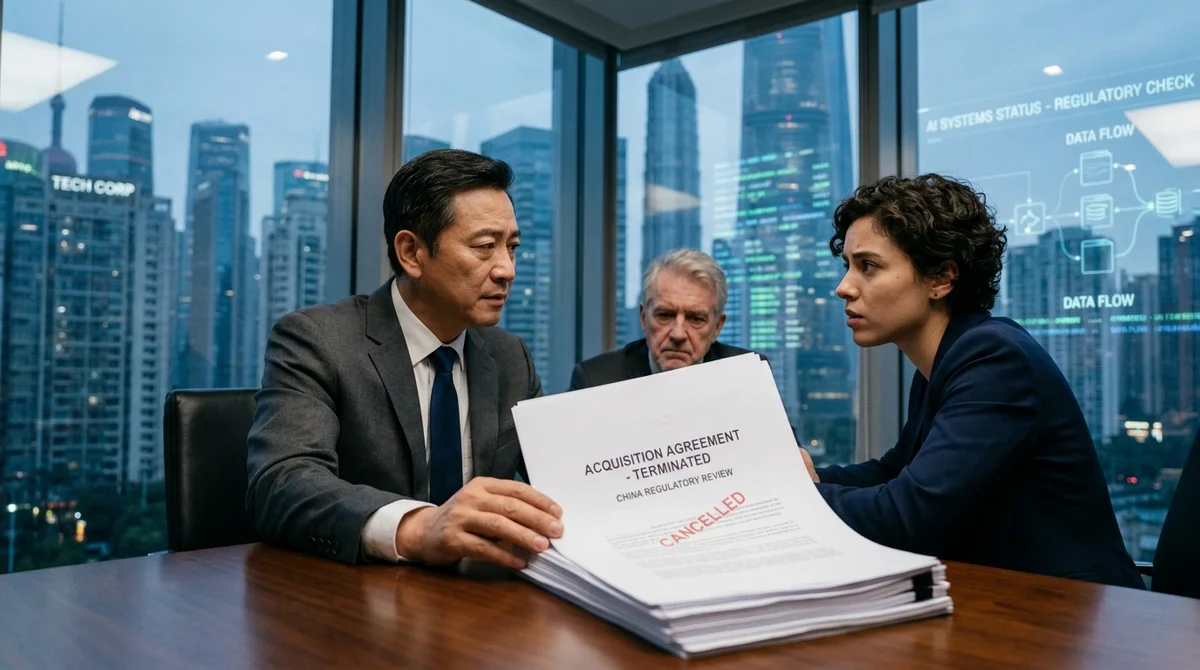
Chinese authorities demanded that Meta cancel the acquisition of AI startup Manus for $2 billion, and this decision appears far more significant than the deal amount itself. The regulator made clear that this is not merely a sale of a company to a foreign buyer, but rather a transfer of sensitive technological competence: the team, research culture, applied developments, and managerial know-how. For the market, this signals that in the era of generative and agentic AI, the state may view exports not just as code, servers, or data, but as the company's very capacity to build such systems.
In fact, the dispute over a single deal quickly became a test of who controls AI competencies that have grown within the Chinese ecosystem. The formal order to cancel the deal was issued by the relevant division of China's State Committee on Development and Reform, which oversees reviews of foreign investments from a security perspective. The deal was announced in December 2025, and just several months later the dispute escalated to severe state intervention.
According to reports, Manus co-founders Xiao Hun and Ji Yichao were forbidden from leaving China in March after being called to Beijing for explanations regarding possible violations of foreign investment rules. This sharply raised the stakes: the issue moved well beyond corporate procedure and became a precedent at the intersection of technology, geopolitics, and national security. Manus itself was not a random asset.
The startup, founded by Chinese entrepreneurs and registered in Singapore, quickly gained attention as one of the strongest agentic AI platforms of early 2025. Such a structure is typical for Chinese AI companies seeking international investment while maintaining operational roots in China. Its system could autonomously execute complex multi-step tasks in browsers, code editors, and file environments without constant human involvement at each step.
In spring 2025, the company raised $75 million from Benchmark, and then found itself at the center of a Meta deal worth over $2 billion. Meta, as reported, intended to shut down Manus's Chinese operations and completely exclude further Chinese ownership after deal closure. The key question for Beijing, judging by its actions, was not whether Meta strengthens its position in the Chinese consumer market, where its main services are already blocked anyway, but rather what exactly would fall under the control of an American corporation.
China's Ministry of Commerce launched an official review in January 2026, examining it through the lens of export control: is it considered an export when not a physical product is transferred, but rather a team, system, processes, and accumulated expertise within an organization of Chinese origin. This very framework makes the Manus case so important. If the state recognizes that an AI collective itself can be an export, then dozens of startups with similar structures fall under additional oversight: Chinese founders, international jurisdiction, and global investors.
In practice, this changes the negotiating positions of acquirers, funds, and founders themselves before contract signing. From this case emerges a new red line for the entire market. Registration in Singapore or another external jurisdiction no longer guarantees that Chinese authorities will refrain from intervening in the sale of a business to an American buyer.
Moreover, the Manus story could become a landmark case for broader policy in which Chinese technology companies would require separate approval for raising capital from the US or for exit deals. For Meta, the consequences are painful but limited: the company will either have to unwind the purchase or seek a legal solution for what parts of the deal can even be preserved. For the industry, the takeaway is broader: AI M&A deals must now be evaluated not only by price, synergy, and antitrust risks, but also by how states interpret the movement of talent, models, and organizational knowledge across borders.
The more valuable teams that can build autonomous AI systems become, the more often they will be considered a strategic resource rather than a normal corporate acquisition object.
Want to stop reading about AI and start using it?
AI News is a curated feed of AI/tech news. Hamidun Academy teaches you to use AI systematically in your work.