US Department of Justice Backs xAI in Colorado AI Regulation Dispute
The US Department of Justice supported xAI in its lawsuit against Colorado's AI regulation law. The agency argues that the state's regulations violate the…
AI-processed from Guardian; edited by Hamidun News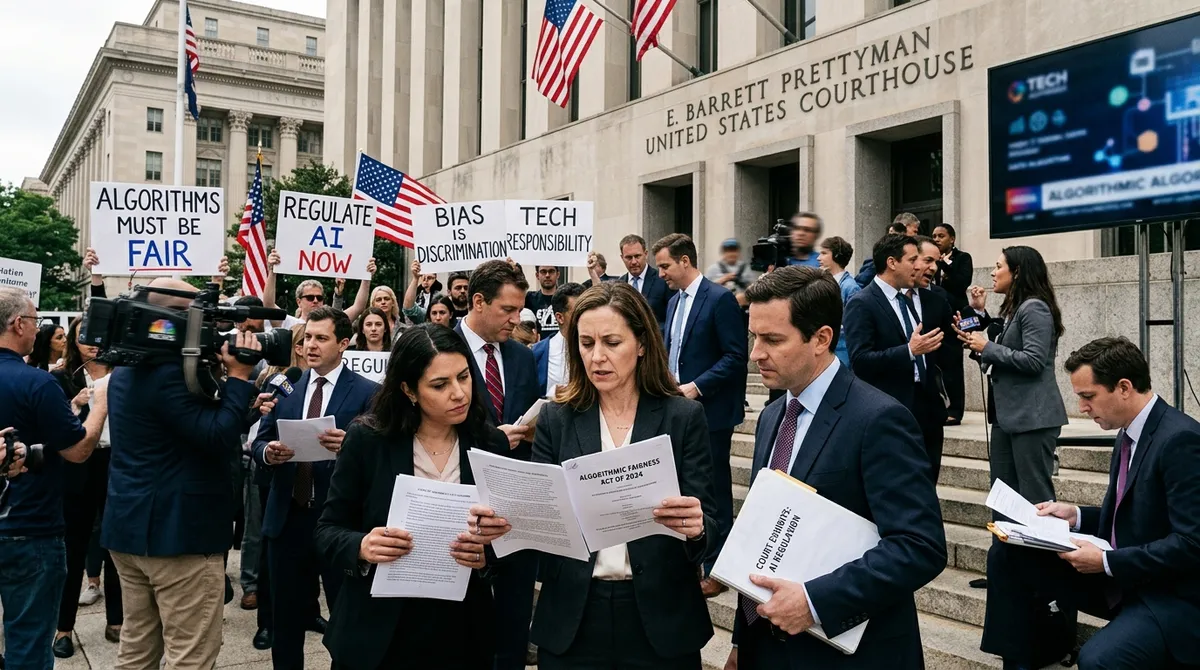
The federal government of the United States has significantly raised the stakes in a dispute over who will set the rules for artificial intelligence. The Department of Justice entered the lawsuit on the side of xAI, which is challenging Colorado's AI regulation law, thereby transforming a local lawsuit into a conflict between Washington and an individual state. The DOJ's intervention became known on April 24.
The agency informed the court that it wants to participate in the case where Elon Musk's company is attempting to overturn Colorado's norms aimed at controlling AI systems. In essence, the federal government made clear that the dispute concerns not only one company and one state, but the future architecture of industry regulation throughout the United States. While states attempt to introduce their own restrictions and requirements, the White House under Donald Trump is promoting the idea of a unified federal framework instead of a collection of disparate local rules.
For the industry this is especially sensitive: models, HR tools, moderation systems, and automated decision services typically operate across multiple markets simultaneously and work poorly with a set of incompatible regional norms. The DOJ's key argument is not related to innovation or competitive struggle, but to constitutional law. According to the agency, Colorado's law violates the equal protection guarantee enshrined in the 14th Amendment to the U.
S. Constitution. The document states that the state requires companies to prevent unintended discriminatory effects of their systems, but simultaneously allows certain forms of differential treatment if they are aimed at promoting diversity.
Federal lawyers consider this contradiction to be problematic: AI companies are obligated to avoid one form of discrimination, while another form is effectively recognized as permissible in certain cases. For xAI, support from the DOJ means a significant strengthening of its position in court. The company initially opposed state-level regulation, and now has gained an ally in the federal government, which is prepared to dispute with Colorado not only over the design of AI rules, but also over their constitutionality.
For Colorado itself, this conversely complicates the defense of the law: now it must respond not simply to claims from one technology company, but to arguments from the U.S. administration.
The DOJ's participation also increases the political weight of the case: other states that are preparing their own AI norms will look to it, as will companies evaluating where the line passes between regulation and excessive intervention. In a broader sense, the case shows how quickly the AI issue has moved from the domain of industry policy into a zone of open institutional conflict between states, courts, and federal authority. The dispute also demonstrates the main fault line in the American approach to AI.
Some politicians and regulators believe that the risks of algorithmic discrimination, errors, and opaque decisions require quick rules right now, even if those rules are adopted individually in each state. Others insist that such a model will create a legal mosaic, complicate product launches across the country, and give officials too much leeway for interpretation. Against this backdrop, the DOJ's intervention looks not like a technical procedural move, but a political signal: the administration wants to seize the initiative and show that AI rules should be formed in Washington, not in state capitals.
For the market, this means that the next stage of the struggle around artificial intelligence will take place not only in laboratories and boardrooms, but also in courts. If the federal line prevails, the United States could move toward a unified AI regulation regime. If states preserve space for their own laws, technology companies will have to work under increasingly fragmented requirements.
In either case, the xAI versus Colorado case becomes an important test of who exactly will write the rules for the American AI market.
Want to stop reading about AI and start using it?
AI News is a curated feed of AI/tech news. Hamidun Academy teaches you to use AI systematically in your work.