Mathieu Kassovitz: In two years, viewers won't care if the actor is real or AI-created
Director of 'Hate' Mathieu Kassovitz is making a film using AI and believes that very soon audiences won't care who's on screen—a real actor or a synthetic…
AI-processed from Guardian; edited by Hamidun News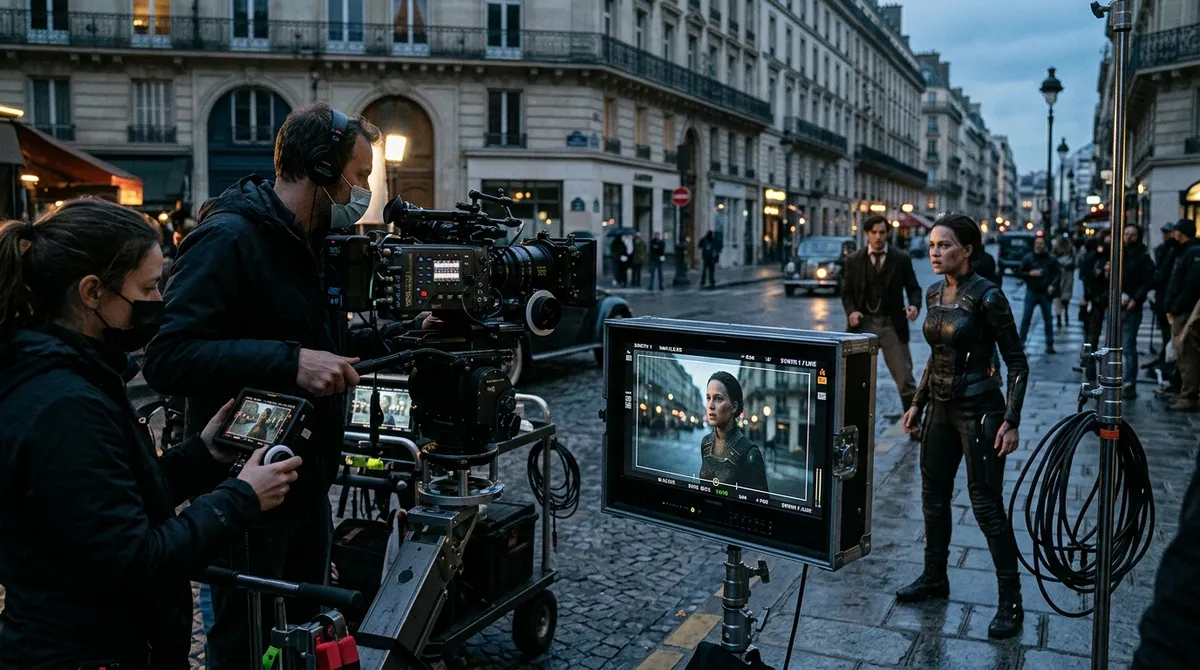
Director Mathieu Kassovitz, known for "Hate," is convinced that the question of whether a character on screen was played by a real actor will very quickly cease to be a matter of principle for mass audiences. By his forecast, in just two years viewers will think far less about the origin of a hero on screen — whether it was performed by a human, a digital double, or fully generated by an artificial intelligence system. Kassovitz himself is already working on a film using AI and speaks about the technology not as a temporary experiment, but as the next key tool for cinema.
For the film industry, this statement sounds particularly striking coming from a man known for "Hate" — a harsh and very vivid story of Parisian suburbs that became one of the most notable French films of its time. Therefore, interest is aroused not simply by another optimistic comment about AI, but by the turn of an author who became famous for precise human observation and almost documentary-like energy in his frames. Now he views generative technologies as a full part of the future of film production, rather than as a threat to the craft.
The very fact of such a shift shows that AI is ceasing to be a toy of tech enthusiasts and is increasingly discussed by people from traditional cinema, for whom actor physicality, the living texture of the face, and the unpredictability of human presence in the frame were previously key. Kassovitz calls AI the last great artistic tool left for authors to acquire. In such a formulation one hears not only enthusiasm for new possibilities, but also a rather radical view of the film production process itself.
If the director truly perceives AI this way, then it's not about targeted automation of individual tasks like pre-production, storyboarding, or post-processing, but about a deeper transformation: from creating images and characters to working with voice, movement, and screen presence. His thesis that viewers will soon not care who exactly "plays" the role essentially erases the previous boundary between acting and synthetic simulation. For studios and producers, this could mean more control over the result, fewer scheduling constraints, and theoretically cheaper work with reshoots, de-aging, duplicates, and localization.
For actors — conversely, intensified anxiety about where their work ends and where exploitation of their digital image begins. Equally telling is how sharply the director dismisses concerns around intellectual property rights. Against the backdrop of prolonged disputes about whether models can be trained on others' work, where the line of borrowing lies, and how to protect the work of actors, screenwriters, and artists, such a position looks almost defiantly challenging to the entire existing system of rules.
Essentially, Kassovitz proposes viewing AI not through a legal lens, but a practical one: if the tool allows faster, cheaper, or freer filmmaking, then the industry will use it anyway. But it is precisely here that the main nerve of the discussion runs: speed and convenience for studios far from always coincide with the interests of performers, rights holders, and those whose works have already become raw material for training models. His two-year forecast is also important.
This is not an abstract conversation about a distant future, but almost a production deadline, after which the market may begin to behave as if the authenticity of the performer no longer influences the commercial success of a film. If such a shift truly occurs, then not only filming methods will change, but also contracts, rules of consent for using appearance, payment schemes, project insurance, and the very logic of casting. Today audiences are still capable of perceiving digital people as a technical trick or a questionable compromise.
But the faster image generation, speech synthesis, and facial animation improve, the easier cinema will find it to present an artificial performer as a normal element of the screen, rather than as a sensation. Kassovitz's statement is important not because it settles the debate, but because it shows how quickly the tone of conversation within cinema is changing. If not long ago AI was discussed mainly as auxiliary technology, then increasingly it is being described as a full replacement for part of creative professions and even human screen presence.
This does not mean that the public will instantly accept synthetic actors as the norm. But it does mean that one of the notable European directors is already publicly betting on such a scenario — and thereby pushing the industry toward a harder choice between technological efficiency and the value of human participation.
Want to stop reading about AI and start using it?
AI News is a curated feed of AI/tech news. Hamidun Academy teaches you to use AI systematically in your work.