China blocks Meta's $2 billion acquisition of AI startup Manus
China halted Meta's $2 billion acquisition of AI startup Manus over concerns that key agentic AI technologies would transfer to the US. For Meta, it disrupts…
AI-processed from Bloomberg Tech; edited by Hamidun News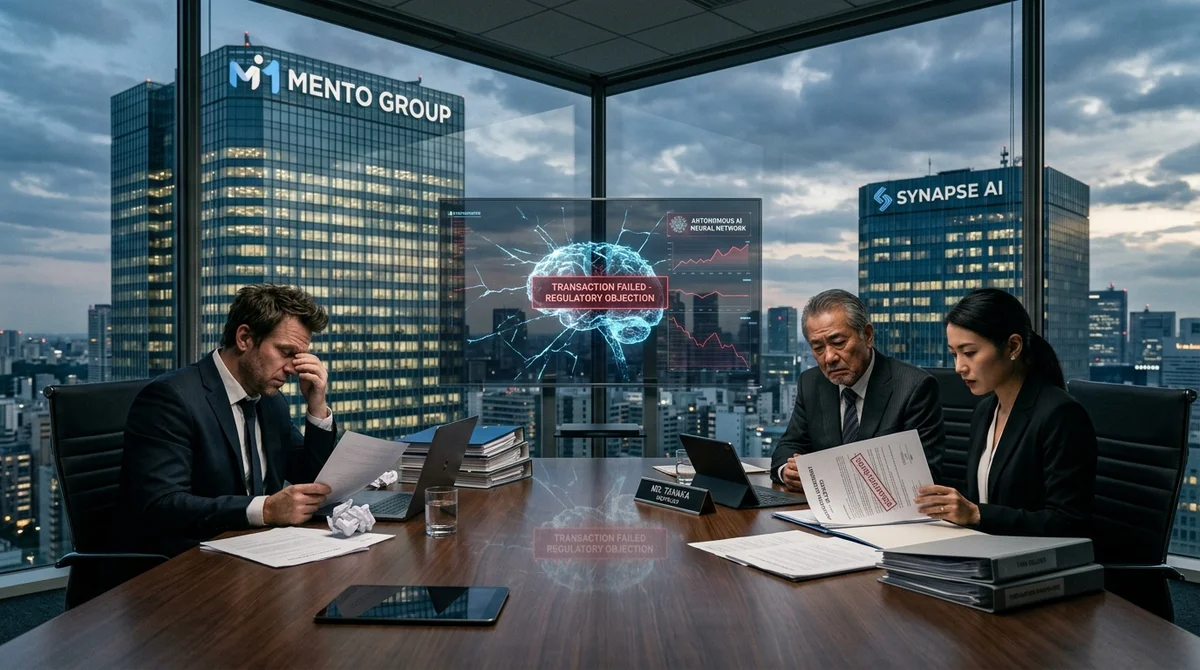
China has blocked Meta's acquisition of Manus for $2 billion, halting one of the most high-profile deals in the AI sphere and signaling that the transfer of promising Chinese technologies to American corporations is becoming a political issue rather than merely a corporate transaction. The decision stands out particularly because Manus operates in the agentic AI segment — systems that not only respond to queries but can plan actions, execute task chains, and operate more autonomously than ordinary chatbots. Essentially, Beijing decided to cancel the deal following criticism that it could lead to technology leakage to the United States.
Based on the official statements, the dispute over Manus centered less on price than on control over the team, intellectual property, and future products. For Chinese authorities, such assets are becoming sensitive: agentic AI systems are viewed as an important technological foundation for the next generation of digital services, corporate automation, and potentially broader strategic applications. In such deals, what matters is not just the code itself but also the accumulated data, research expertise, and the ability to quickly transform laboratory developments into mass-market products.
For Meta, this acquisition would have appeared as a quick way to strengthen its position in the new AI product race. Major technology companies are already competing not just on models but on interfaces, task execution tools, and platforms that allow AI to act on behalf of the user. Startups that can build such agentic scenarios become particularly valuable because they close the application layer: from work assistants and business process automation to more complex digital operators.
This is why a separate market for agentic AI products is now forming—products capable of taking on a significant share of routine work without constant human involvement. The $2 billion deal demonstrated that Meta was prepared to pay not for an early experiment but for a potentially strategic asset. China's decision also aligns with a broader push for technological sovereignty.
Even if formally the discussion concerns a single M&A transaction, the signal to the market is crystal clear: companies creating critically important AI developments within the country will not be able to freely transfer to the control of American players if the state considers it a risk. This increases uncertainty for cross-border AI deals, especially where code, research teams, data, and infrastructure developments are involved. For investors, this means that the valuation of such startups now depends more heavily not only on technology and revenue but also on political approval of the deal itself.
For founders, it is a reminder that a strategic exit through sale to a global tech giant may turn out to be not just a business question but a matter of state policy. For Manus itself, the story could be both a limitation and an opportunity simultaneously. On one hand, the startup loses an immediate exit under the wing of a global tech giant with its computational resources, product scale, and distribution channels.
On the other hand, the blockade confirms that the company's development is perceived as important enough to dispute at the state level. This could strengthen interest in Manus within China, raise expectations for its further growth, and make it part of a more local AI ecosystem where key technologies are kept within the country. The key takeaway is that the AI market is increasingly operating outside the usual rules of venture capital and corporate acquisitions.
If previously a major deal meant primarily synergy between product, team, and capital, now it increasingly passes through a technology security filter. The blockade of Manus's acquisition shows: in the agentic AI segment, the price of an asset is measured not just in money but also in who exactly gains control of the technology. For Meta, this is a thwarted important strengthening, for China—a demonstration of a firm line, and for the entire industry—a reminder that the next major AI deals will be decided not just in negotiation rooms but at the level of states.
Want to stop reading about AI and start using it?
AI News is a curated feed of AI/tech news. Hamidun Academy teaches you to use AI systematically in your work.