Elon Musk's lawsuit against Sam Altman goes to court: Oakland decides OpenAI's future
A federal court case has opened in Oakland over Musk's claims against OpenAI and Sam Altman. Musk is seeking up to $150 billion, restoration of the company's…
AI-processed from TNW; edited by Hamidun News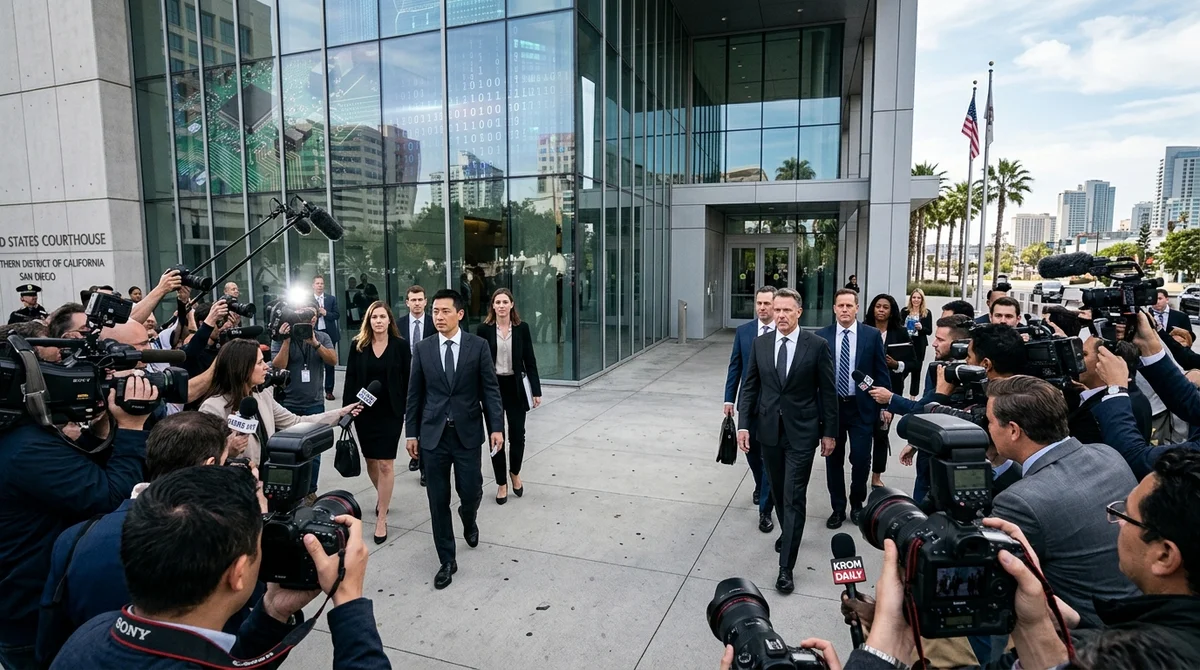
On April 27, 2026, what is arguably the most important trial in OpenAI's history began in federal court in Oakland: Elon Musk is attempting to prove that the company, created as a non-profit research laboratory, abandoned its original mission and transformed into a commercial machine. At stake is not only Musk's personal conflict with Sam Altman, but also the question of whether a structure that promised to work for humanity's benefit can legally restructure itself into a business valued at hundreds of billions of dollars. Formally, the dispute concerns events from 2015–2019.
Musk, Altman, Greg Brockman, and others launched OpenAI as a non-profit project that was supposed to develop strong AI in the interests of society, rather than investors. Later, in 2019, a commercial structure emerged within OpenAI, and subsequently the company received major funding and a strategic partnership with Microsoft. Musk claims that he was either not warned about such a turn of events or was misled, and therefore the initial agreements were violated.
OpenAI responds differently: according to the company, Musk knew about the search for a more commercial model, himself proposed radical options like merging with Tesla, and left when he didn't get control. The lawsuit was filed in August 2024 and by spring 2026 reached full federal proceedings. At the center of the case are Musk's demands to return OpenAI to non-profit status, remove Altman from leadership, and recover up to $150 billion from OpenAI and Microsoft, directing the money to the organization's charitable arm.
Before the start of proceedings, the case was narrowed: instead of a long list of claims, the court retained key questions about unjust enrichment and breach of charitable trust. The jury plays a consultative role in this proceeding, with the final decision to be made by Judge Yvonne Gonzalez Rogers. According to the approved schedule, proceedings began on April 27, opening statements may start no earlier than April 28, and the trial itself, according to the current schedule, could stretch for nearly four weeks.
Special interest in the proceedings is added by documents and witnesses. One notable episode was a 2017 internal recording of Greg Brockman, which the parties interpret oppositely: for Musk, it's possible evidence that he was deliberately sidelined from OpenAI; for the defense, a sign that leadership feared his drive for control. It is expected that Musk himself, Sam Altman, and according to reports from American media, Microsoft CEO Satya Nadella will testify in court.
This transforms the dispute from an ordinary corporate lawsuit into a public examination of OpenAI's entire structure: how exactly were decisions made, who determined the balance between mission and capital, and what role did investors and partners play in this transformation. A separate layer of this story is the moment at which the proceeding starts. OpenAI enters the court with the status of one of the most expensive players on the AI market with a valuation of around $852 billion.
Therefore, the dispute has long since transcended the personal feud of two billionaires. If the court agrees with Musk's key arguments, the very legal logic that allowed OpenAI to grow from a non-profit project into an extremely expensive commercial company could be at risk. If the company successfully defends its position, it will become a strong signal to the entire market: promises about mission and public benefit can be combined with aggressive capital raising if the structure is properly organized.
The main point of the Oakland proceeding is not about which former allies will wound each other more sharply in the courtroom. The court is essentially testing where the boundary lies between an idealistic startup manifesto and legally binding promises. For OpenAI, this case is about the right to its own evolution.
For the entire industry—an early test of how AI companies will be judged when their original mission collides with money, power, and the race for leadership.
Want to stop reading about AI and start using it?
AI News is a curated feed of AI/tech news. Hamidun Academy teaches you to use AI systematically in your work.