OpenAI prepares AI smartphone: chips to be created by MediaTek and Qualcomm, assembly to be handled by Luxshare
OpenAI is preparing to enter the smartphone market and has already engaged MediaTek, Qualcomm, and Luxshare. The project targets a device capable of…
AI-processed from 3DNews AI; edited by Hamidun News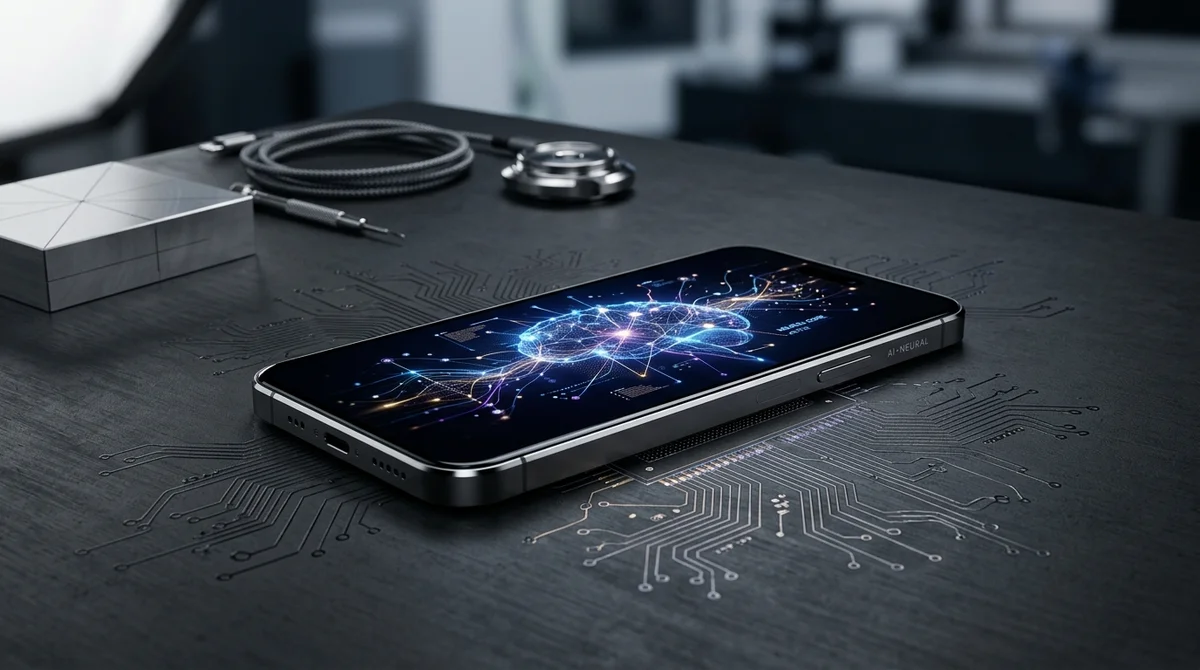
OpenAI seems to be preparing to move beyond software and cloud services: the company has started developing its own AI smartphone and has already brought MediaTek, Qualcomm, and China-based Luxshare into the project. If plans don't change, mass production of the device will begin in 2028. The main bet is not simply on another phone with a chatbot, but on a hardware platform capable of efficiently running compact AI models directly on the device, without constant cloud dependency.
According to the current scheme, MediaTek and Qualcomm will participate in developing the mobile processor, while Luxshare will handle assembly. For OpenAI, this is a logical path: instead of building the entire chain from scratch, the company relies on manufacturers who already know how to make mass-market mobile chips and produce complex electronics in large volumes. In the smartphone industry, such partnerships typically allow you to accelerate development, reduce technological risks, and prepare for production scaling in advance.
This is especially important for a new device category where you need to simultaneously solve issues of battery life, heat dissipation, AI block performance, and final product cost. The project's key priorities are already defined: energy efficiency, memory management, and local execution of small models. This shows that OpenAI is not looking at maximum "synthetic" power, but at a real user scenario: quick responses, personal functions, data processing without noticeable delay, and more predictable performance where the network is weak or expensive.
For a smartphone, this is critical. Even a powerful cloud model is of little use if the device drains quickly, overheats, or constantly sends requests to the server. That's why local AI in mobile devices is increasingly becoming not an add-on, but a basic platform function.
A separate question is the economics of such a device. Local execution of compact models can reduce the load on cloud infrastructure and decrease the cost of individual user operations, especially if AI features are used constantly: for messaging, search, voice assistant, translation, and camera work. In that case, the smartphone becomes not just a cloud client, but part of OpenAI's computational architecture.
This is beneficial both for the user, who gets more offline functionality, and for the company itself, which can more precisely balance between cloud and local scenarios. Against this background, OpenAI's move looks like an attempt to occupy a place not only in applications, but in the very "hardware" through which people will interact with AI every day. The market is already moving toward on-device AI: smartphone makers are adding neural blocks, companies are pushing summarization, text and image generation features, and local processing has become an argument both in terms of privacy and speed.
If OpenAI really releases its own device, it will be able to more deeply integrate the model stack, software, and hardware capabilities. This is the same approach that has long worked for large ecosystem players: by controlling key product layers, it's easier to optimize latency, power consumption, and the range of user scenarios. But the actual product is still far away.
The 2028 deadline means the project is at an early stage, and OpenAI has a long list of tasks ahead: from chip architecture and supply chain to positioning the device in a crowded market. A smartphone with an AI focus will have to be compared not with concepts, but with very mature products where cameras, battery, app ecosystem, and customer service are already well-tuned. So success will depend not only on the model and chip, but also on whether the company can offer a compelling scenario that would make a user actually want to switch from their familiar phone.
If this strategy works, OpenAI will stop being just a model supplier and will become a contender for its own consumer platform. For the market, this is a signal that the next competition in AI will not only be over who gives the best answers in a chat interface, but over who controls the device on which those answers appear.
Want to stop reading about AI and start using it?
AI News is a curated feed of AI/tech news. Hamidun Academy teaches you to use AI systematically in your work.