Nvidia-linked data center seeks $4.54B in high-yield bond market
An Nvidia-linked data center project in Nevada is tapping the high-yield debt market for another $4.54B. The funds will go toward building the 200-megawatt…
AI-processed from Bloomberg Tech; edited by Hamidun News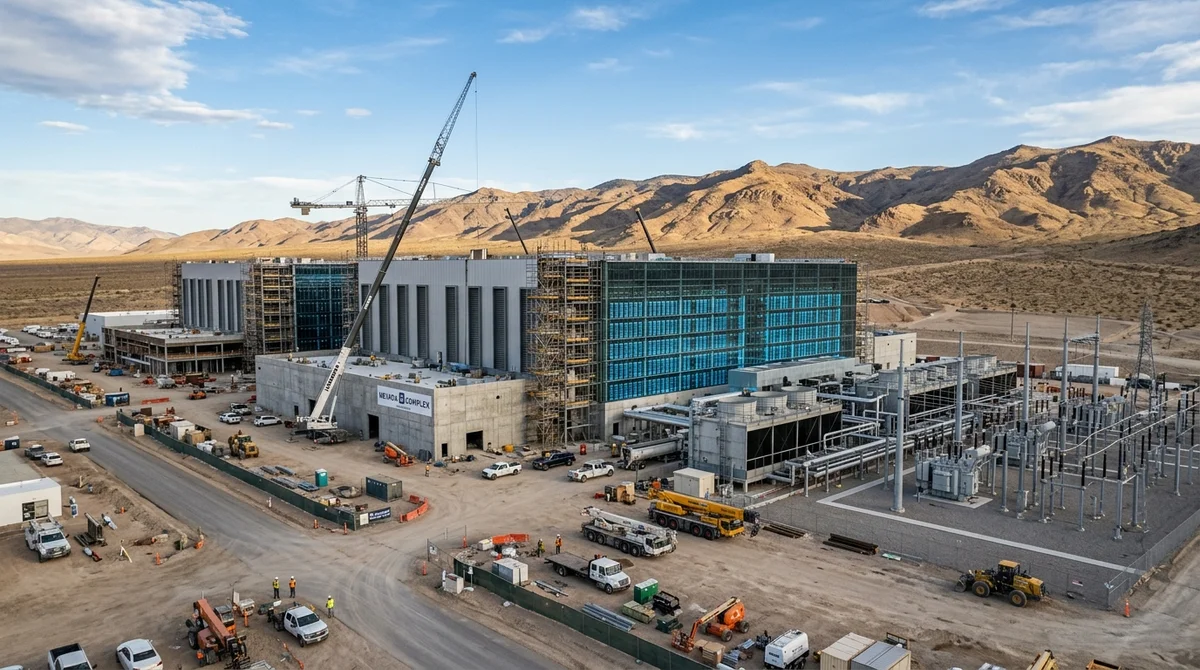
The AI infrastructure boom is increasingly moving from technological promises to serious debt: a structure linked to a data center project that Nvidia is set to lease is attempting to raise another $4.54 billion through the high-yield bond market. This isn't about a startup pitch deck — it's about a concrete construction project in Nevada — a 200-megawatt facility with a substation that should provide Nvidia with new computing capacity.
The issuer is connected to Tract Capital Management and Fleet Data Centers. Based on parameters being discussed with investors, these are five-year bonds with yields targeted at the upper end of the 6% range. The raised funds are planned to be directed toward financing part of the construction and compensating shareholder investments already made.
In other words, the project isn't starting from scratch: first, owner capital went into it, and now the developer is trying to shift a significant portion of the burden onto the debt market. This isn't the first attempt to borrow money against the same asset. Back in February 2026, the developer already raised $3.
8 billion in a debut high-yield bond offering for this project. At that time, investor interest turned out to be very high: the volume of bids reached approximately $14 billion according to market data. That round demonstrated that investors are willing to fund AI infrastructure even with a speculative credit profile if the project has a clear tenant and solid economics for future utilization.
The new deal essentially tests whether that appetite remained after April's wave of similar offerings. Context is important here. In 2026, the high-yield debt market has quickly become one of the main channels for financing AI construction in the US.
Companies involved in data center construction have already raised more than $22 billion this year through risky bonds. Over recent weeks alone, the market has seen several major deals: a Google-linked project placed record $5.7 billion, Core Scientific raised $3.
3 billion, Edged Compute — $1.3 billion. In effect, investors have started buying not just debt from individual companies, but the right to participate in future demand for computing capacity.
The reason for such activity is simple: demand for AI services has run up against not just chips, but physical infrastructure. What's needed are sites, electricity, cooling, network connectivity, and the ability to quickly bring all of this into operation. For the market, this means a new asset class that sits somewhere between real estate, energy, and tech capex.
For Nvidia, this is also a telling moment. The company is becoming not only a GPU supplier, but also an anchor tenant for projects that are already securing multibillion-dollar debt financing in advance. At the same time, financing for such projects remains expensive.
Yields on recent deals in the sector were noticeably above the average level for comparable bonds: investors demand a premium for construction risk, dependence on completion timelines, and concentration among one or two major clients. To make such deals more attractive, issuers sometimes offer additional protection mechanisms, such as accelerated repayment of part of the debt over the life of the issue. This is an important signal: market enthusiasm exists, but it's not unconditional.
Bond buyers are willing to finance the AI boom only if they see concrete guarantees, a clear payment structure, and strong counterparties on the tenant side. The Nevada project has precisely what is most valued now: large scale, a clear site, an energy component in the form of a substation, and a tie to Nvidia as the future user of the capacity. Therefore, the attempt to raise another $4.
54 billion doesn't look exotic, but rather like a continuation of a new pattern. Developers are assembling not classic project financing that takes years of approvals, but quick market capital for pre-booked demand from AI companies. The main conclusion is this: the AI boom has definitively entered a phase where its scale is measured not only by the number of models and chips, but also by the volume of the debt market willing to underwrite it.
If the deal goes through successfully, it will reinforce the idea that the capital market still believes in a long-term shortage of computing infrastructure and is willing to finance new campuses even at speculative rates. If demand turns out to be weaker, the market will receive for the first time a signal that the wave of AI debt is beginning to hit the limits of investor appetite.
Want to stop reading about AI and start using it?
AI News is a curated feed of AI/tech news. Hamidun Academy teaches you to use AI systematically in your work.