European Commission demands Google open Android for competing AI services
The European Commission proposed that Google open key Android features to third-party AI services on the same terms as for Gemini. This involves deeper…
AI-processed from Bloomberg Tech; edited by Hamidun News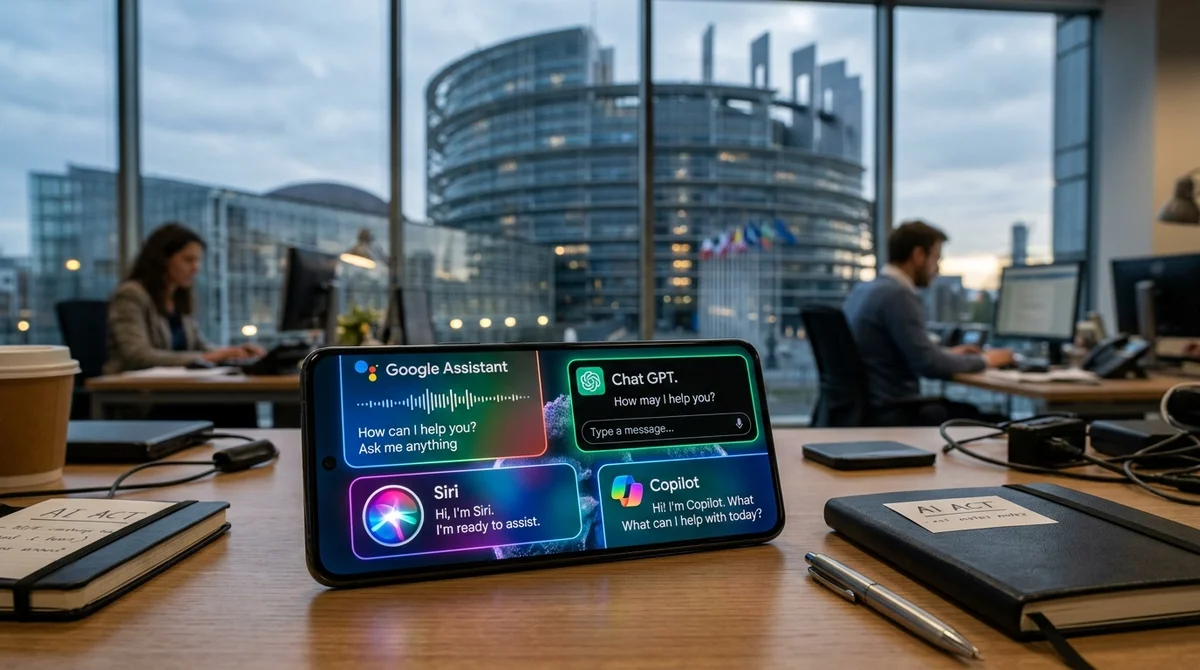
The European Commission has taken direct action to limit Google's advantage in Android: the regulator wants third-party AI services to receive the same practical access to system capabilities that Gemini currently enjoys. If the proposals are approved, Android in Europe will no longer be a platform where the deepest level of integration is by default reserved for Google's own AI. On April 27, 2026, the European Commission presented a package of preliminary measures under the Digital Markets Act targeting Google.
This is not about an immediate fine or a final decision on a violation, but rather the next phase of the so-called specification proceeding—a procedure in which Brussels describes exactly how the company must fulfill its DMA obligations. At the center of the dispute is Android and the question of whether Google can keep key system functions as a practical privilege for Gemini while simultaneously restricting competitors like ChatGPT or Claude.
The meaning of the requirements is quite practical. According to the European Commission, competing AI services should be able to effectively interact with applications on Android devices and perform actions on behalf of the user. This means not just having an application in the Google Play Store, but access to the same hardware and software capabilities that form the basis of Gemini's native experience on smartphones and tablets. In the examples provided by the regulator, a third-party assistant should be able to send an email through the user's preferred email application, order food, or share a photo in another service without artificial restrictions from the platform.
This story stretches back to January 27, 2026, when the Commission opened two parallel proceedings against Google. The first concerns Article 6(7) of the DMA and Android interoperability for third-party AI providers. The second concerns Article 6(11) and access to Google Search data for competing search engines, including AI chatbots with search functionality. On April 16, Brussels already published separate preliminary measures regarding search data, and now it has reached the mobile portion of the dispute.
For Brussels, this is a matter of principle, because in the mobile market, the level of system integration often determines which assistant a user will keep as their primary one: the one that launches faster, better understands device context, and can act through other applications gains an advantage even before comparing the quality of the model itself. Third parties can submit comments until May 13, 2026, after which the European Commission plans to issue a final decision on Google's compliance with DMA requirements by the end of July 2026.
Google is expectedly challenging this approach. The company argues that Android remains an open ecosystem in which device manufacturers can independently configure AI features, and Brussels' new requirements create risks to privacy and security. Google's response contains a key argument: if the regulator requires disclosure of access to sensitive hardware capabilities and system permissions, this will increase the cost of supporting the platform and weaken protective mechanisms for European users.
In essence, the dispute is no longer only about competition, but also about where the line is drawn between fair interoperability and dangerous disclosure of overly deep system rights. For the market, this is an important test of whether mobile AI will become another case of platform lock-in. If the European Commission pushes through its measures, Android users in the EU will have real choice not just between application icons, but between assistants that can work equally deeply with the device. If Google's position holds, Gemini will retain its main strategic advantage: integration into the operating system, which competitors will find difficult to match even with strong models.
In other words, Europe is now deciding not a particular dispute about Android settings, but the question of whether the next level of mobile AI will be an open market or another closed ecosystem.
Want to stop reading about AI and start using it?
AI News is a curated feed of AI/tech news. Hamidun Academy teaches you to use AI systematically in your work.