AI is Changing Car Design: GM and Nissan Neural Concept Show the Future of Development
GM and Nissan were the first in the auto industry to show how neural networks are transforming the car design process. The traditional cycle from sketch to…
AI-processed from The Verge; edited by Hamidun News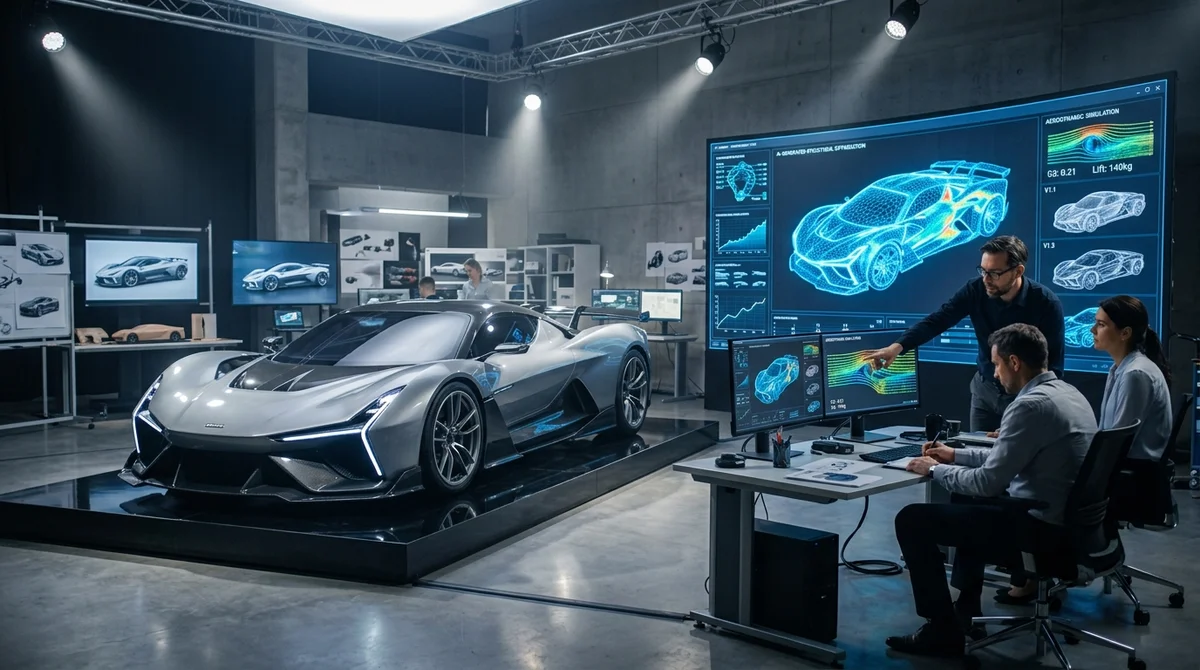
Automotive design is experiencing a quiet but significant revolution. GM and Nissan were the first major players to show the public what a car looks like when artificial intelligence plays a role in its creation. And this is far from the futuristic show car that we're accustomed to seeing at auto shows.
The traditional path for a car from idea to dealership takes five to seven years. It all starts with a pencil sketch — and this is not a metaphor. Even today, when powerful 3D visualization and VR sculpting tools are available in the industry, most new cars are still born on paper.
Then comes endless iteration of sketches from every angle, manual translation into 3D models, and then — clay modeling. Yes, real clay: this allows designers to physically feel the body lines and proportions, which may look different on screen. Only after this does the actual engineering development begin, which also takes years.
This is why the cars that appear in dealerships this summer were conceived back in 2020–2021 — in an era of completely different market conditions, different raw material prices, and different buyer priorities. Companies made bets on the future then, not knowing what it would be. This is a structural flaw in the industry: decisions are made five years before the market evaluates them.
AI is beginning to break this rhythm. Nissan presented Neural Concept — a concept car in whose design neural networks were actively used. It's important to understand: this is not about designers pressing a button and getting a finished car.
AI is built into the workflow differently. Algorithms allow generating and evaluating hundreds of body shape options in the time that previously went into a dozen sketches. They analyze aerodynamics, visual weight, proportions — and return to the designer not one option, but a wide spectrum of directions to choose from.
The designer still makes the final decisions, but now he does so based on a significantly wider sample of ideas. GM is moving along a similar path, integrating generative tools directly into the workflow of design studios. The key point here is not replacing humans, but expanding their capabilities.
The character of the car, its "face," emotional message, style — all of this is still determined by people with decades of experience. AI takes on routine iteration and helps check hypotheses faster, which previously required weeks of painstaking work. From a practical standpoint, this means shortening several development stages.
If previously it took months from an approved concept to the final 3D model, now this cycle can be compressed. Clay models are not going anywhere — the physical prototype is still irreplaceable for perceiving the actual form. But AI is capable of significantly reducing the number of iterations preceding this stage, and therefore the overall development time.
In perspective, this could lead to new models reflecting current trends rather than tastes from five years ago. It's important to understand the scale of these changes. The automotive industry is one of the most conservative spheres in terms of design processes.
Studios with decades of accumulated culture work here, where sketch traditions are passed down as craftsmanship. Implementing AI in this environment is not just a technical upgrade, it's a cultural shift. Some designers see new tools as a threat to the profession, others as an opportunity to finally realize ideas without months of waiting.
It's telling that GM and Nissan were the first to enter the AI design race, not technology startups or new players like Rivian or BYD. This speaks to the maturity of the tools: major traditional corporations are ready to trust AI with a real part of the production cycle. The next logical step is when a car designed with AI participation stops being perceived as news.
Perhaps some of those cars are already driving next to you, and no one thinks about it twice.
Want to stop reading about AI and start using it?
AI News is a curated feed of AI/tech news. Hamidun Academy teaches you to use AI systematically in your work.