Musk vs Altman: US lawsuit begins over $150 billion and control of OpenAI
A lawsuit has begun in the US between Elon Musk and Sam Altman over OpenAI's future. Musk, the company's former co-founder, demands Altman's removal…
AI-processed from The Verge; edited by Hamidun News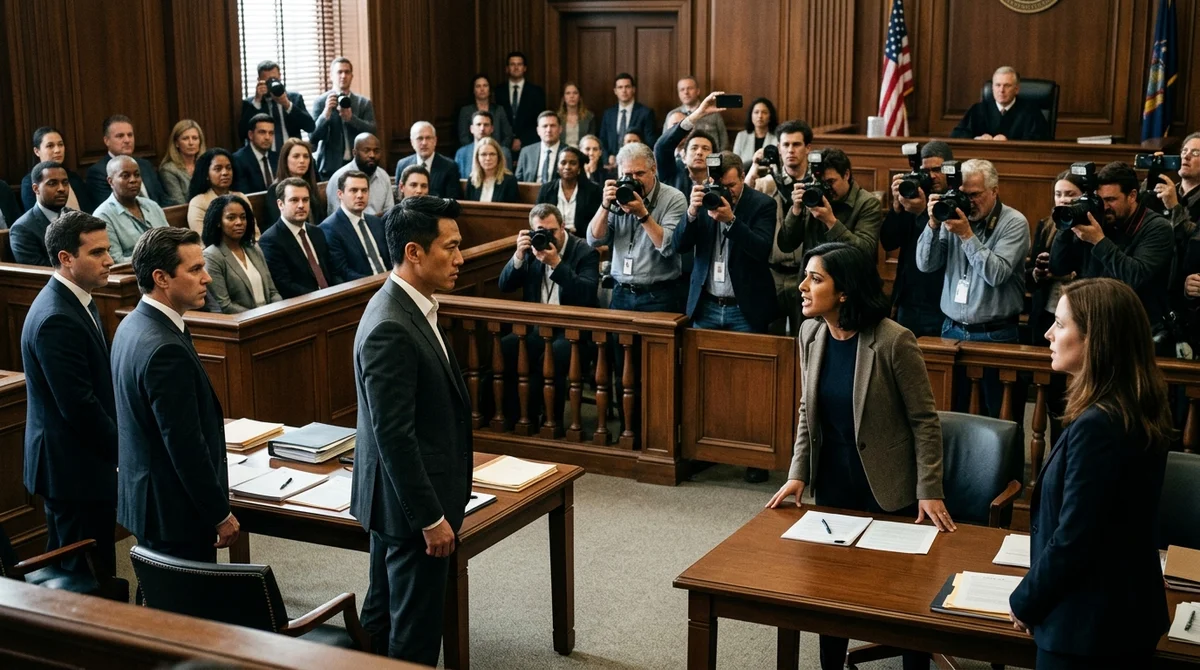
On April 27 in California, a trial began that could rewrite the history of the world's largest AI startup. Elon Musk and Sam Altman met in the courtroom: at stake are the fate of OpenAI, hundreds of billions of dollars, and a fundamental question about who truly owns the future of artificial intelligence. The case is already being called one of the most significant technology trials in history.
Musk filed a lawsuit against OpenAI back in 2024, and since then the case has expanded: new defendants were added, new accusations, new lawsuits. The essence of the central claim: OpenAI abandoned its original mission — developing safe AI for the benefit of all humanity — and transformed itself into a commercial entity oriented toward profit extraction. Musk argues that he was deliberately misled: he donated money to a nonprofit organization with specific ideals, yet that organization ultimately became a corporation valued at hundreds of billions of dollars.
Musk was among the cofounders of OpenAI alongside Sam Altman and Greg Brockman. In 2018, he left the board of directors — officially due to conflicts of interest with Tesla. Since then, Musk has developed his own AI business: the company xAI and its flagship product Grok — a direct competitor to ChatGPT.
This fact became the key argument in OpenAI's defense. The company categorically rejects all accusations. In an official statement on the social network X, OpenAI called the lawsuit "a baseless and envious attempt to eliminate a competitor" in order to promote the interests of Musk's own companies — SpaceX, xAI, and X.
According to OpenAI's lawyers, the real purpose of the lawsuit is not to protect a nonprofit mission, but to eliminate a rival from the AI market. They point to an obvious conflict of interest of the plaintiff: a man who created a competing product is trying to block his competitor's development through the courts. Musk's demands are unprecedented in scale.
He is seeking the immediate removal of Altman and Brockman from their positions, the cessation of OpenAI's activities as a public benefit corporation, and payment to the nonprofit division of compensation up to 150 billion dollars in case of victory. In parallel, xAI filed a separate lawsuit against OpenAI and Apple, accusing them of violating antitrust law. OpenAI, meanwhile, continues its transformation.
The company has attracted multi-billion-dollar investments, its valuation exceeds 300 billion dollars, and it is actively preparing for an IPO. This very commercial transformation is the central subject of the dispute: Musk insists that it violates the conditions of the original agreement between the founders and changes the very nature of the organization. On the eve of the hearings, an unexpected turn occurred: Musk withdrew a number of fraud accusations against Altman and OpenAI, focusing on the remaining claims.
This somewhat narrowed the front of the legal attack, but did not change the overall strategy of the lawsuit. Jury selection began on April 27 — the full trial promises to stretch out over several weeks. For the entire technology industry, the stakes extend far beyond a personal conflict between two billionaires.
If the court sides with Musk, this will create an important precedent: nonprofit organizations in the AI field will gain a legal tool to protect their original mission. If OpenAI wins — the company will continue its transformation into a public corporation. In any case, the outcome of the trial will determine the rules of the game for the next generation of AI companies: how they should build corporate governance and to whom they are accountable.
The Musk v. Altman case is not merely a legal dispute over money and control. It is a public battle for the narrative: who "betrayed" the ideals of the AI revolution, and who is building its true future.
The court's answer will determine not only the fate of OpenAI, but also the rules of the game for the entire industry for years to come.
Want to stop reading about AI and start using it?
AI News is a curated feed of AI/tech news. Hamidun Academy teaches you to use AI systematically in your work.