DeepSeek-V4: How New Compression Algorithms Made One-Million-Token Context a Reality
Chinese lab DeepSeek released preview versions of its V4 series models: the flagship DeepSeek-V4-Pro (1.6 trillion parameters) and fast DeepSeek-V4-Flash…
AI-processed from MarkTechPost; edited by Hamidun News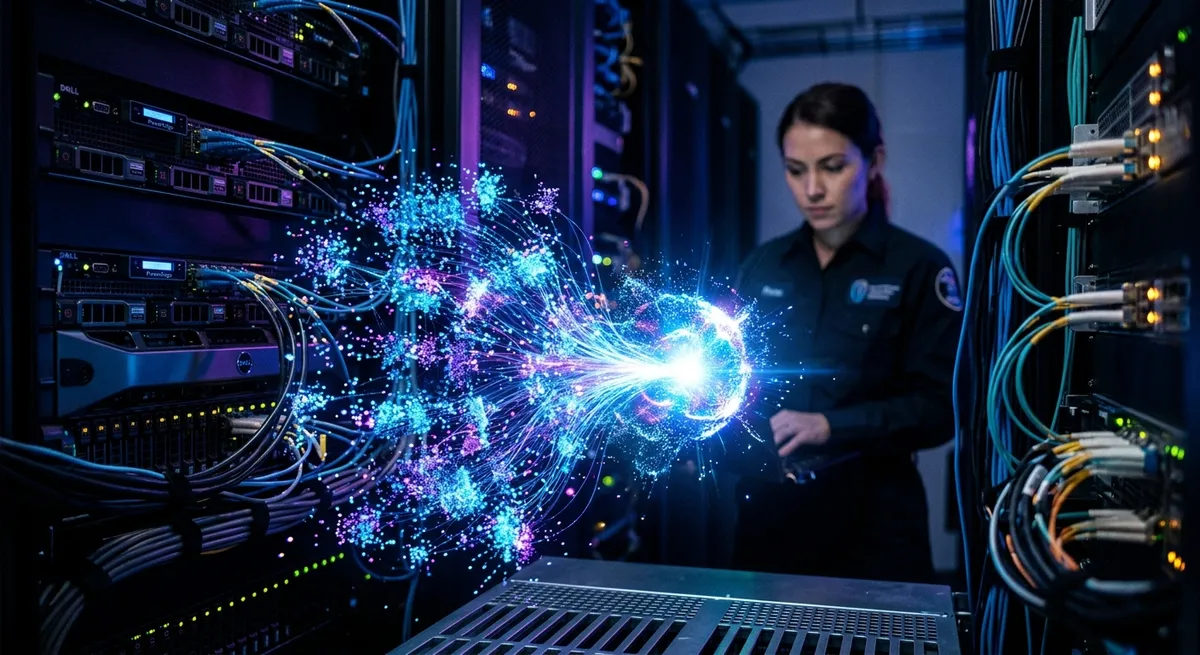
Dominance in the artificial intelligence industry is no longer determined solely by a model's ability to think logically. The spotlight has shifted to memory capacity — the ability of a neural network to hold vast arrays of information in mind without astronomical costs for server hardware. Over recent years, a context window of one million tokens, equivalent to dozens of thick books or large corporate code repositories, has been considered the exclusive domain of the most expensive and resource-intensive systems.
However, the DeepSeek laboratory is once again rewriting the rules of the game, releasing a preview version of the DeepSeek-V4 series models. Their main innovation lies not in simply increasing computational power, but in a radical rethinking of fundamental memory mechanisms.
To understand the scale of this achievement, one must grasp the technical barrier that developers faced. In traditional transformer architectures, each newly generated token forces the model to look back at all previous text. All this conversation history is stored in the so-called KV-cache, which at the one-million-token mark balloons to enormous proportions, consuming expensive GPU memory. This made large-scale commercial use of long context economically unfeasible at the inference stage. Most companies circumvented this problem by creating complex search systems that extracted only the necessary text fragments, but such workarounds inevitably led to the loss of important nuances and logical connections in documents.
DeepSeek engineers decided to eliminate the root cause of the problem itself by implementing two new architectural approaches: compressed sparse attention and deeply compressed attention. To explain this complex mathematics in simple terms, the new model stops storing a photographically accurate copy of each word read. Instead, algorithms compress information, creating dense semantic clusters, and focus attention only on fragments that are critical for the current computation. This is similar to how a human reads a long novel: we don't remember every comma in the first chapter, but we clearly hold in mind the motivations of characters and the world's structure, instantly retrieving these insights when needed.
The technological elegance of DeepSeek-V4 also lies in the skillful use of mixture of experts architecture. The flagship version, DeepSeek-V4-Pro, possesses a colossal total of one point six trillion parameters, yet only forty-nine billion are activated to generate a single word. The lighter version, DeepSeek-V4-Flash, contains two hundred eighty-four billion parameters, of which only a ridiculously small fraction — just thirteen billion — are engaged. This approach allows the model to retain incredible depth of knowledge and analytical capabilities while requiring computational resources comparable to running systems from previous generations.
The consequences of this release for the industry cannot be overstated. The ability to load millions of tokens at minimal cost threatens entire business segments built on developing infrastructure for vector databases and retrieval-augmented generation systems. Corporate clients no longer need to fragment their financial reports, legal contracts, or source code. They can simply place the entire context directly into the model's memory and conduct dialogue with it in real time. This dramatically accelerates software development processes, scientific paper analysis, and security audits, making these tools accessible even to small startups.
Moreover, this move reinforces DeepSeek's reputation as the primary disruptor of the established market. While major technology corporations have long competed in creating closed systems with high subscription costs, independent researchers demonstrate that intelligent algorithm optimization can overcome brute computational force. This will inevitably force competitors to rethink their pricing policies and accelerate innovation in neural network architecture to avoid falling behind in the race for efficiency.
Ultimately, the DeepSeek-V4 release marks the transition to a new era of generative artificial intelligence. An era where unlimited memory becomes a standard feature rather than a premium option. When the computational cost of analyzing giant data arrays falls to historic lows, the focus of development shifts from attempts to retain information in context to creating more sophisticated autonomous agents capable of processing this knowledge over weeks and months, transforming our understanding of the capabilities of machine intelligence.
Want to stop reading about AI and start using it?
AI News is a curated feed of AI/tech news. Hamidun Academy teaches you to use AI systematically in your work.