OpenMythos: Open-source PyTorch reconstruction of Claude Mythos architecture with 770M parameters
Anthropic never published a technical paper on Claude Mythos — but the research community didn't stop. Developer Kye Gomez released OpenMythos on GitHub: a…
AI-processed from MarkTechPost; edited by Hamidun News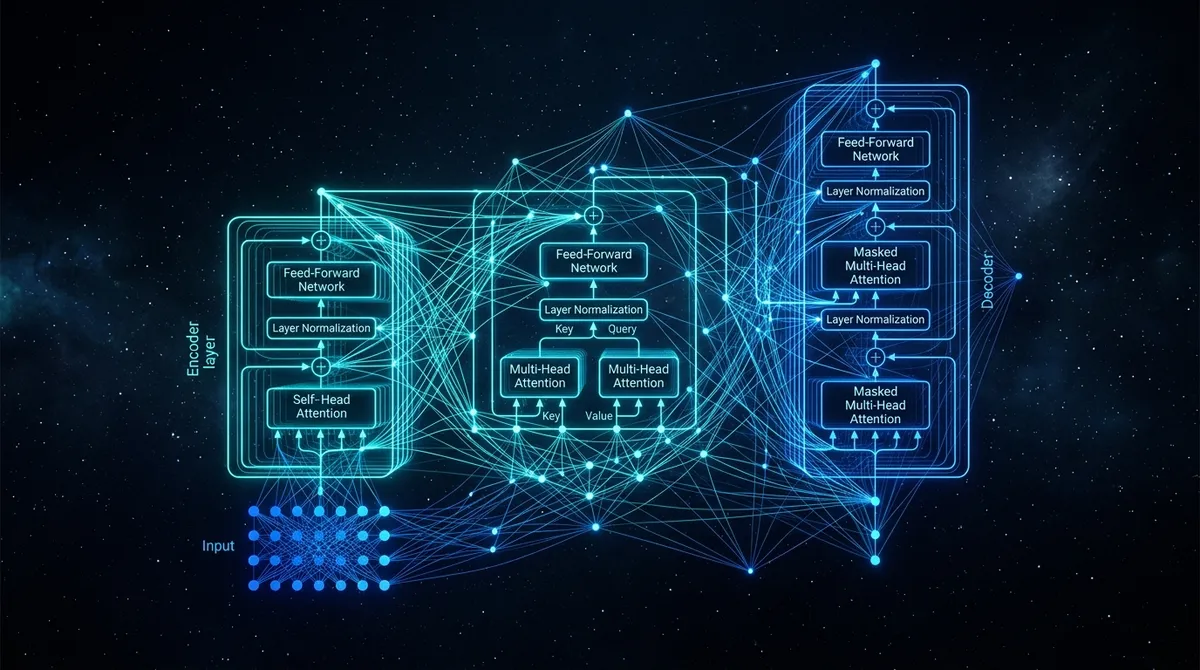
Anthropic has never published a technical paper on Claude Mythos. This did not deter the research community — and now the GitHub project OpenMythos has emerged, attempting to answer the question: how exactly is this architecture structured? The project's author, Kye Gomez, approached the task from first principles.
He did not rely on internal leaks or insider information — only on peer-reviewed publications and publicly available research in the field of large language model architectures. The result is a complete reconstruction of the presumed Claude Mythos architecture, implemented in PyTorch. The project's key technical finding: a model with 770 million parameters demonstrates performance comparable to standard transformer architectures with 1.
3 billion parameters. If this observation is correct, it points to a fundamentally different approach to scaling — not through increasing the number of parameters, but through more efficient organization of them. Among the presumed architectural solutions that Gomez reconstructed in OpenMythos are specialized attention mechanisms, non-standard normalization schemes, and apparently, a departure from the classical decoder-only scheme of GPT-like models.
It is the combination of these solutions, according to the author, that provides anomalously high parametric efficiency. It is important to understand: OpenMythos is neither reverse engineering in the technical sense nor an attempt to reproduce the weights of Anthropic's actual model. It is a theoretical hypothesis formalized into working code.
Gomez explicitly states this in the documentation: the project reflects one possible interpretation of how such an architecture might be structured, rather than claiming exact reproduction of the original. Nevertheless, the very fact of this project's emergence is telling. Anthropic's opacity regarding the architectural details of Claude has become the norm — the company publishes research on safety, interpretability, and reinforcement learning, but avoids revealing the technical details of its flagship models.
This creates an information vacuum that the community fills on its own. OpenMythos is not the first such attempt. Previously, the community has engaged in reconstructing the architectures of GPT-4 and Gemini Ultra, relying on indirect indicators from benchmarks, error patterns, and publications by affiliated authors.
The difference is that here we are dealing with an architecture that Anthropic has not officially announced — Claude Mythos is mentioned only in the context of rumors and unconfirmed leaks. For machine learning practitioners, OpenMythos is interesting primarily as a source of architectural ideas. Even if the reconstruction proves inaccurate, specific solutions — in attention organization, normalization schemes, scaling approaches — may prove useful regardless of their origin.
The project is published under an open license, with code available on GitHub. This means anyone can run the architecture, verify the stated characteristics, and propose their own interpretations. Essentially, Gomez has opened a collective investigation — and now the community will continue it.
Want to stop reading about AI and start using it?
AI News is a curated feed of AI/tech news. Hamidun Academy teaches you to use AI systematically in your work.