OpenClaw Outpaced Linux in GitHub Growth: Why Engineering Scaffolding Matters More Than the Model
OpenClaw — a framework for wrapping AI agents — gained GitHub popularity faster than Linux. Chief AI Architect Andrey Nosov explained why engineering…
AI-processed from Habr AI; edited by Hamidun News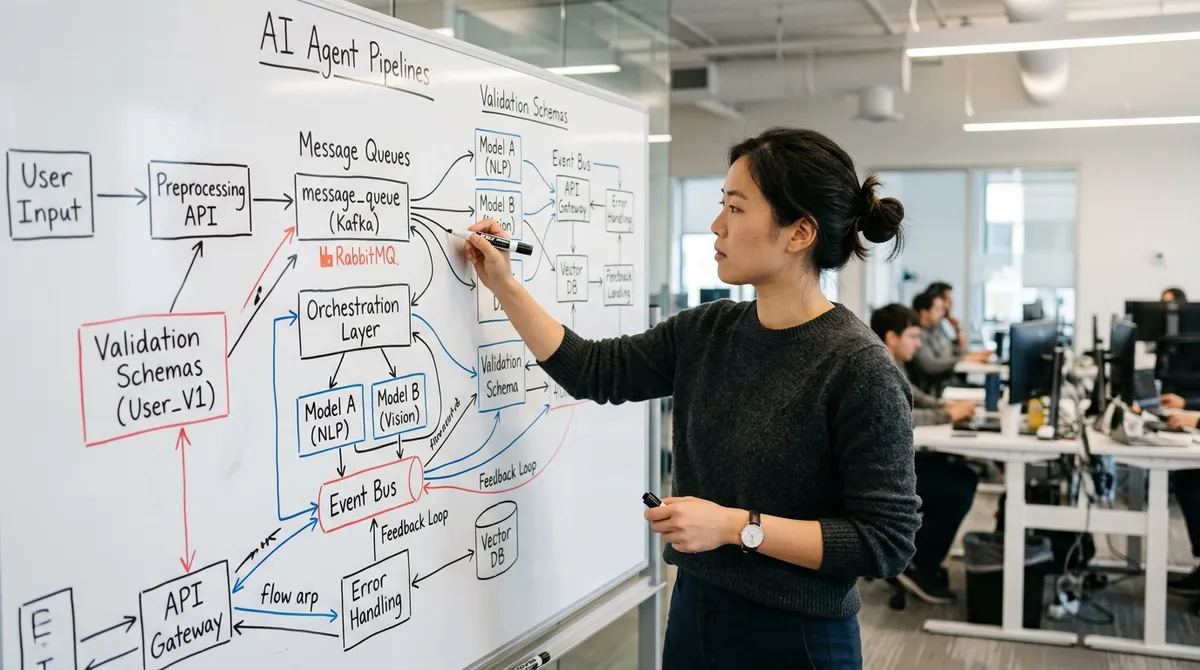
The OpenClaw project appeared on GitHub quietly — without press releases or marketing campaigns. Within a few months, its growth rate outpaced Linux in its early years. Behind this phenomenon lies a simple idea: when a neural network produces unpredictable output, the reliability of the entire system is determined not by the quality of the model, but by the quality of the engineering infrastructure around it.
Andrey Nosov, Chief AI Architect and one of the authors of OpenClaw, explained in an interview with the Ai4Dev community how he came to this conclusion. His team was working on a production AI product where failure meant not just an incorrect answer, but real losses — financial or operational. That's where it became clear: GPT-4 and its competitors handle tasks well, but they are non-deterministic by nature. The same prompt at different moments can produce different results. For production, this is unacceptable.
The solution became a combination of Kafka and Pydantic. Kafka takes on the role of an event bus: every request to the model, every response, every intermediate state is recorded as an event with a timestamp. This removes the magic from the process and makes the system reproducible. Pydantic schemas work as a contract between the neural network and the rest of the code: the model must return an object of a defined structure, otherwise the response is rejected and sent for retry or escalation. Together, these two tools turn a probabilistic process into something resembling a deterministic pipeline.
A separate topic of the interview is natural language tracing. Unlike classical tracing, where you track function calls and response time, NL tracing captures semantic transformations: how the original user request changed at each step of the agent chain, what parts of the context were removed or added, at what point the meaning broke. Without such a tool, debugging multi-agent systems becomes a shot in the dark.
Human-in-the-Loop is another pillar of OpenClaw's architecture. Nosov explains this without romanticism: not because AI cannot be trusted, but because there are classes of decisions where the cost of an error exceeds the cost of a delay. In such cases, the system itself determines the confidence threshold and hands the task to a human without interrupting the rest of the pipeline. This is not a workaround, but an architectural pattern with clear trigger rules.
A community of several thousand engineers has formed around OpenClaw, those who faced the same problems in production projects and didn't want to reinvent the wheel. The Telegram channel Ai4Dev has crossed the 5,000 subscriber mark — a sign that Russian-speaking ML engineers have started talking not about model selection, but about production engineering of AI systems.
The AI industry is traveling the same path that web development did in the early 2000s. Then the key skill was not PHP itself, but the ability to build a reliable stack around it: caching, queues, deployment, monitoring. The same is happening now with large language models. The ability to call GPT-4 is not a competitive advantage. The competitive advantage is the ability to build a system that does this reliably, transparently, and with predictable behavior under failures. OpenClaw is one of the first attempts to provide such a stack with open-source code.
Want to stop reading about AI and start using it?
AI News is a curated feed of AI/tech news. Hamidun Academy teaches you to use AI systematically in your work.