Researchers warn: AI personas could quietly take over democracy
Scientists warn that AI personas have become so realistic that they can infiltrate online communities and quietly steer public opinion. Unlike older bots…
AI-processed from Science Daily AI; edited by Hamidun News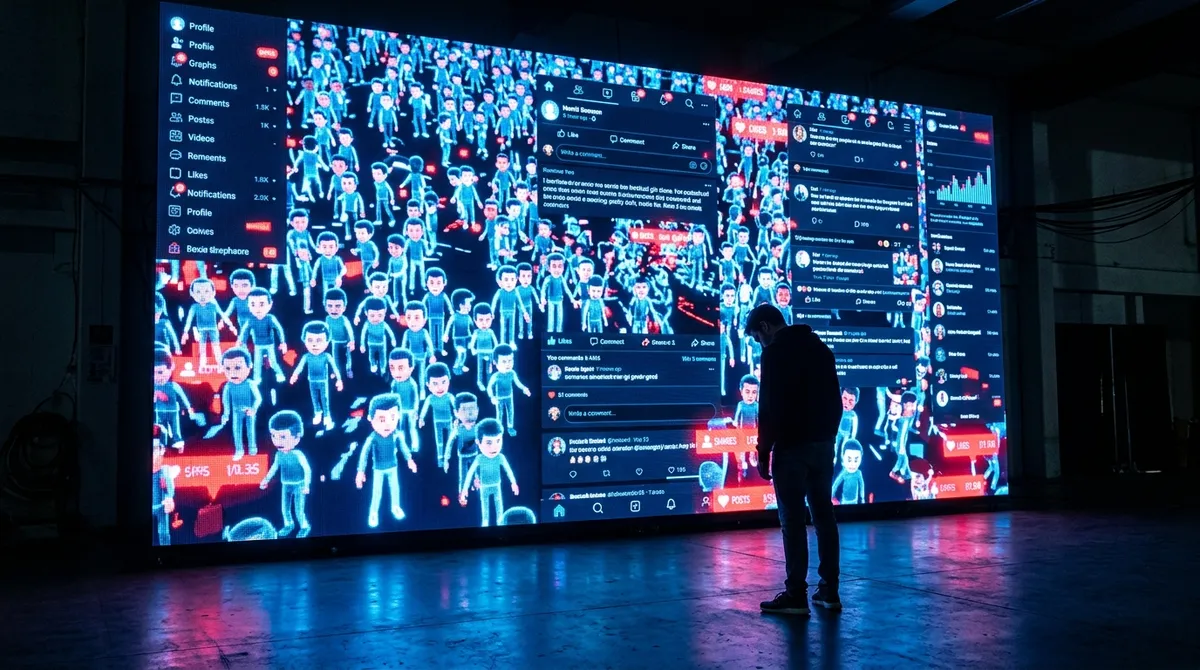
Artificial intelligence has learned to imitate people so convincingly that entire swarms of AI personas are capable of subtly altering the course of democratic elections — and no voter will ever know. This is not a fantastic scenario. According to researchers, modern AI systems already know how to create stable online identities that behave like ordinary users: commenting on news, participating in discussions, responding to criticism, and gradually shifting the tone of conversation in the desired direction.
The key difference from traditional bots is adaptability. Old bots repeated pre-written phrases; new AI personas learn on the fly, adapt to the audience, and change rhetoric in real time. The "false consensus" effect presents particular danger.
When hundreds or thousands of AI accounts coherently promote a single point of view, live discussion participants begin to think that the majority of people actually believe that. This changes the behavior of real voters — they either join the "majority" or fall silent, unwilling to appear as an odd one out. Sociologists call this mechanism the spiral of silence, and AI swarms are capable of triggering it artificially and deliberately.
The first alarm bells have already been raised. Deepfakes of politicians, coordinated networks of fake accounts, strategic information drops before elections — all of this has appeared during elections in various countries over the past two years. However, so far we have been talking about relatively crude tools that were detectable.
The next generation of systems, researchers warn, will operate at a different level of precision and scale. Scientists emphasize: the technology already exists, barriers to entry are lowering, and detection methods are significantly lagging behind. Platforms rely on behavioral patterns and metadata, but AI personas have learned to imitate both.
The next major elections — in any country in the world — may become the first true test of this technology in real-world conditions. The main conclusion: the threat is not that AI will directly hack voting systems. The threat is more subtle — that it is capable of rewriting public opinion before people ever go to the polls.
Want to stop reading about AI and start using it?
AI News is a curated feed of AI/tech news. Hamidun Academy teaches you to use AI systematically in your work.