How the AI boom is devastating the gaming industry: memory shortages, rising prices, and layoffs
The AI boom has turned into a nightmare for the gaming industry. Tech giants are absorbing memory chips for their data centers — and now consoles are getting…
AI-processed from Wired; edited by Hamidun News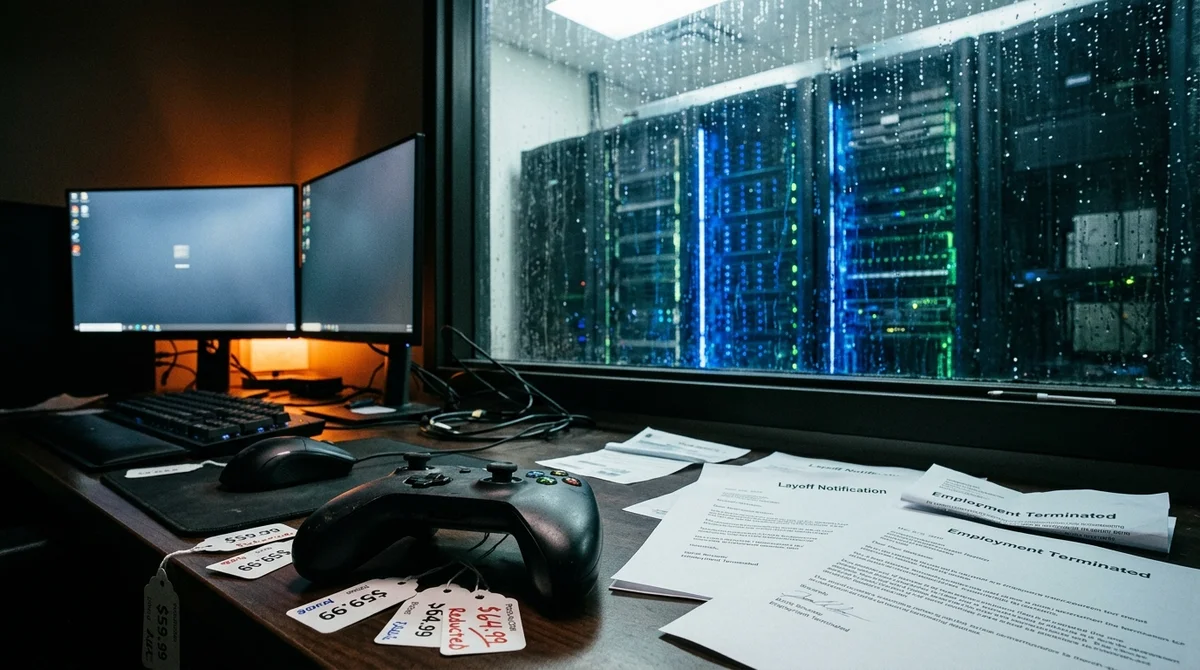
The AI boom has turned into serious problems for the gaming industry. While technology giants expand infrastructure for neural network training, ordinary gamers and developers find themselves at a disadvantage: consoles are getting more expensive, and jobs are disappearing at an alarming rate. A global shortage of RAM has become one of the most tangible side effects of the AI race.
Chip production — both standard DRAM and specialized High Bandwidth Memory — is rapidly being redirected toward data center needs. Microsoft, Google, Amazon, Meta and other technology giants are consuming enormous amounts for training language models and building new infrastructure. This creates an acute shortage in the consumer market: gaming console and video card manufacturers are forced to compete for the same limited semiconductor manufacturing capacity.
Sony and Microsoft are already seeing rising component costs, which will inevitably be reflected in retail prices in the coming years. The employment situation is even more painful. Over the past two years, major studios have laid off tens of thousands of employees — artists, screenwriters, testers, animators.
EA cut around 5% of its workforce, Microsoft Gaming closed several studios after acquiring Activision Blizzard for $69 billion, Sony Interactive Entertainment announced its own round of layoffs. Meanwhile, these same companies are actively investing in AI tools for content generation, justifying this by the need to reduce operating costs. The logic is simple: a neural network can draw a texture or write dialogue for an NPC faster and cheaper than a full-time specialist.
Developer unions are already sounding the alarm. Game Workers Unite and other groups are calling for legislative protection against replacement by algorithms. It's particularly tough for outsourcing teams: quality assurance testing studios and localization services are losing contracts first, since these are exactly the processes that AI automates most easily.
Voice actors, concept artists, and motion capture specialists are at particular risk — employers increasingly choose synthetic alternatives. Gamers are already feeling the consequences. Several major releases have sparked scandals over textures and art generated by neural networks: players notice characteristic artifacts, repetitive patterns, and an overall lifelessness to the visual style.
Studios are cutting costs on content production, but risk losing the trust of players paying full price for a product made with fewer resources. What's happening is a clear illustration of how a technological boom redistributes resources across the entire economy. The gaming industry rarely found itself at the center of such shifts, but this time chip shortages and automation have hit it hard.
For developers, it means instability and the threat of replacement; for players, it means more expensive devices and less lively content. The AI revolution promised to democratize technology — but so far for the gaming industry, it looks more like a source of new problems rather than opportunities.
Want to stop reading about AI and start using it?
AI News is a curated feed of AI/tech news. Hamidun Academy teaches you to use AI systematically in your work.